
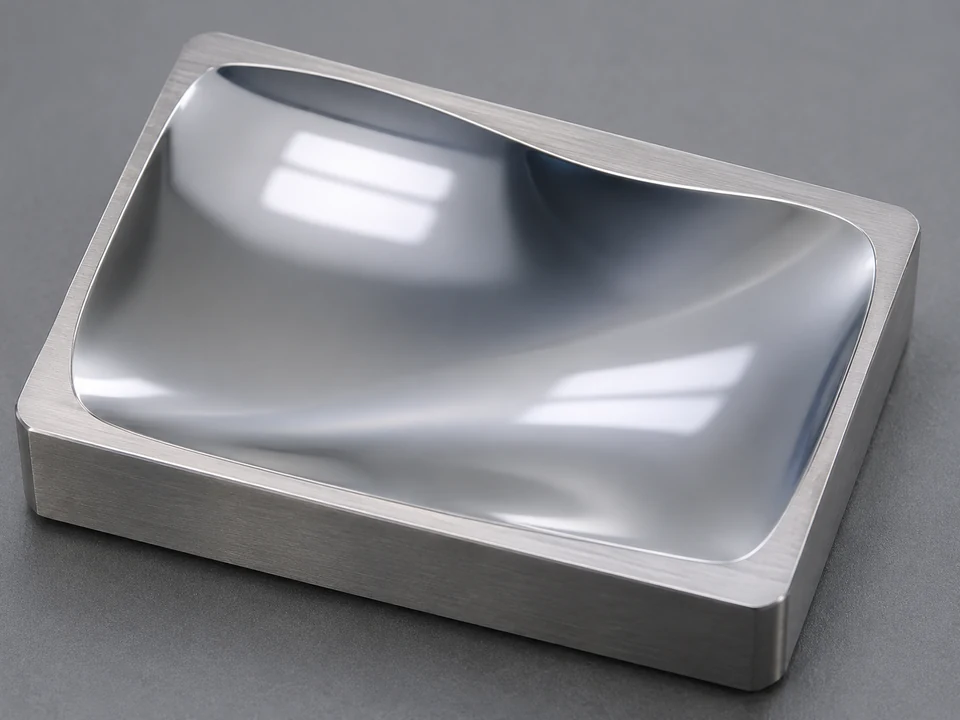
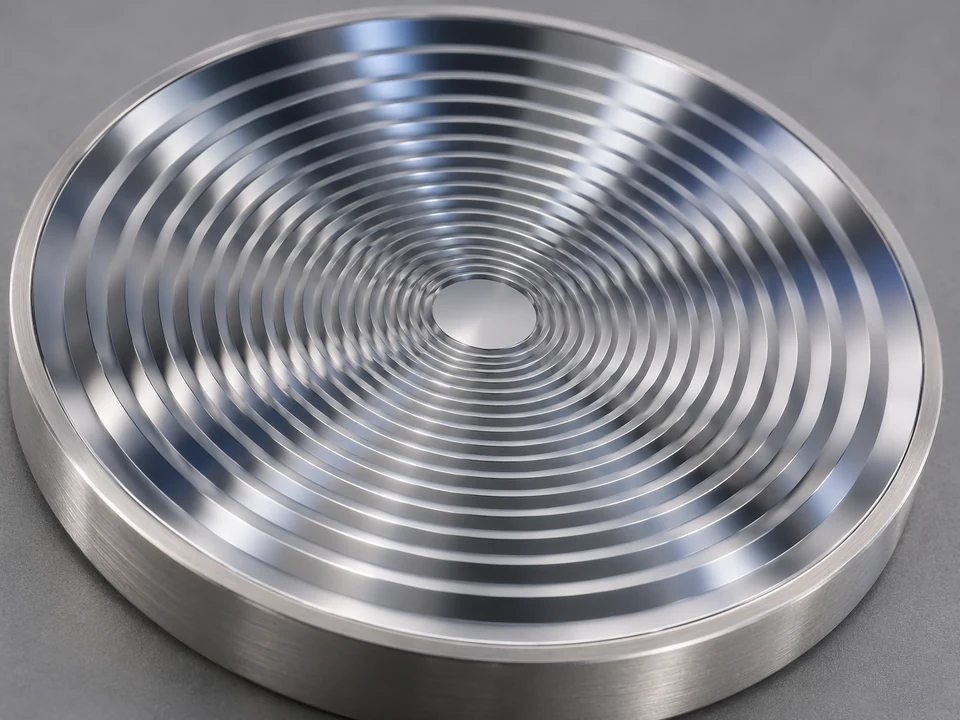
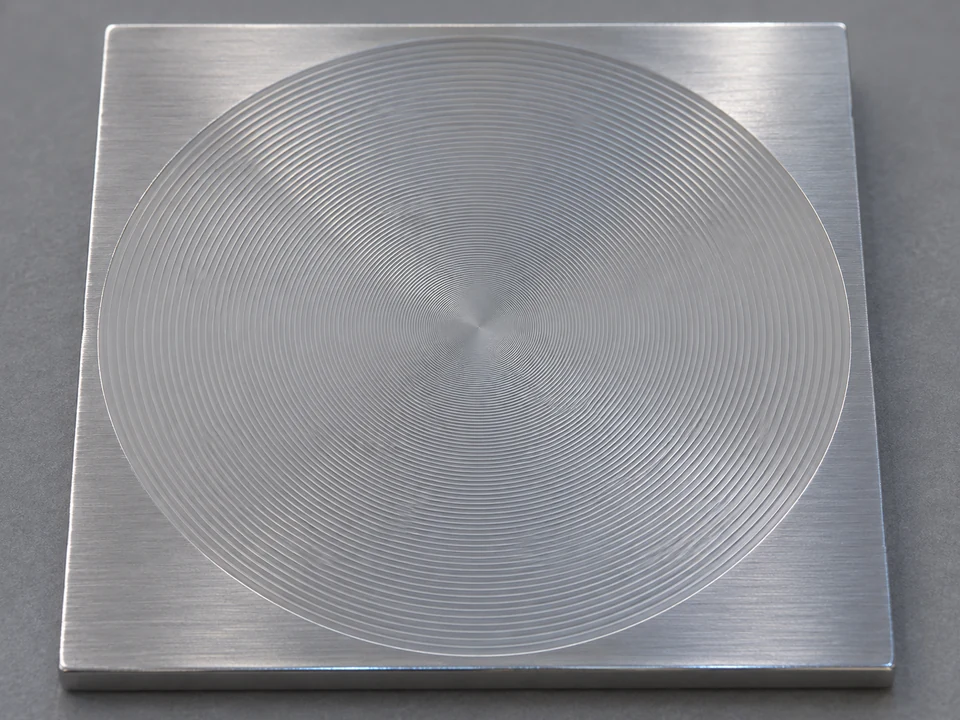
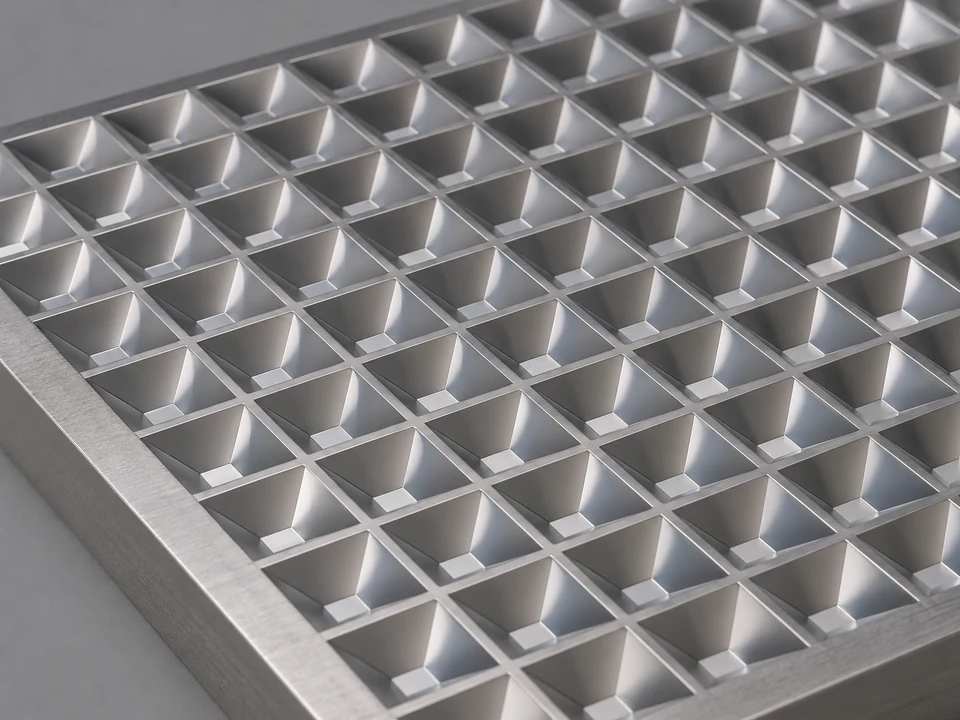
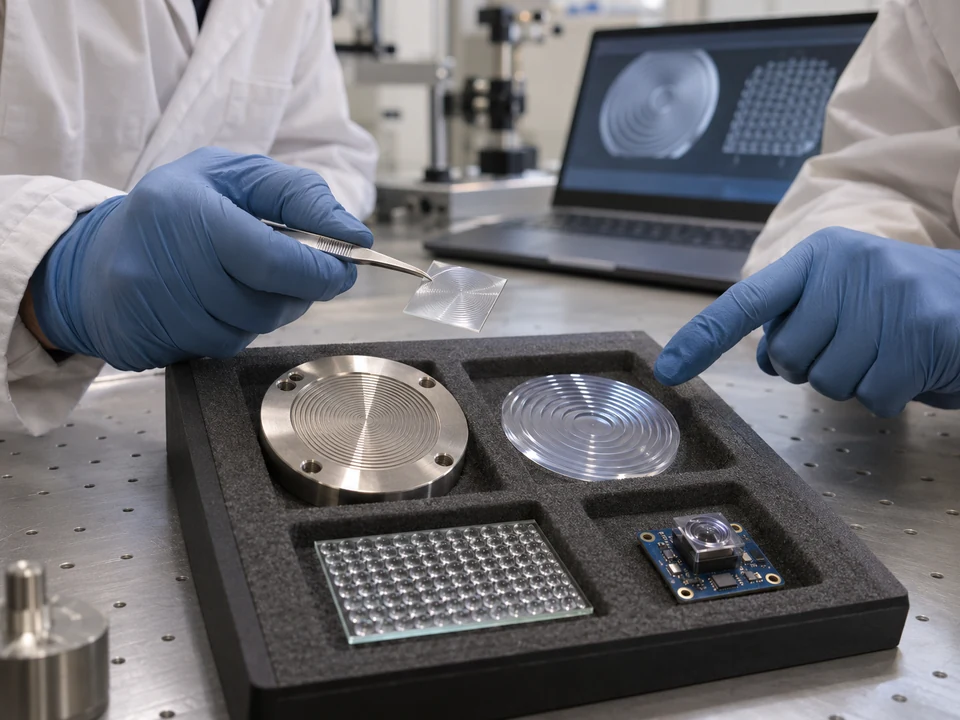
NanoFab uses proprietary CAM-controlled 5-Axis Diamond Turning to create precise metal masters that support higher-performance polymer optics through repeatable, cost-efficient and scalable downstream molding or nanoimprint processes.
Our proprietary CAM allows full utilization of all five axes synchronously to create accurate metal masters across complex and application-specific optical geometries. These masters support NanoFab’s downstream nanoimprint and molding processes.
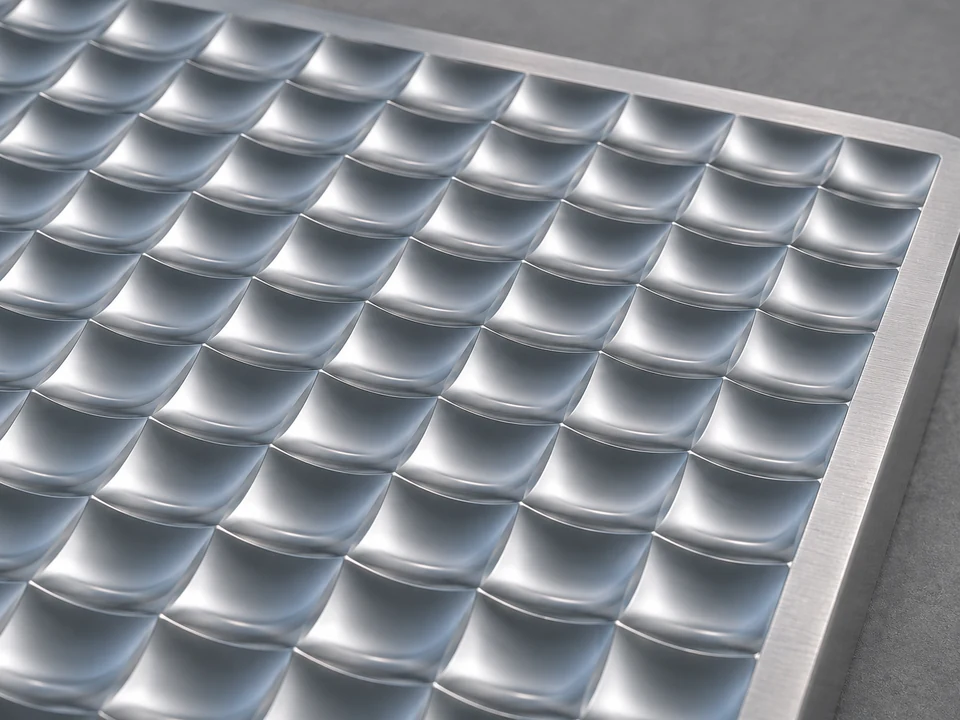
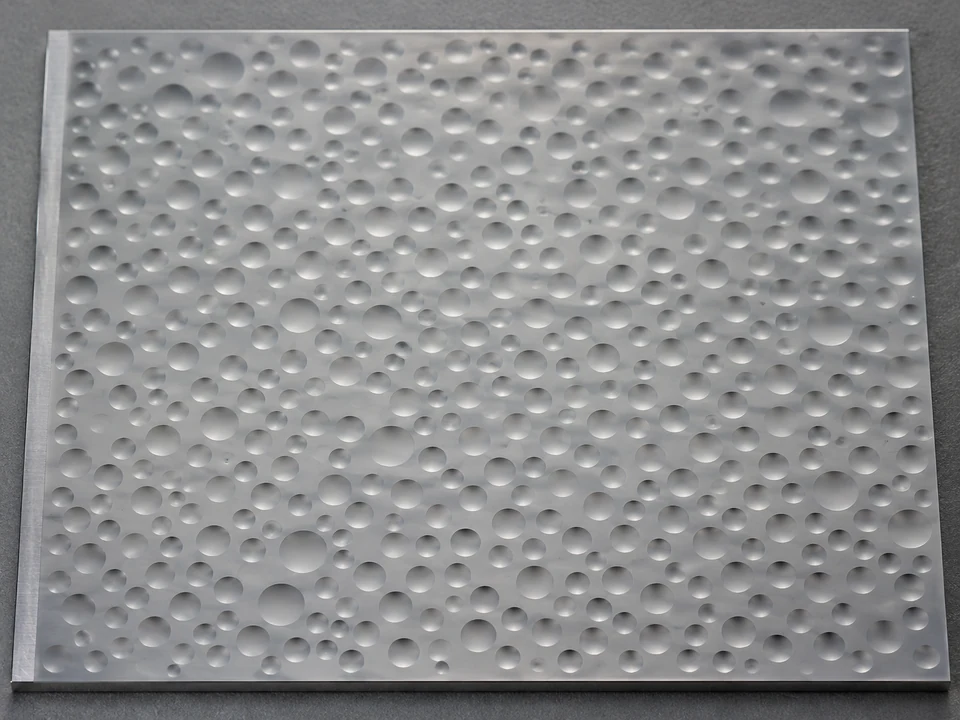
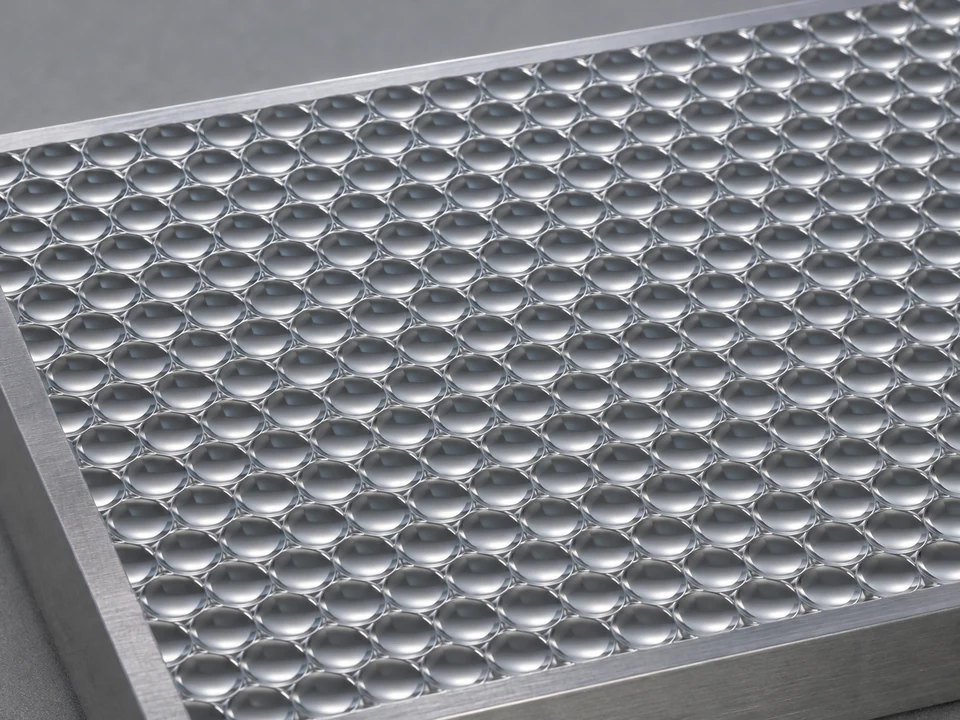
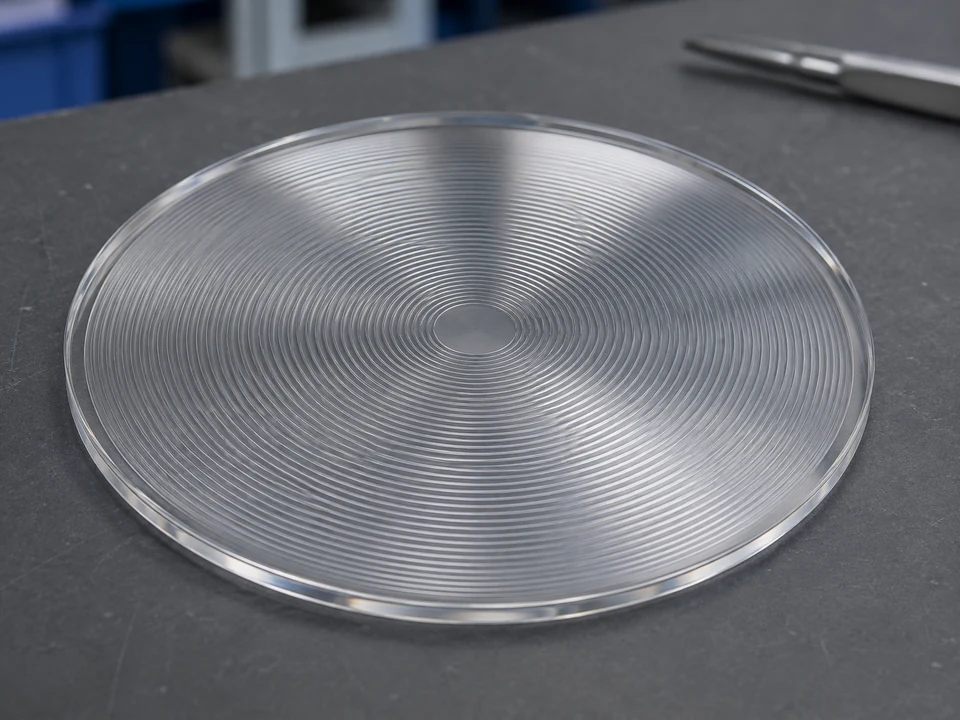
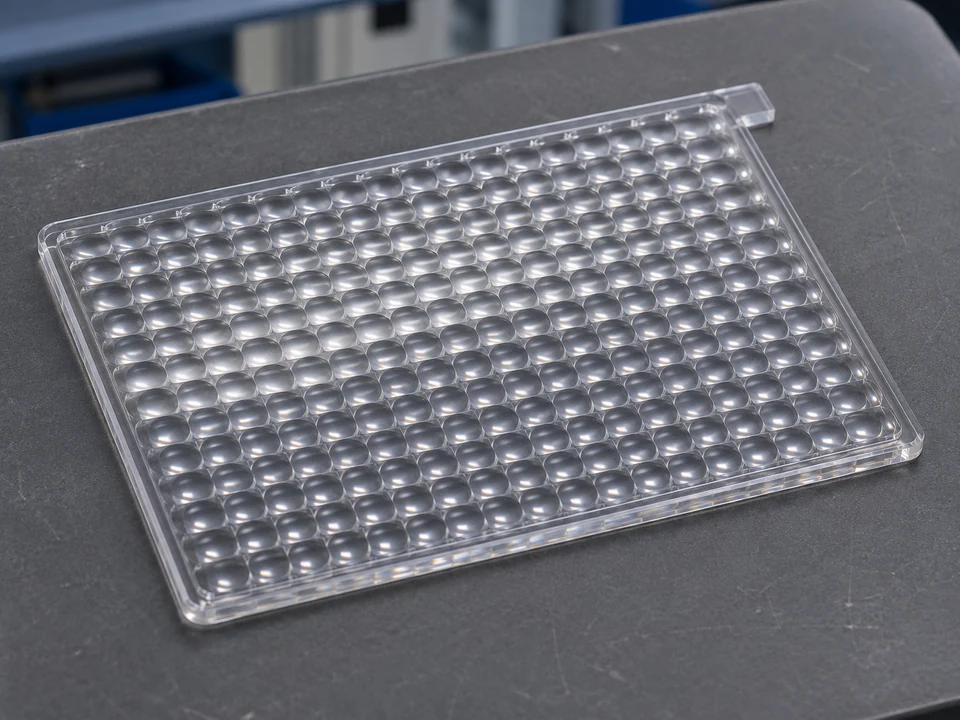
Supports freeform, Fresnel and microlens geometries.
Supports micron-scale optical features.
Optical surface quality for accurate downstream transfer.
High-accuracy metal-master profile control.
5-axis single-point diamond turning uses a diamond cutting tool and coordinated machine axes to create precision optical surfaces on a metal workpiece.
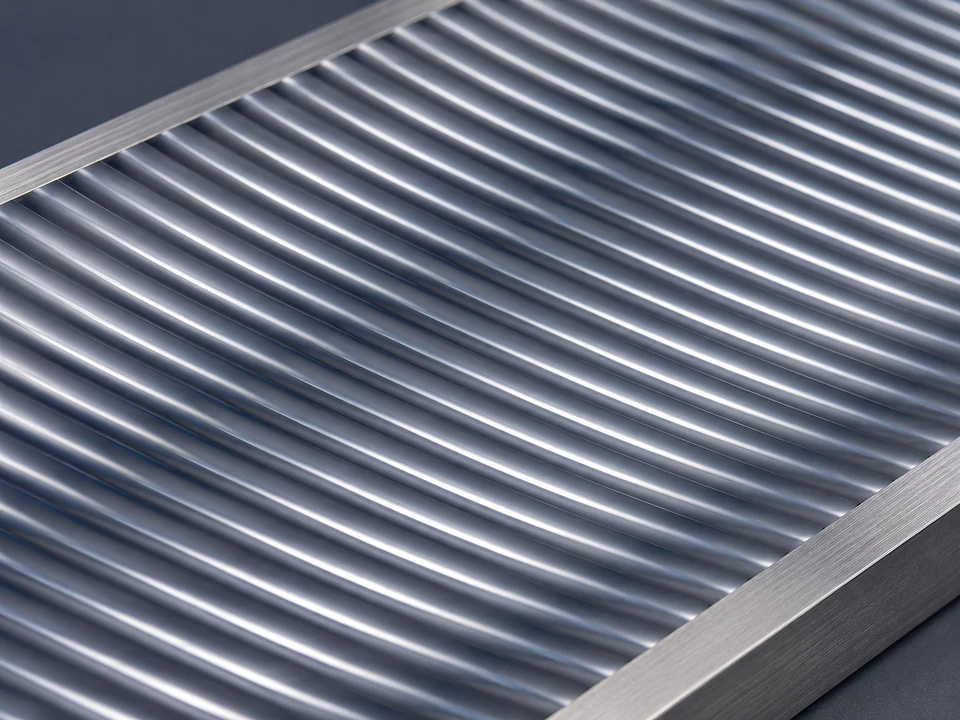
Unlike conventional turning that is mainly suited to rotationally symmetric surfaces, coordinated multi-axis motion can support freeform, Fresnel, cylindrical and microlens geometries.
| Method | Maximum Active Area | Form Accuracy | Complex Geometry | Smallest Feature | Cost |
|---|---|---|---|---|---|
| NanoFab 5-Axis Diamond Turning + CAM | Small–medium | Excellent (<0.1 µm form error) | Excellent | ~1 µm | Medium |
| General Diamond Turning | Small–medium | Excellent | Limited | >5 µm | Medium |
| E-Beam Lithography | Medium / wafer-scale | Excellent | Excellent | <100 nm | Very high |
| Direct Laser Writing | Medium | Good | Very good | ~0.5–2 µm | High |
| 2-Photon Polymerization | Very small / mm-scale | Excellent | Excellent / true 3D | ~100 nm | Very high |
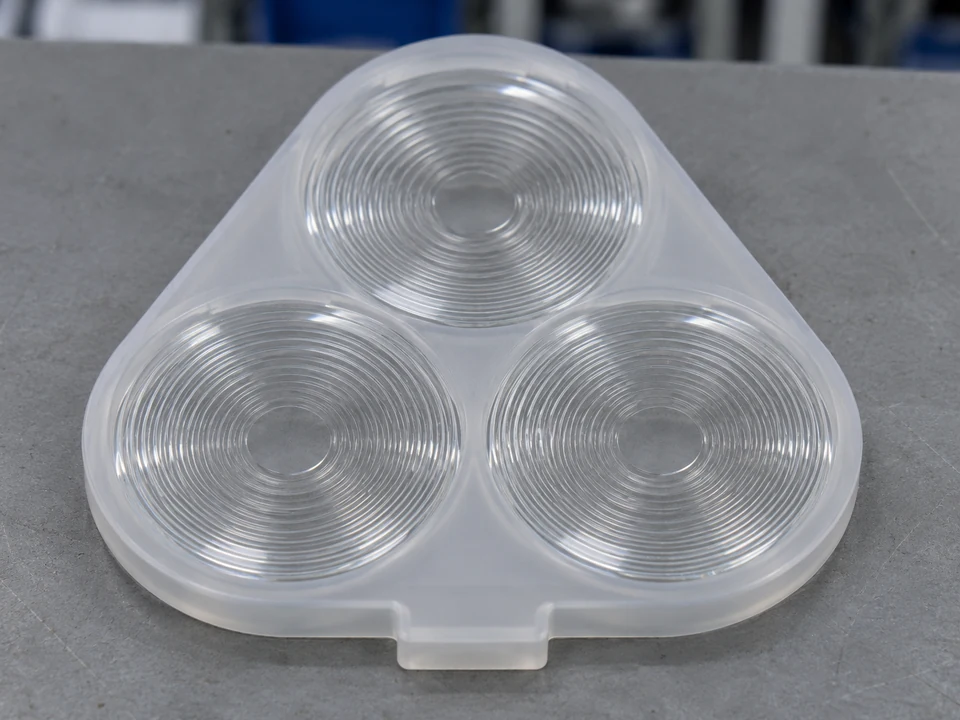
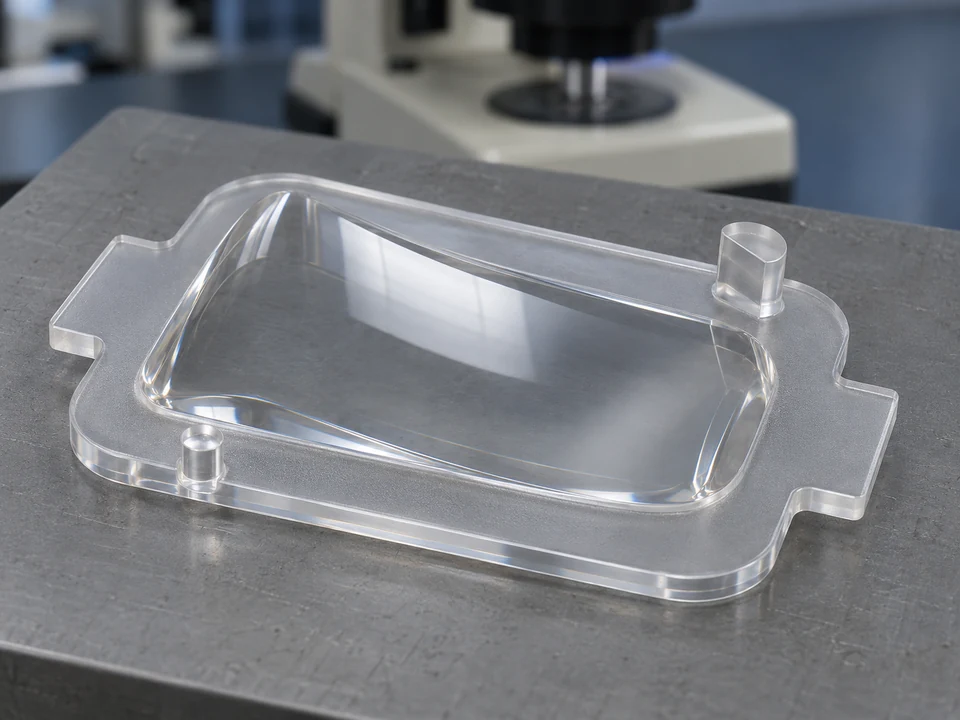
A production process suitable for polymer optics that require 3D geometry and selected undercut or assembly-supporting structures.
Current optical component and molded product size range.
Typical optical polymer material options.
Supports thicker structures and complex molded shapes.
Supports assembly and mechanical reference features.
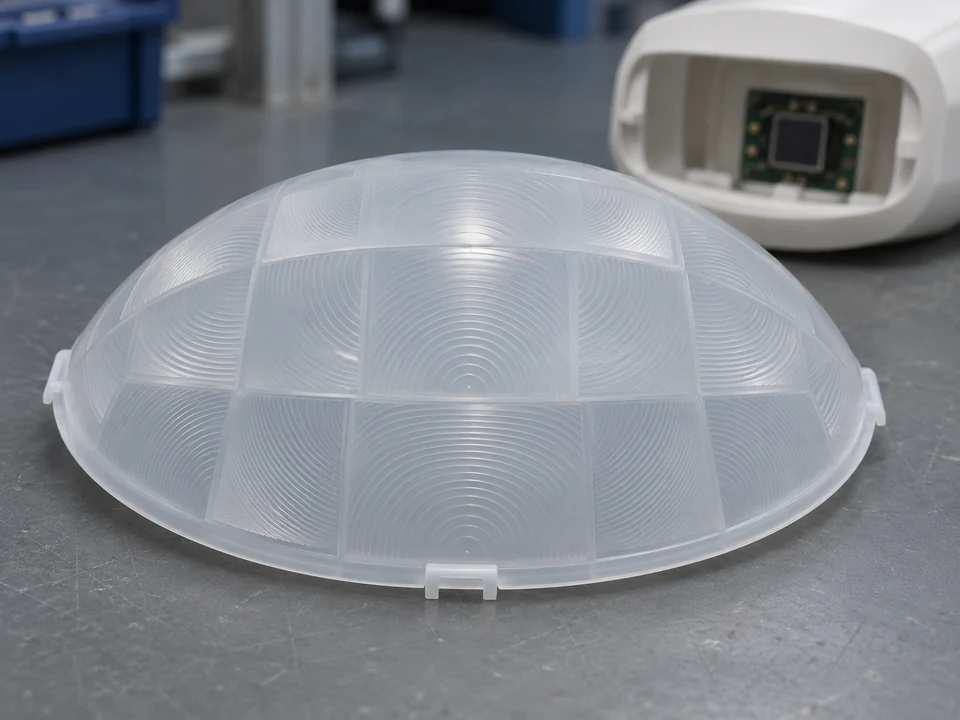
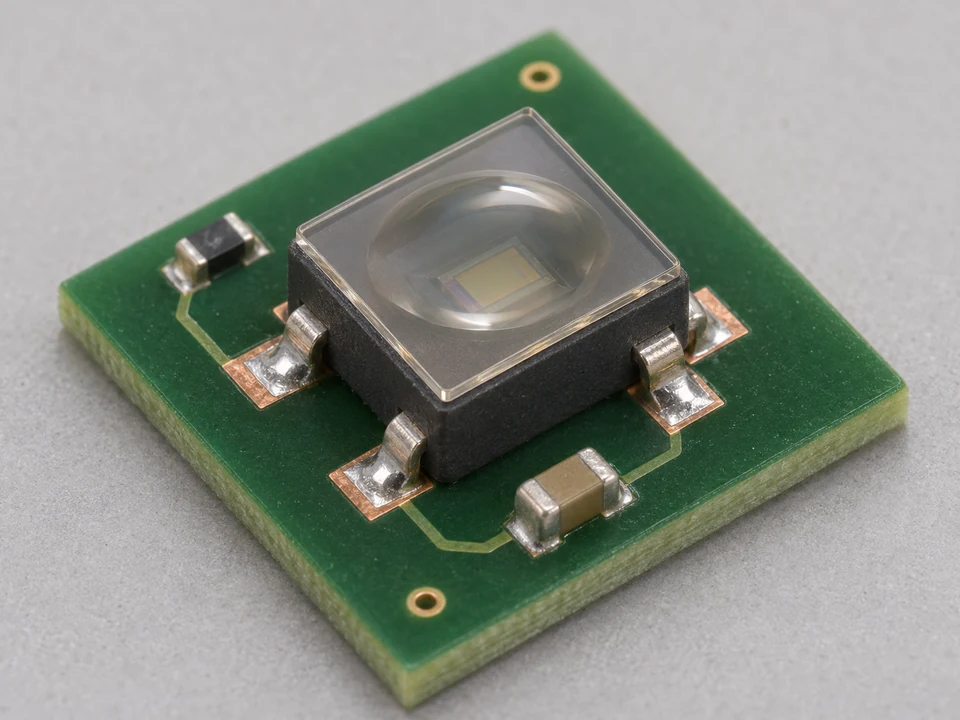
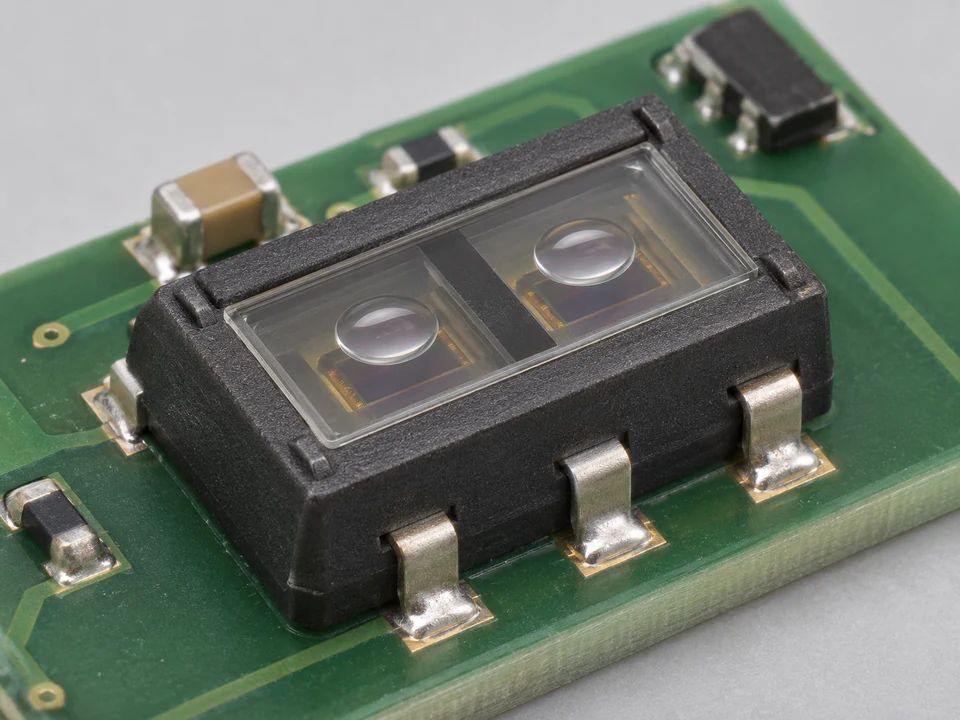
Micro injection molding forms polymer optics by injecting molten polymer into precision tooling. It is useful when the optical component needs a molded body, complex 3D surfaces, or features that help with downstream assembly.
The process is especially suitable when the design needs scalable production beyond prototype quantities.
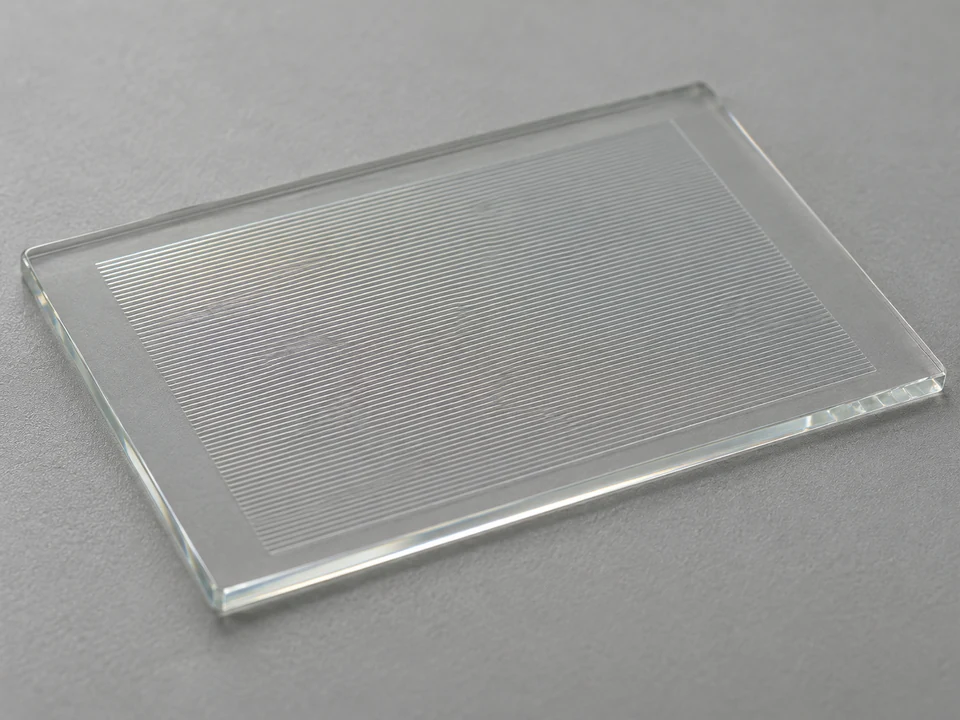
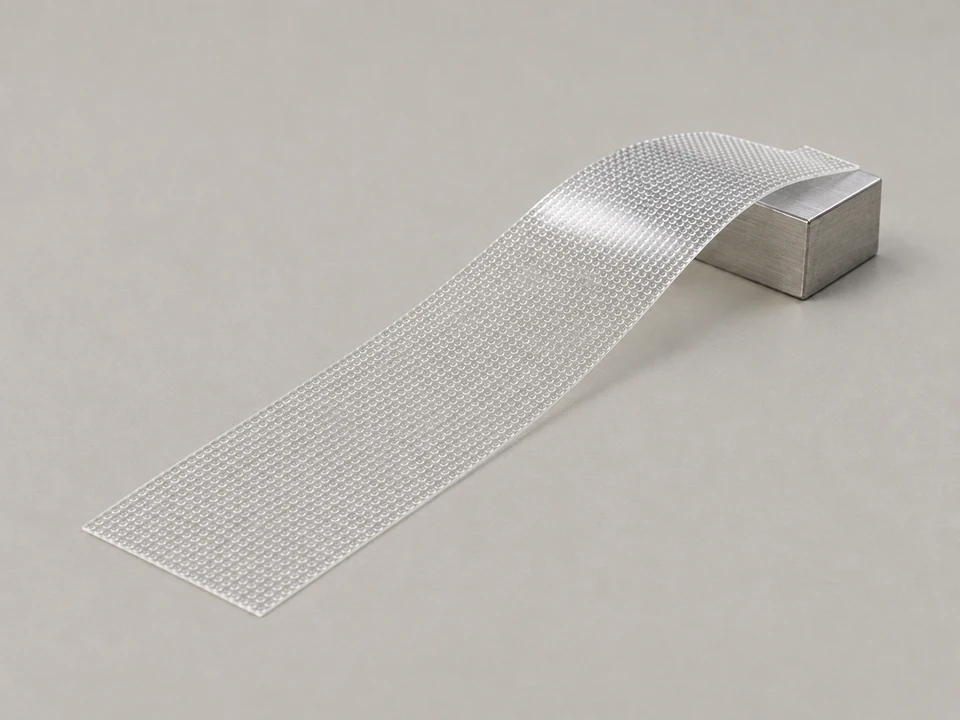
This production process is suited for thin polymer optics onto substrates such as PET sheets, silicon, or glass.
Selected epoxy and acrylate resin systems.
Substrate options depending on application needs.
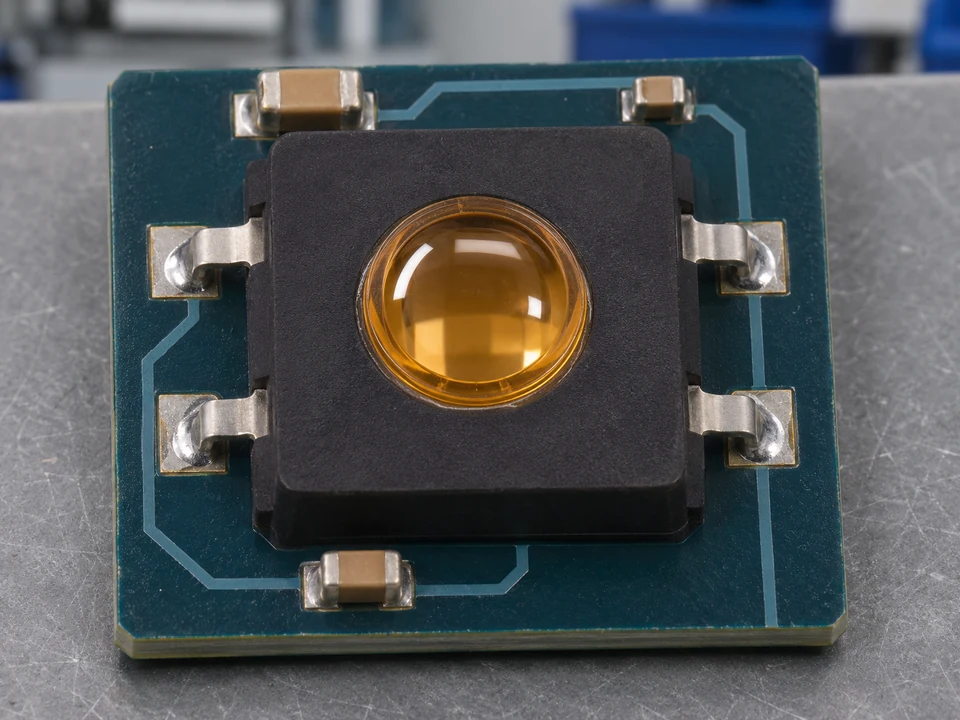
Selected reflow-compatible polymer optics.
Scalable NIL production capability.
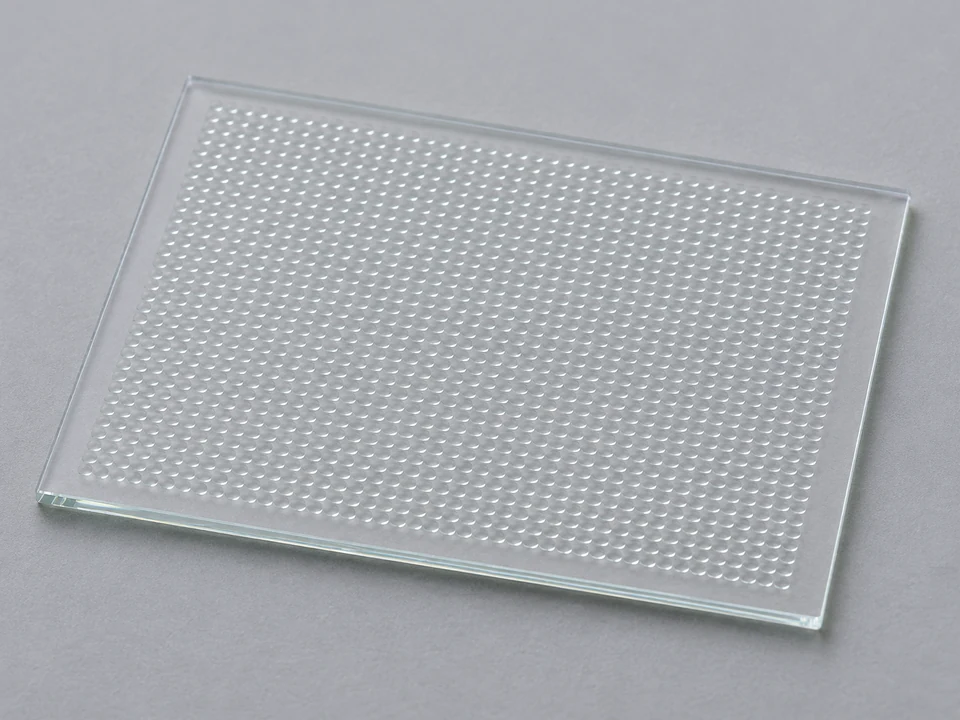
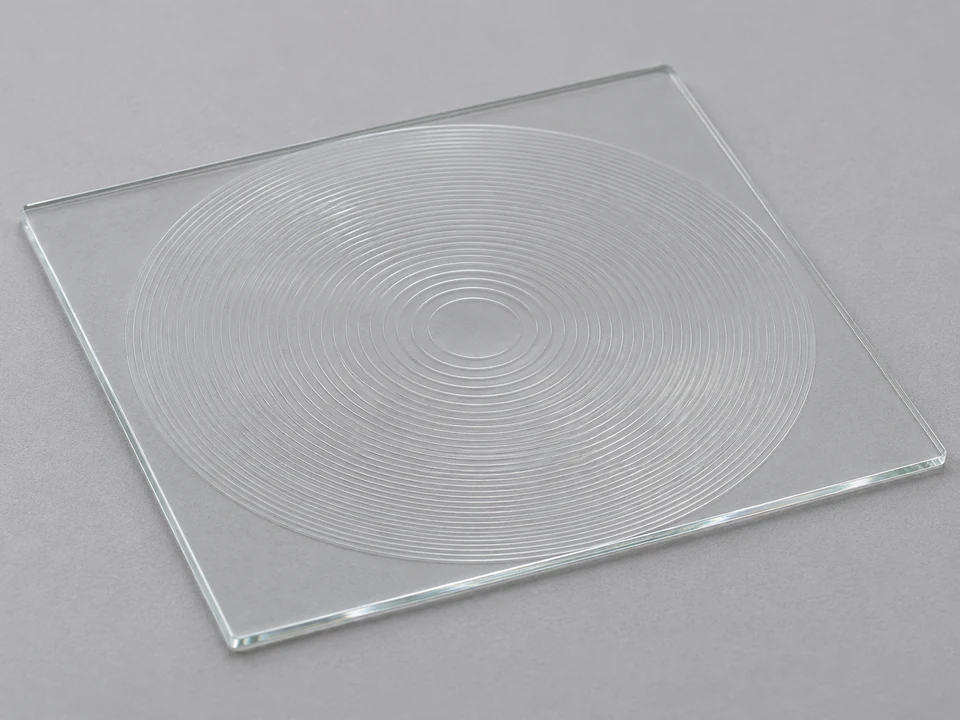
NIL transfers fine surface microstructures from an accurate master into selected epoxy or acrylate resin systems. It is suited for thin polymer optics where the optical function is carried mainly by the replicated surface.
Share your application, optical design, specifications, geometry, material needs and production target. NanoFab can support the right path from review and tooling to scalable production.