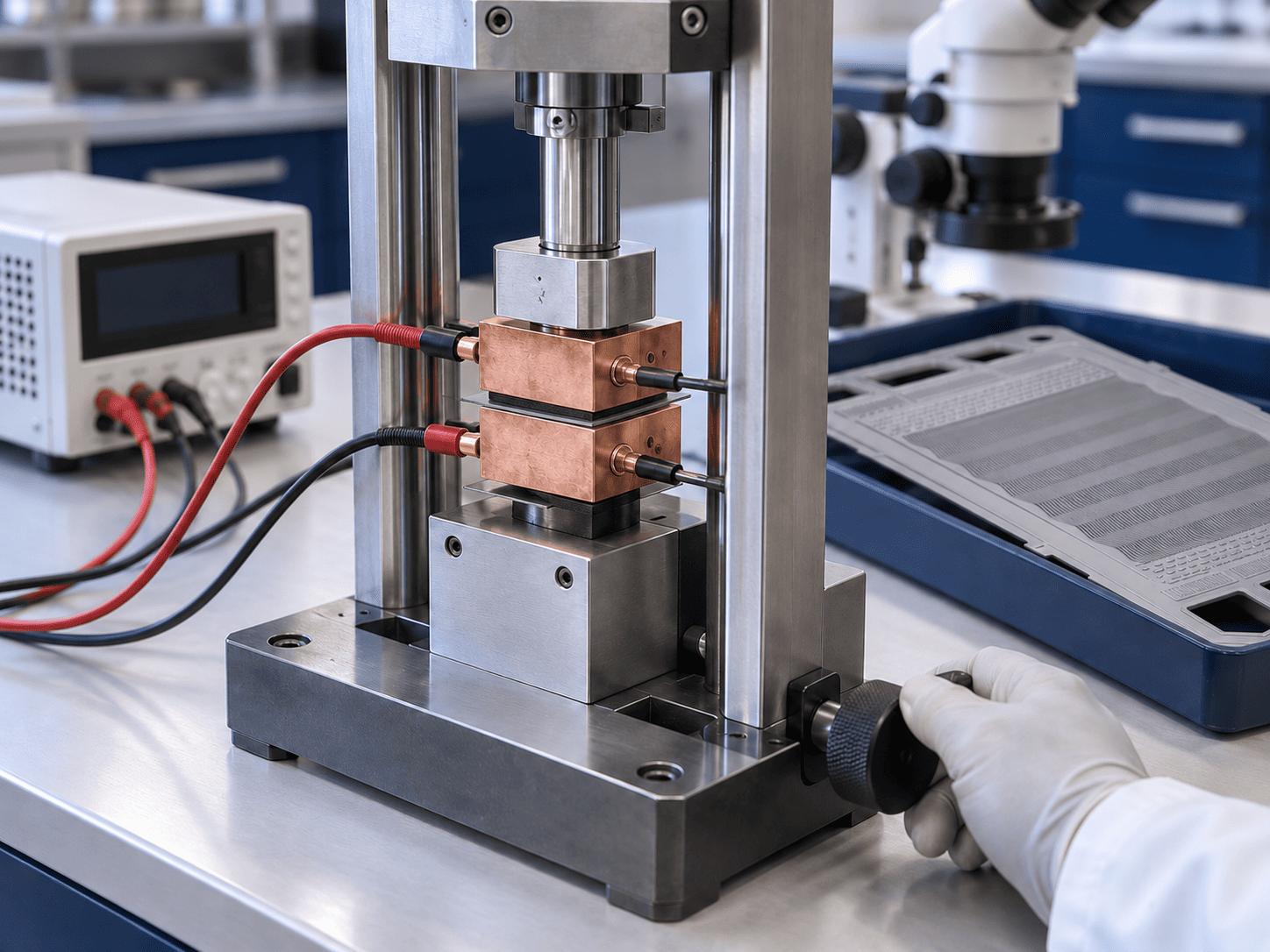
Bring your metallic bipolar plate designs into cost-effective mass production with SydroPLATE™ contract manufacturing. Precision forming, precious-metal-free conductive coatings and integrated sealing support fuel cell efficiency and durability, backed by automated production and automotive-grade quality control. Available as full-service manufacturing or selected capabilities for your existing supply chain.
Your next PEM fuel cell program needs to deliver efficient power for longer, at a cost that supports commercial deployment. For the bipolar plate, that means keeping fine flow channels consistent, electrical losses low and gas and coolant paths sealed as production volumes grow.
SydroPLATE™ helps you meet that challenge through precision manufacturing, proprietary surface engineering and integrated sealing. Ultrathin, precious-metal-free coatings and automated production address material use and manufacturing cost, while inspection and traceability support the finished-plate quality your stack requires.
From first samples to finished, coated and sealed plates, SydroPLATE™ connects precision manufacturing with Sydrogen’s proprietary surface expertise. Full-service and modular support give your team access to forming, joining, SydroCOAT™ coatings, sealing and inspection for high-volume PEM fuel cell production.
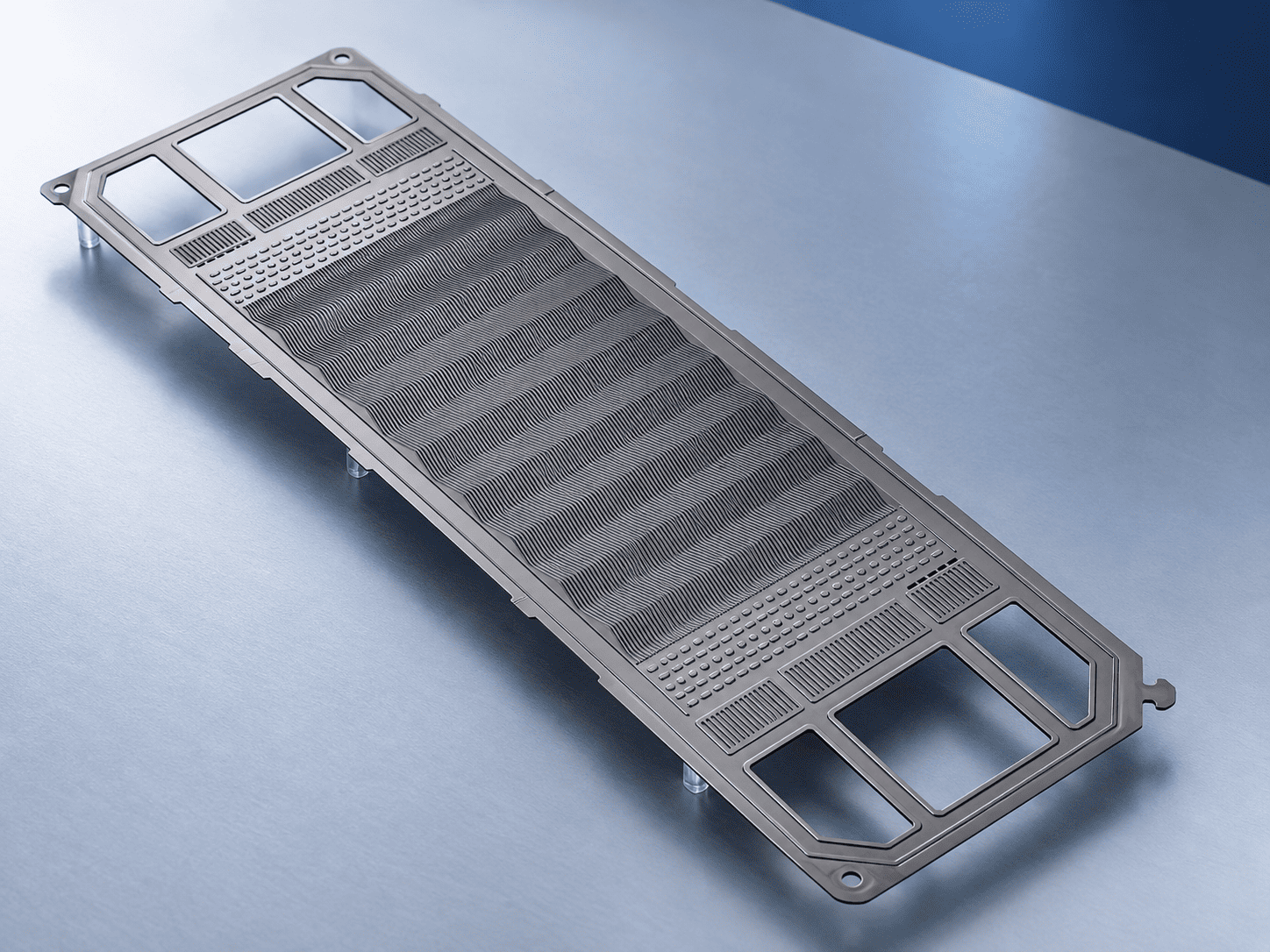
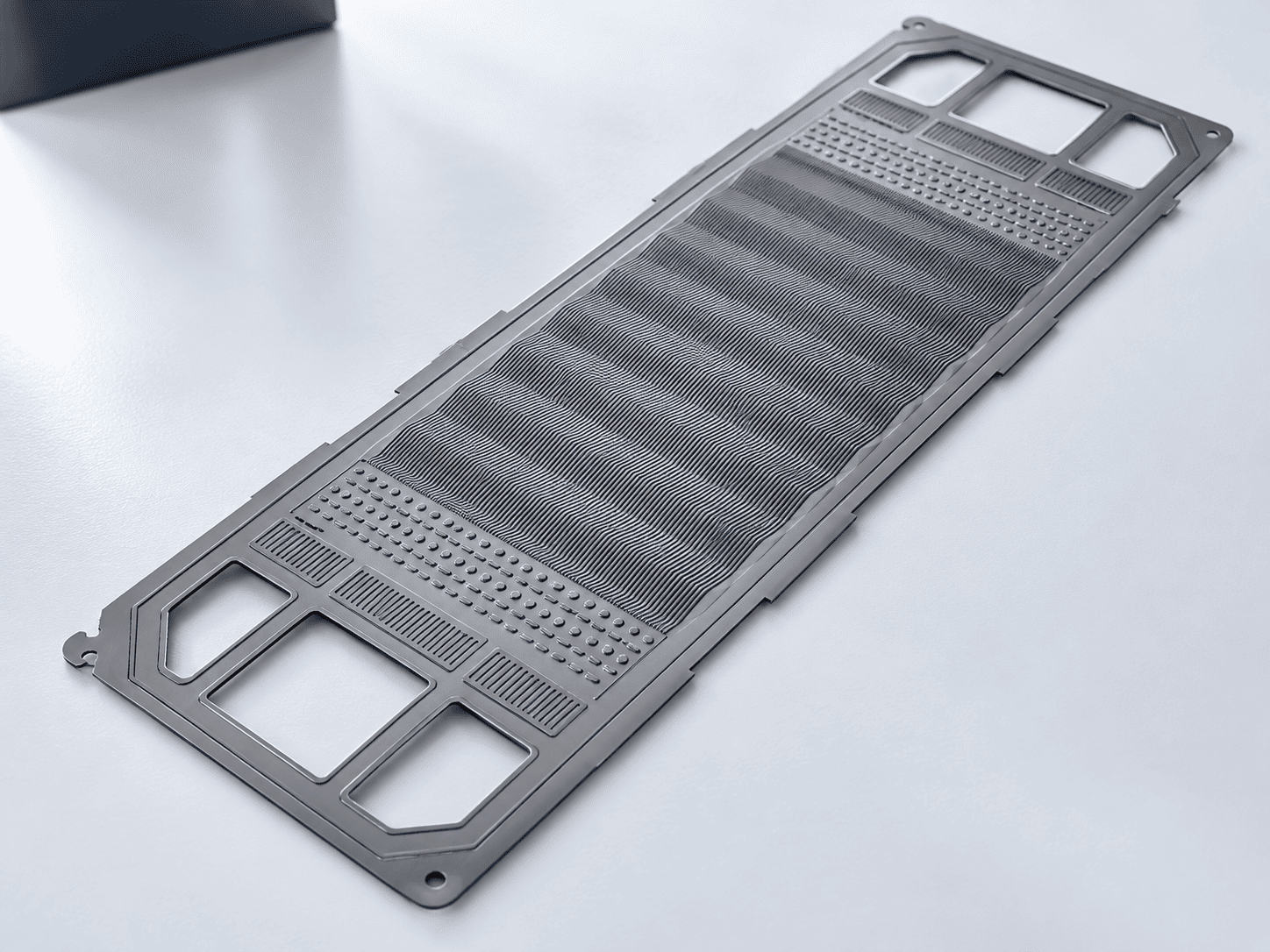
Your flow-field design becomes a production-ready metal component through controlled foil selection, servo-driven stamping and automated laser welding. SydroPLATE™ preserves the channel and sealing features that support reactant distribution, coolant flow and stack assembly. Multistage cleaning and post-weld leak testing prepare the assembly for coating and seal integration.
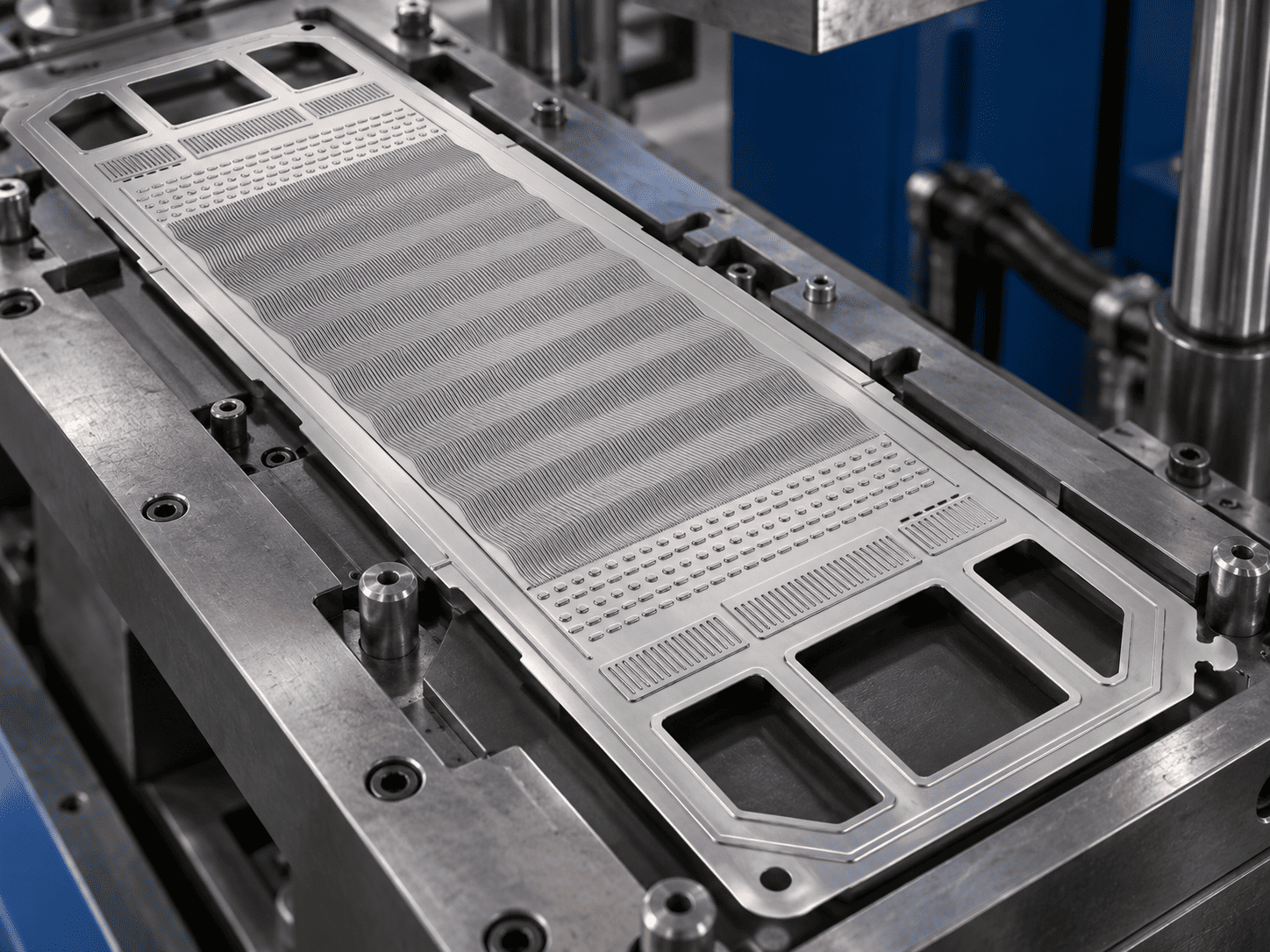
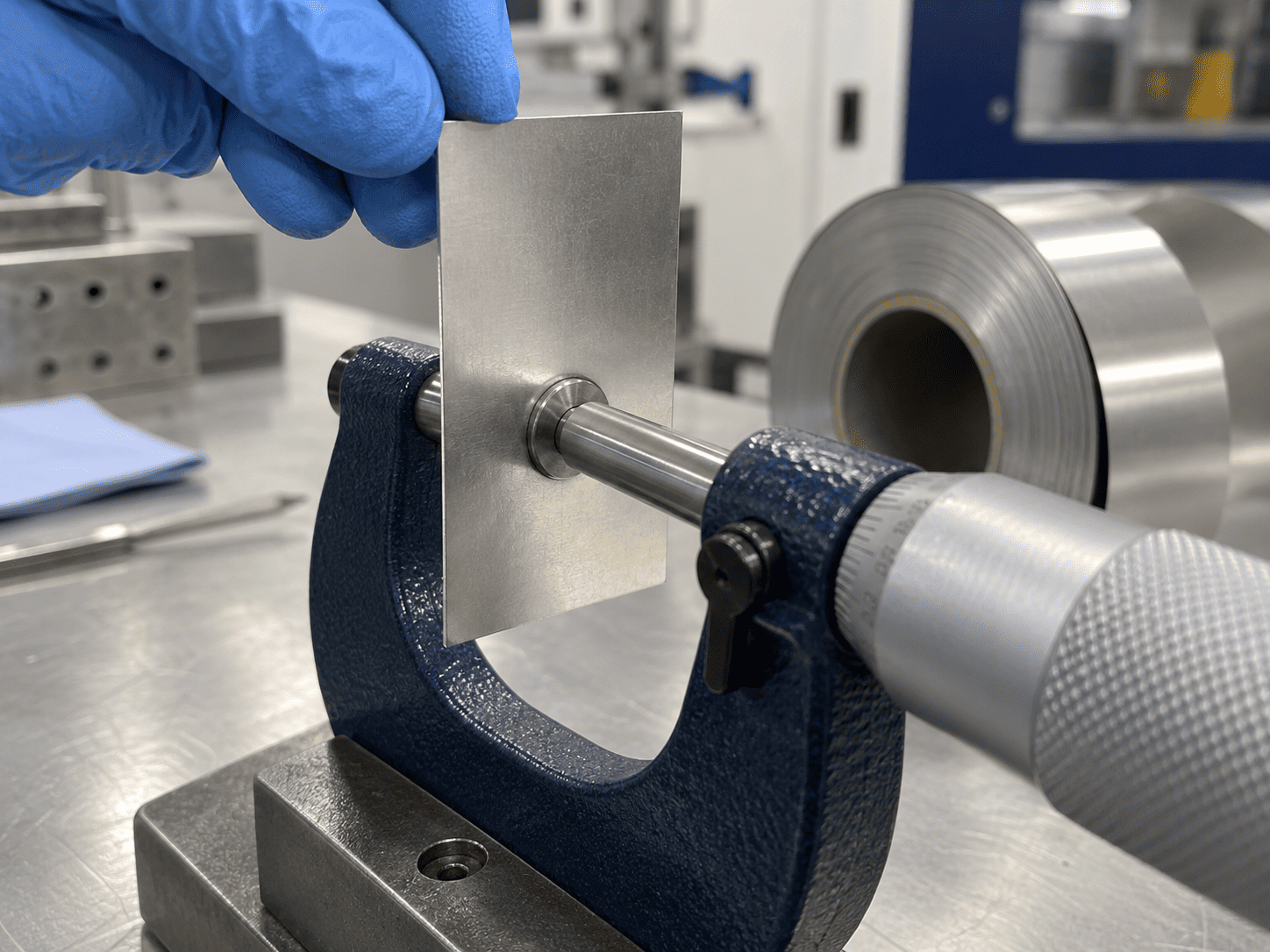
0.075–0.10 mm SUS304, SUS316L and titanium foils support thin plate architectures. Incoming thickness control of ±0.002 mm helps keep the starting material consistent for forming and assembly.
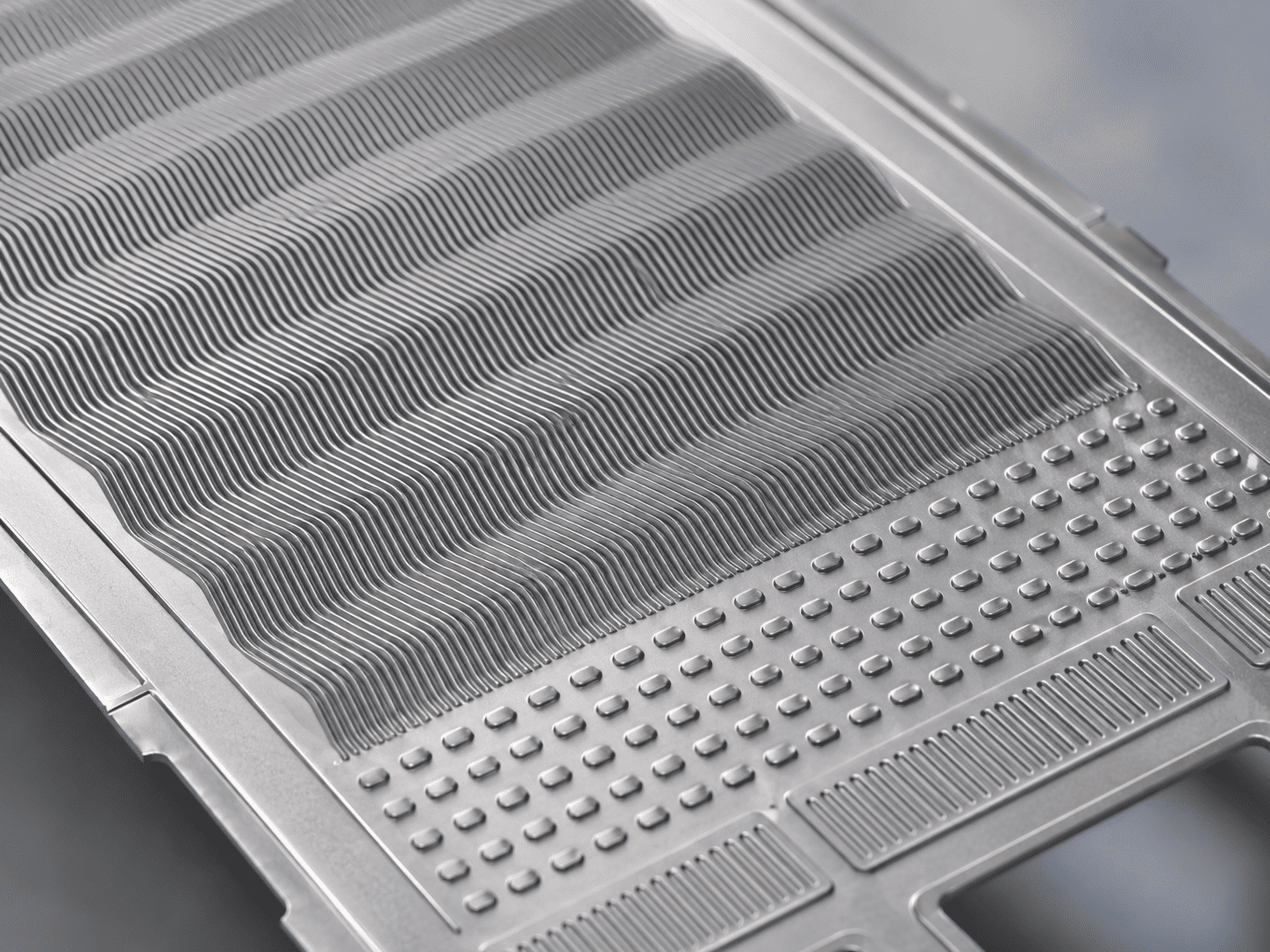
Servo-controlled stamping reproduces the channels and lands that distribute reactants and coolant. Geometry and flatness checks help maintain flow paths and contact surfaces across plates supplied for your stack.
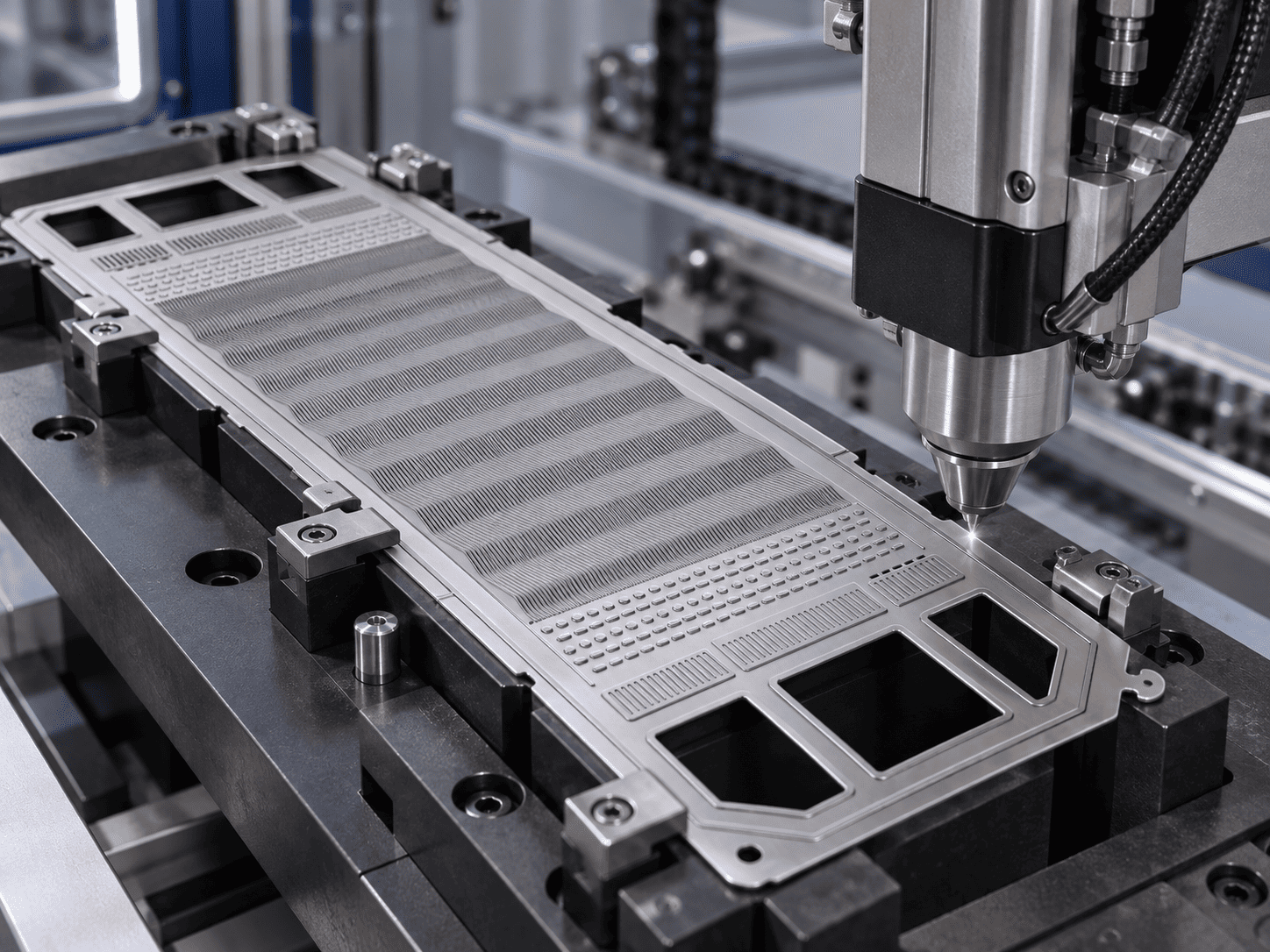
Automated laser welding produces 0.15–0.25 mm seams to join the plate halves. Controlled seam formation preserves the joined assembly and its internal fluid boundaries for coating and sealing.
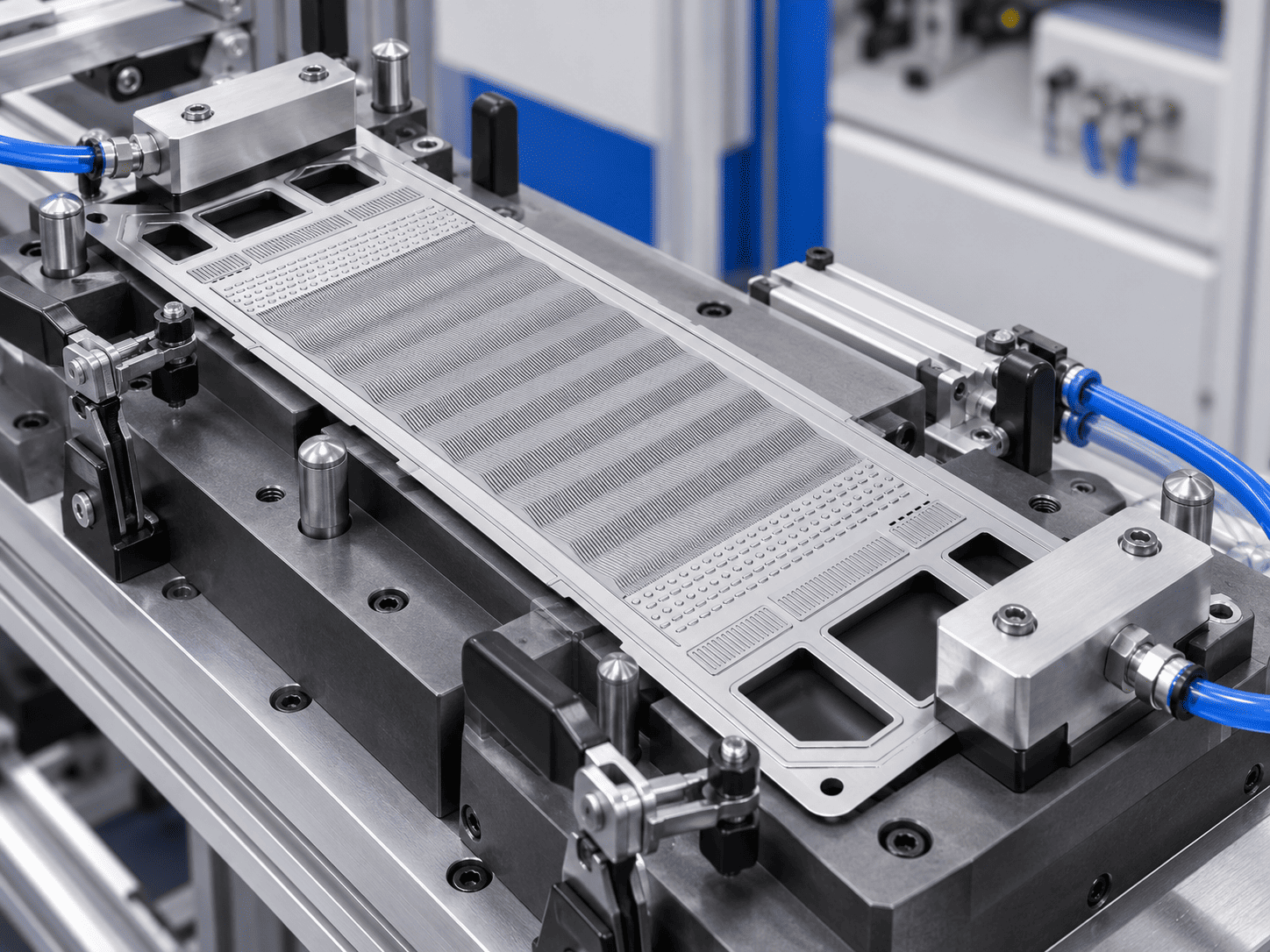
Post-weld leak testing identifies nonconforming assemblies before coating and gasket integration. Early detection helps avoid adding material and processing cost to plates that cannot progress.
Manufacturing dimensions and tolerances depend on plate geometry, material and tooling.
SydroCOAT™ brings precious-metal-free, conductive corrosion protection to your metallic PEM fuel cell bipolar plates. Its SydroGEM™, SydroDIAMOND® and SydroSTAR™ coatings use Sydrogen’s Filtered Cathodic Vacuum Arc (FCVA) technology to form dense, ultrathin protective films. Integrated into SydroPLATE™ manufacturing, these coatings help preserve electrical efficiency, limit metal-ion contamination and support longer component life, with lower coating material requirements for high-volume production.
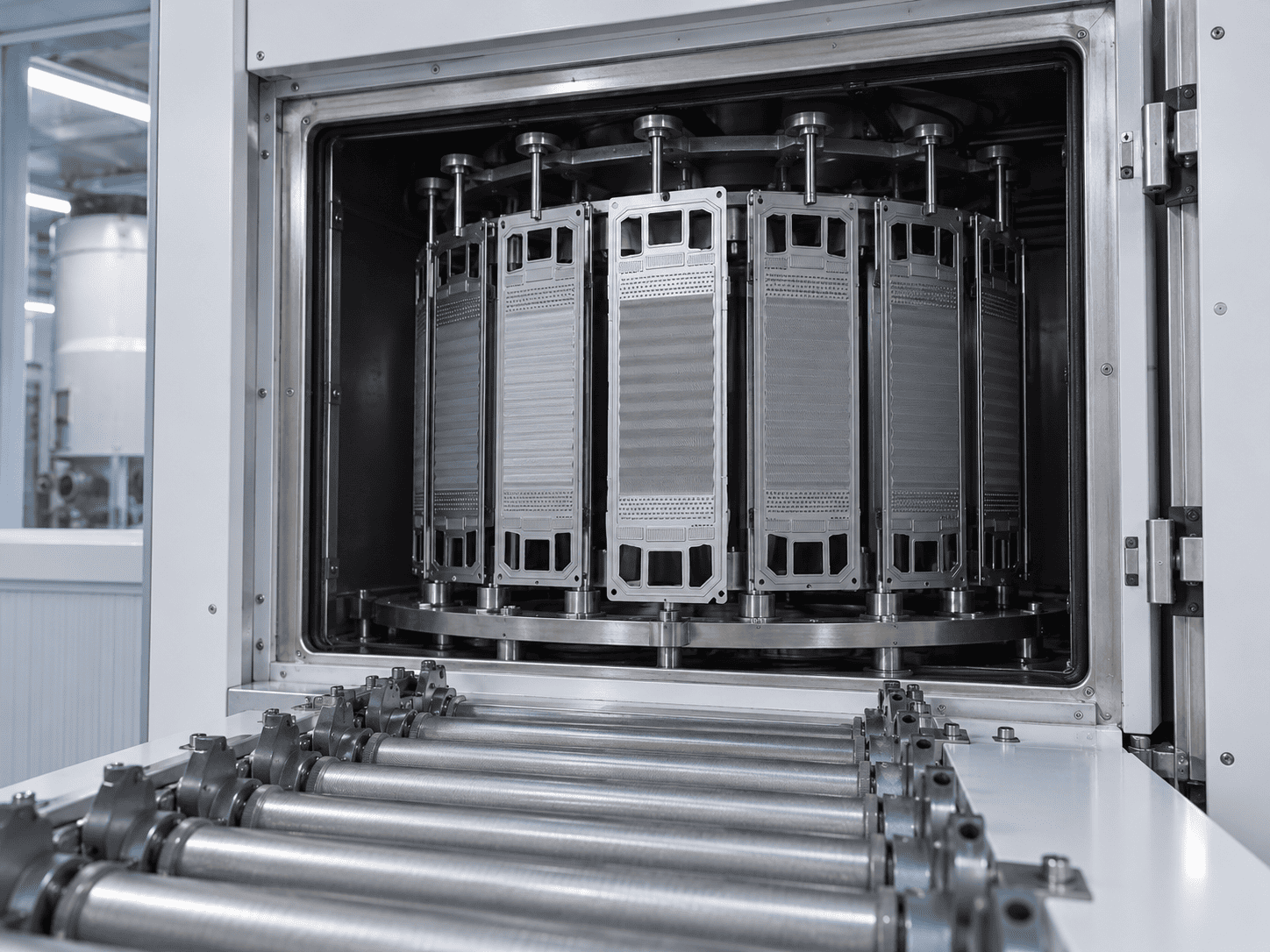
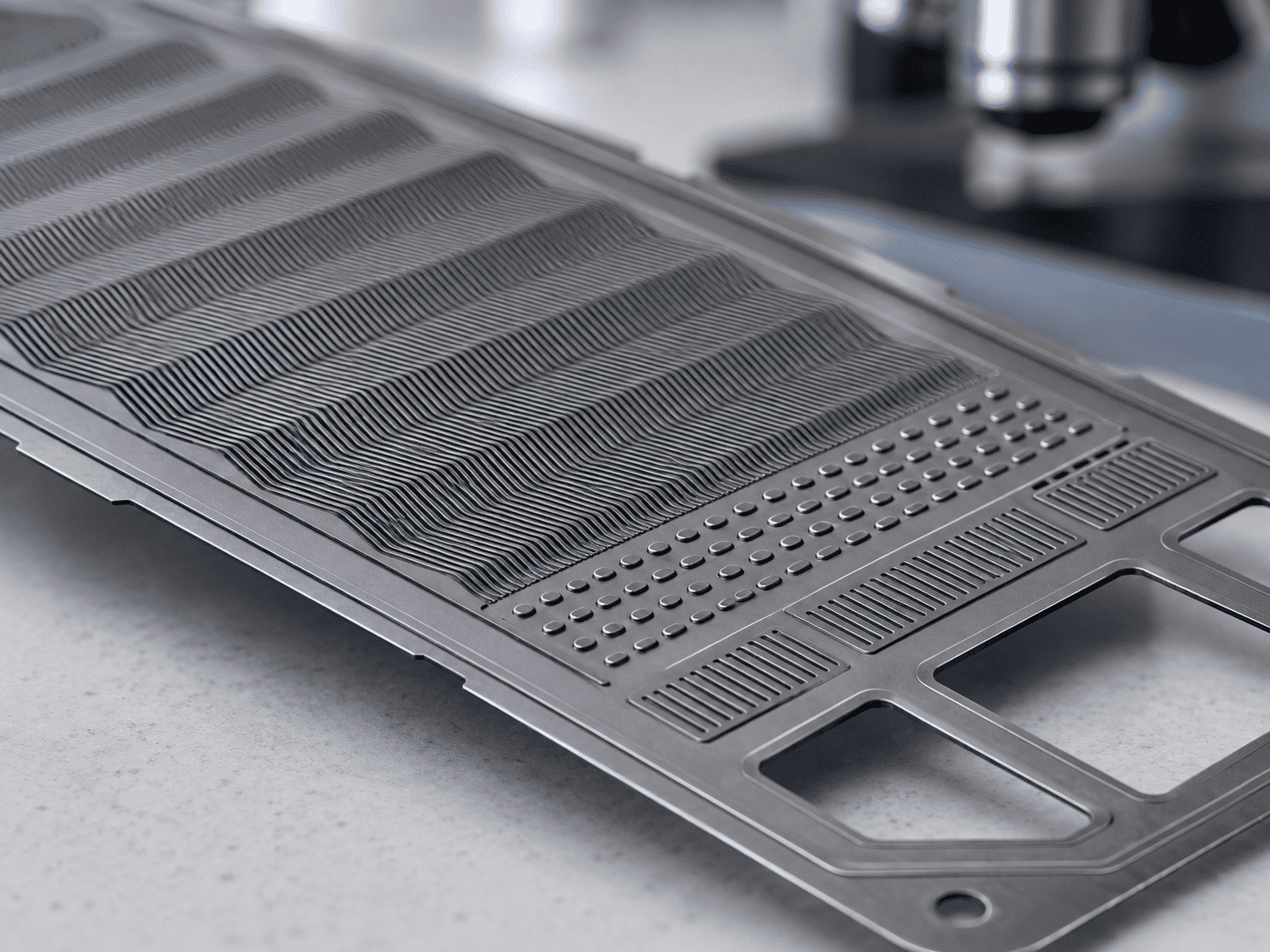
Protect your bipolar plates without gold or other precious metals in the coating. SydroCOAT™ combines conductive corrosion protection with ultrathin film structures, helping reduce coating material requirements and support cost-effective high-volume manufacturing.
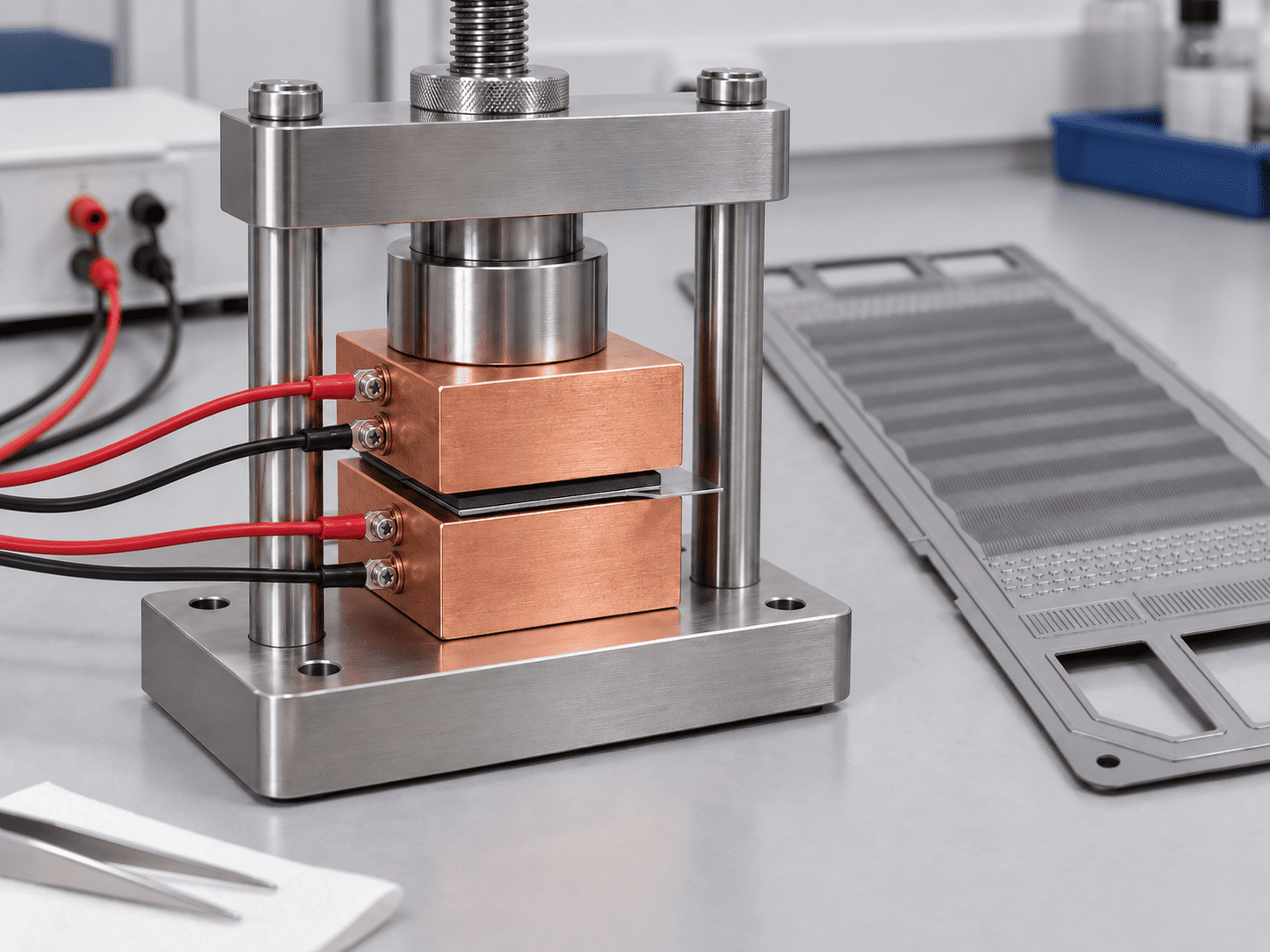
SydroCOAT™ coatings deliver ≤2 mΩ·cm² initial contact resistance at 1.4 MPa and ≤5 mΩ·cm² after corrosion testing. Low, stable resistance helps limit electrical losses between the bipolar plate and gas diffusion layer, supporting efficient stack operation.
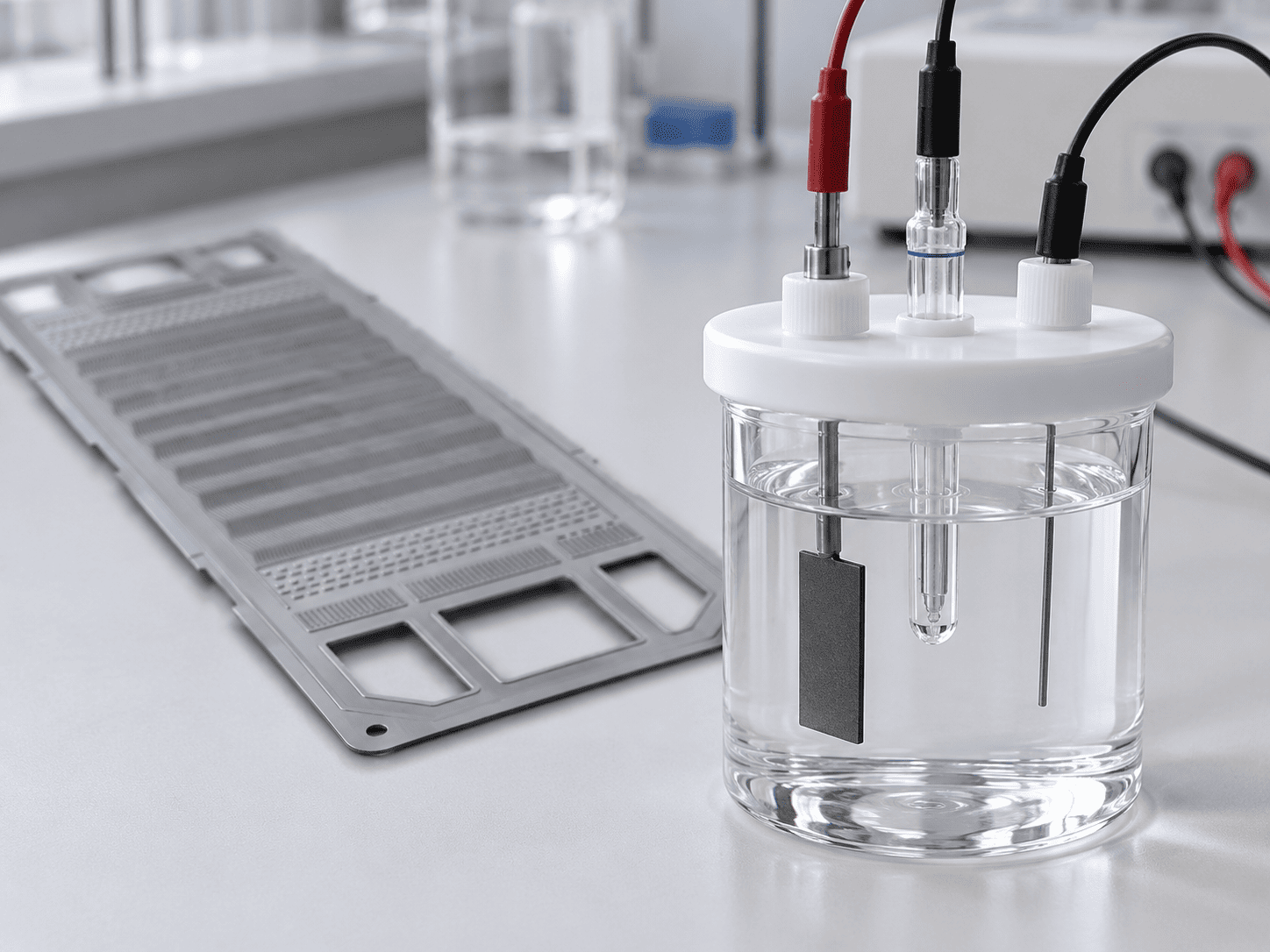
Dense FCVA films provide a barrier against corrosion and metallic-ion release. This helps protect the membrane electrode assembly from contamination and preserve the conductive surface your stack needs for sustained performance over its operating life.
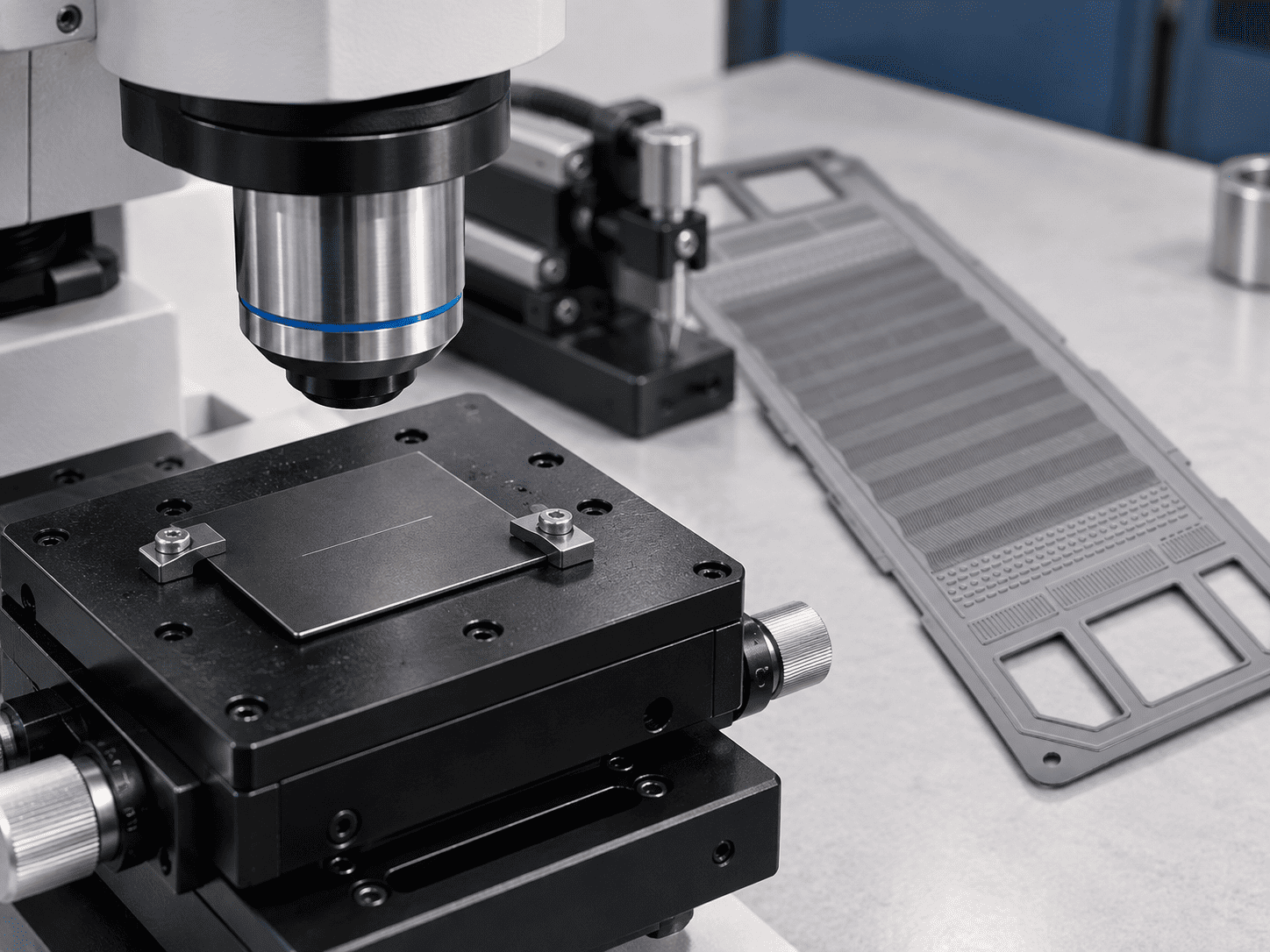
High-energy ion deposition promotes strong bonding between the coating and metallic plate. An adherent, uniform protective film helps maintain surface integrity through demanding operation, supporting lasting corrosion protection across the formed plate.
Performance specifications vary by coating grade, substrate and application conditions.
SydroPLATE™ combines liquid silicone rubber (LSR) overmolding and preformed gasket bonding with coated-plate manufacturing. Precisely positioned seals keep hydrogen, air and coolant in their intended paths while reducing loose-gasket handling in your assembly process. Coating compatibility, seal adhesion and leakage verification are addressed together for the finished component.
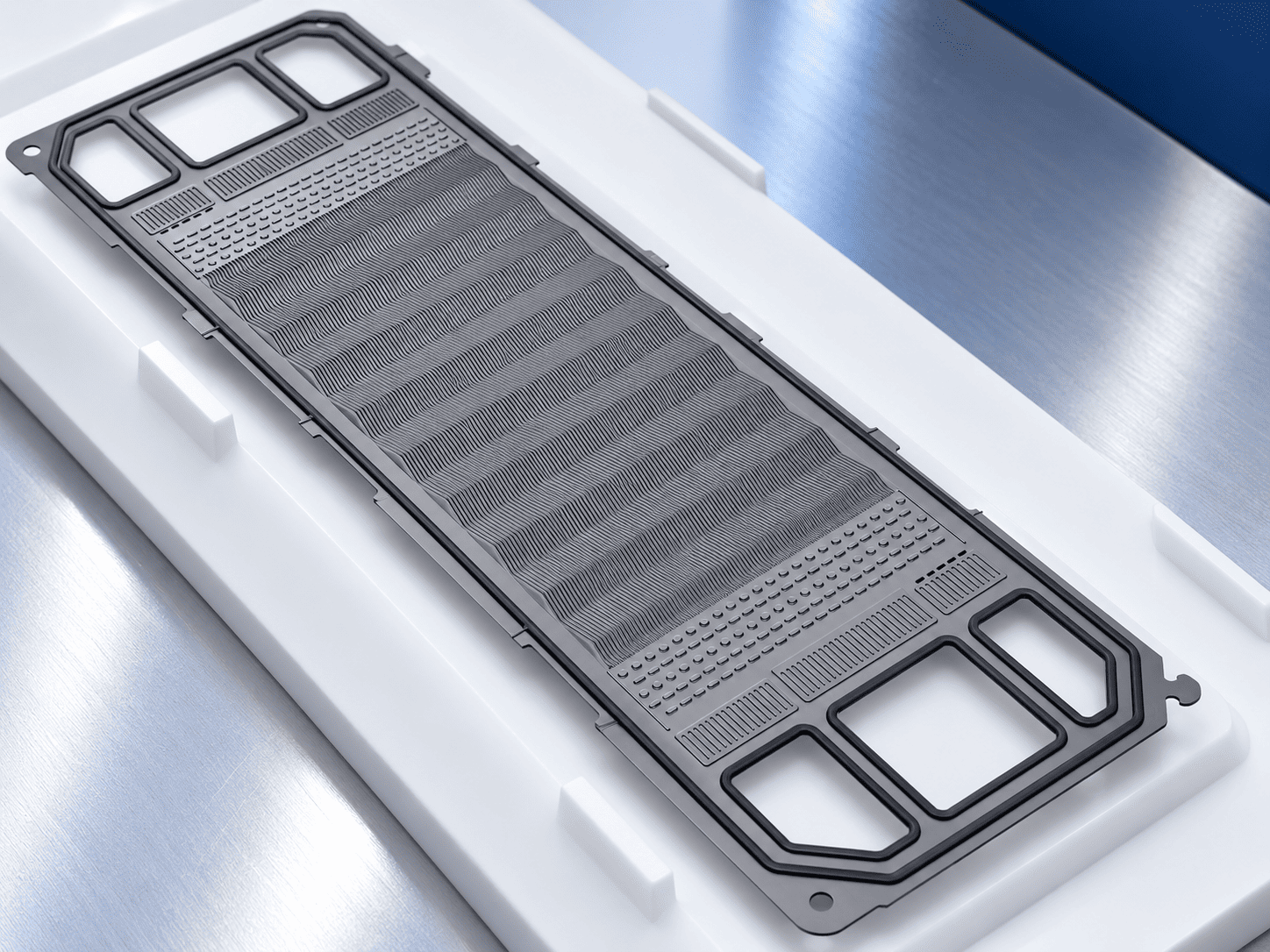
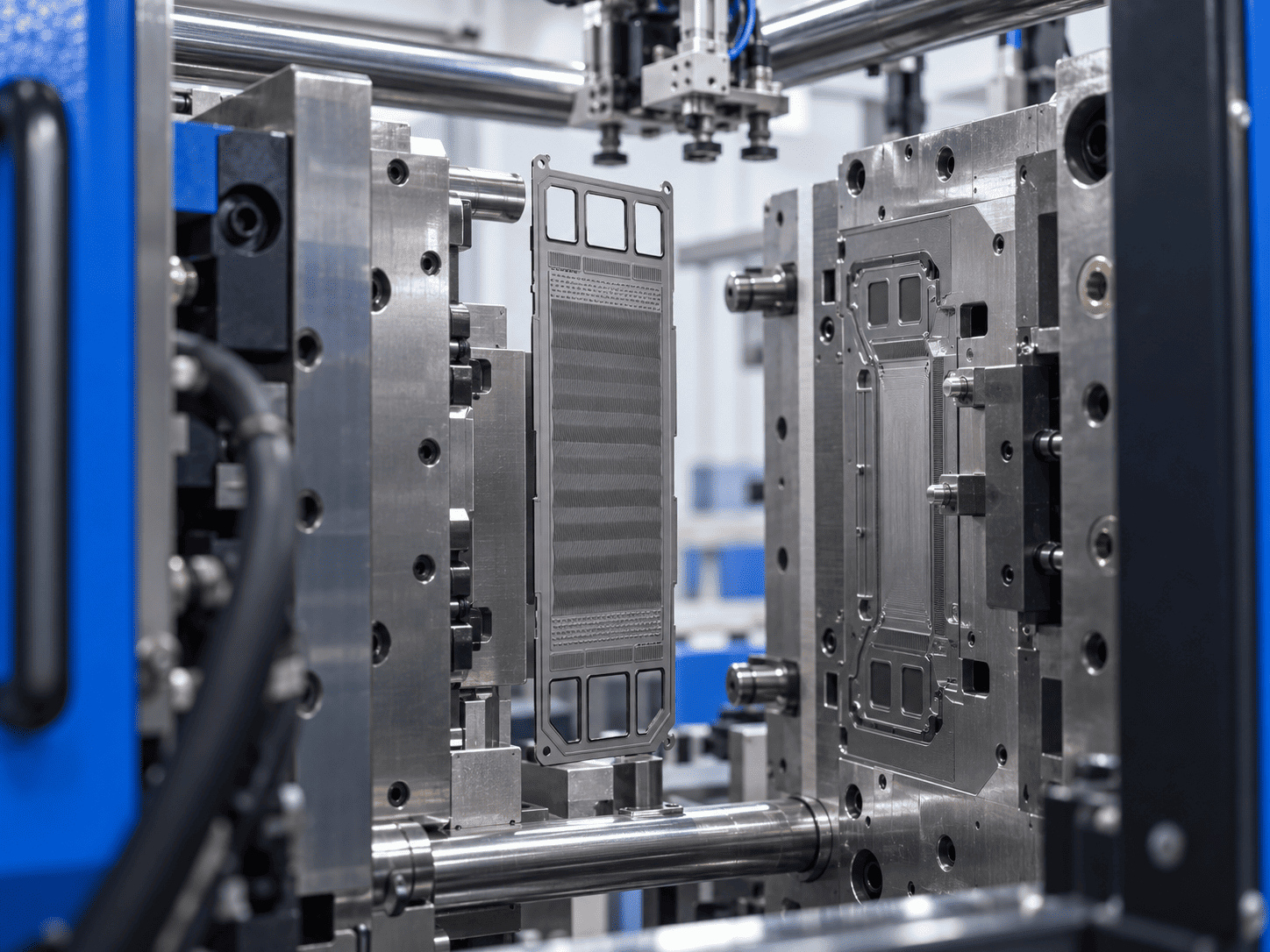
LSR overmolding forms the gasket directly on the plate with 0.01–0.015 mm dimensional control. Automated molding supports consistent seal geometry and reduces separate gasket placement during stack assembly.
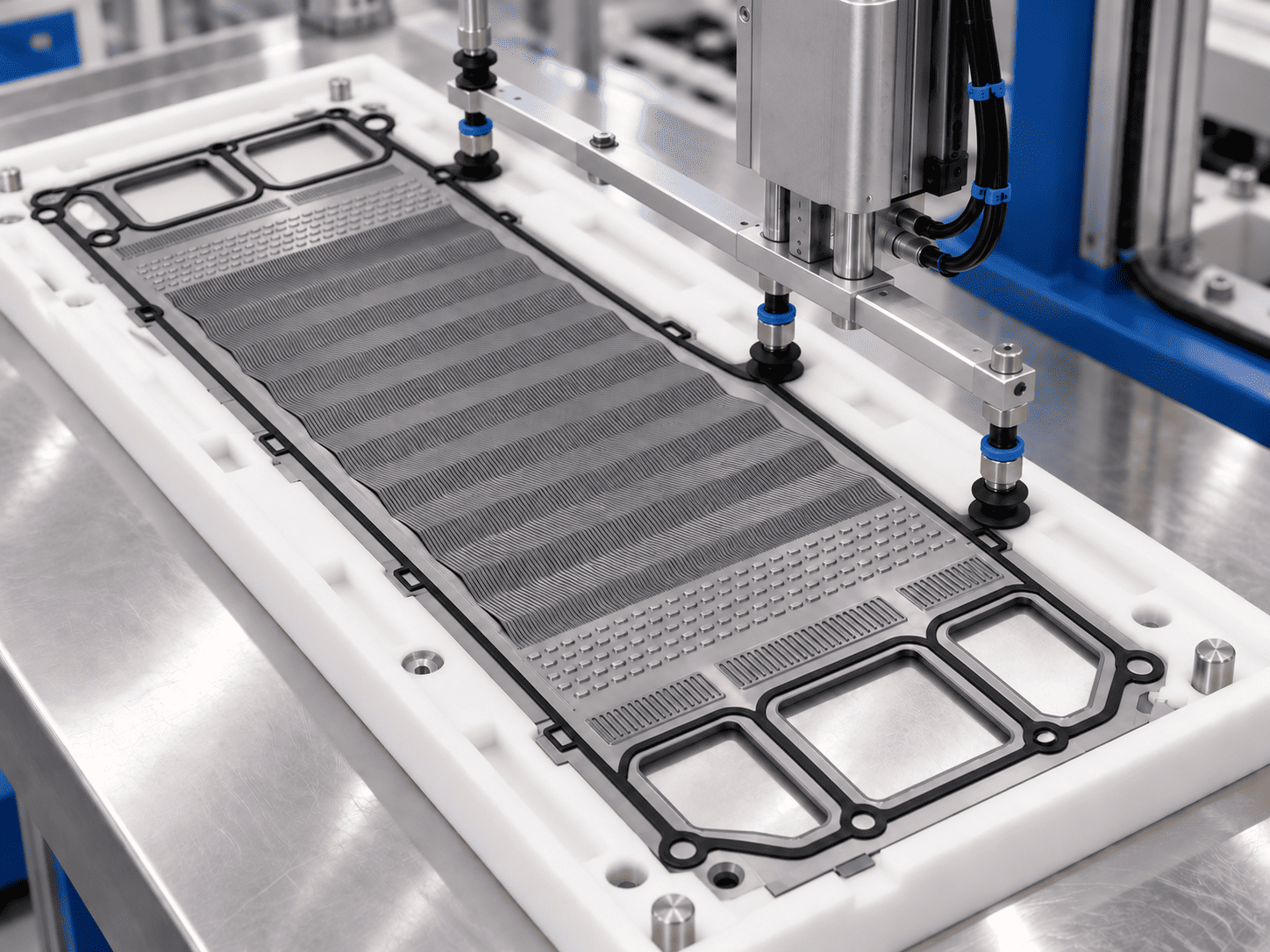
Automated dispensing and curing attach preformed elastomer gaskets, with ±0.015–0.02 mm thickness control. The process accommodates different sealing materials and geometries while maintaining controlled gasket placement.
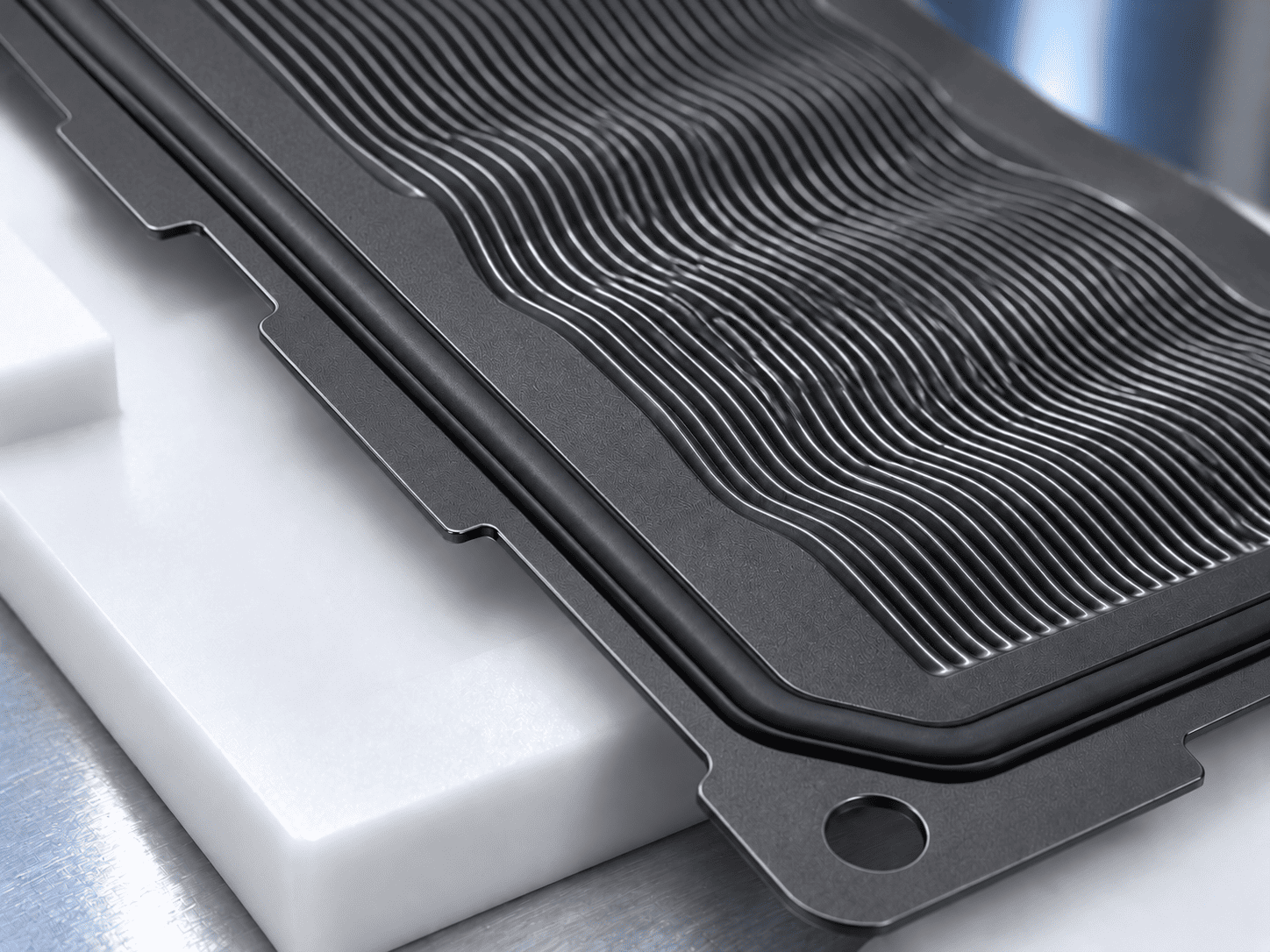
Sydrogen’s surface and sealing expertise supports LSR adhesion to coated bipolar plates. Evaluating the bonded interface helps your team align seal retention with stack compression and operating conditions.
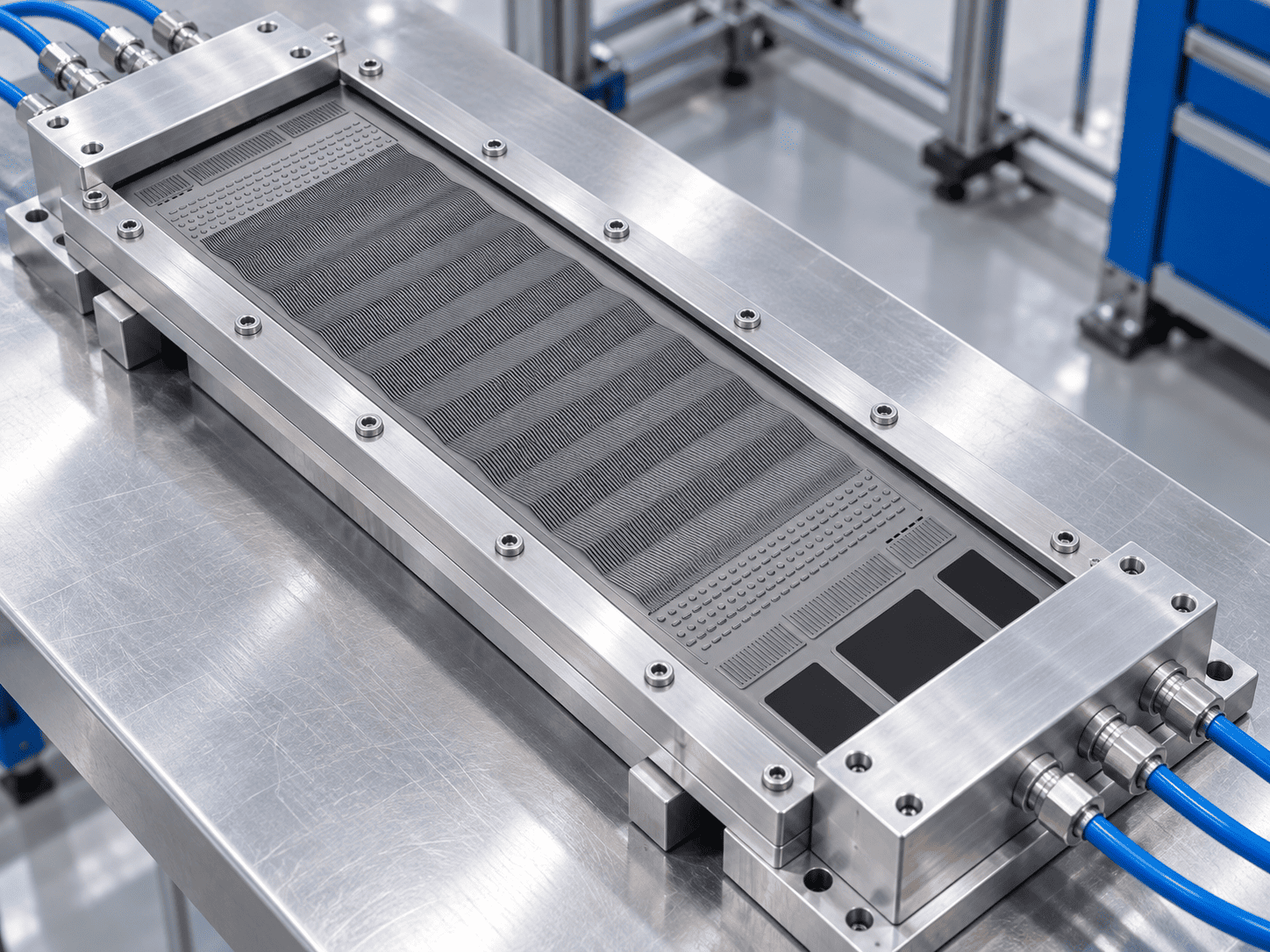
Every bonded gasket assembly is leak-tested before release to help protect gas and coolant separation. Dimensional and visual checks confirm gasket position, giving your assembly team an inspected, integrated component.
Sealing dimensions and performance depend on gasket geometry, materials and tooling. Leak acceptance criteria are application-specific.
Automated optical inspection, leak testing and Manufacturing Execution System (MES) records give your team visibility into the quality of every production lot. SydroPLATE™ combines early defect detection with traceable process history and final component checks to support supplier qualification, investigate deviations and maintain finished-plate quality.
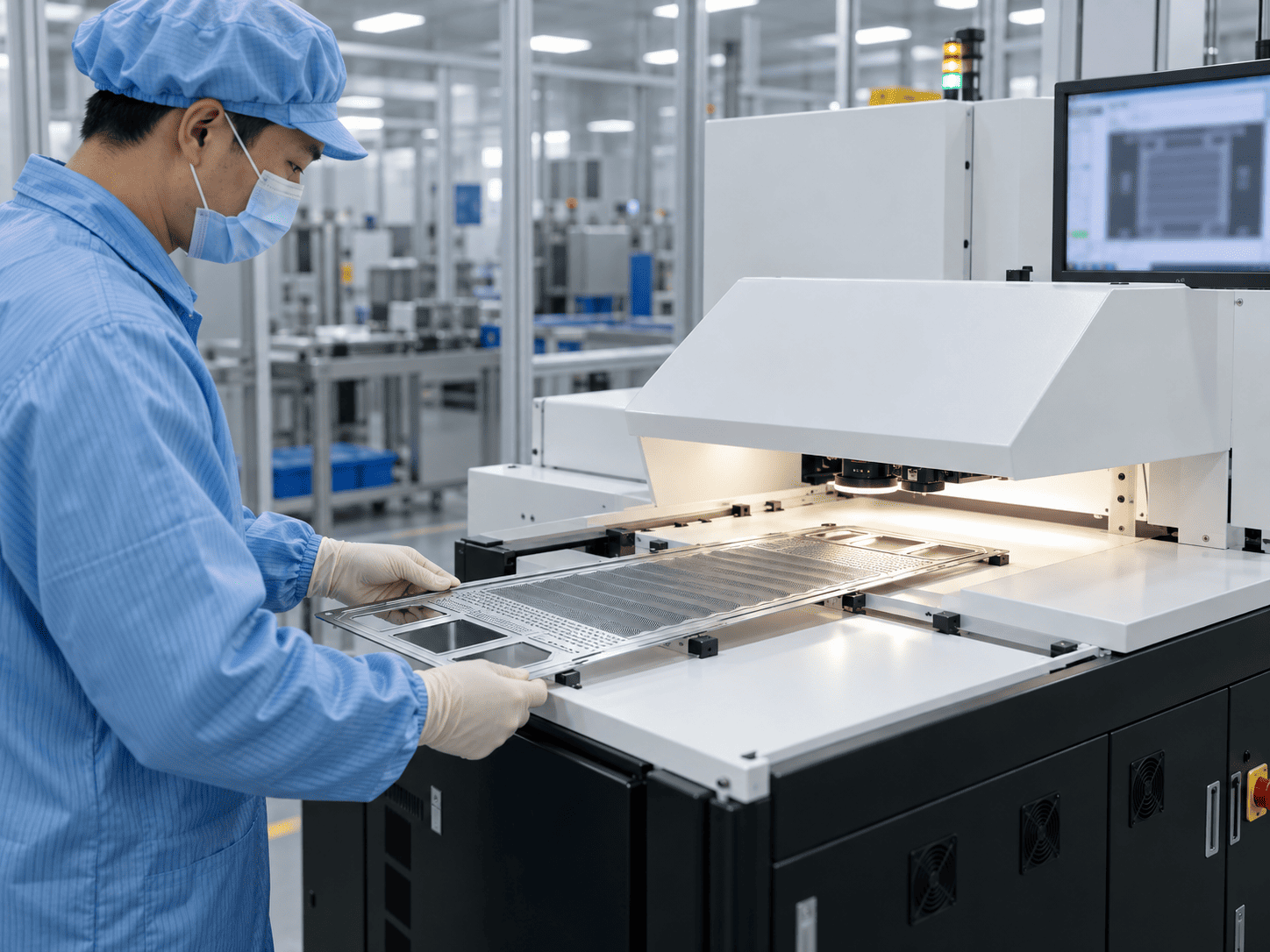
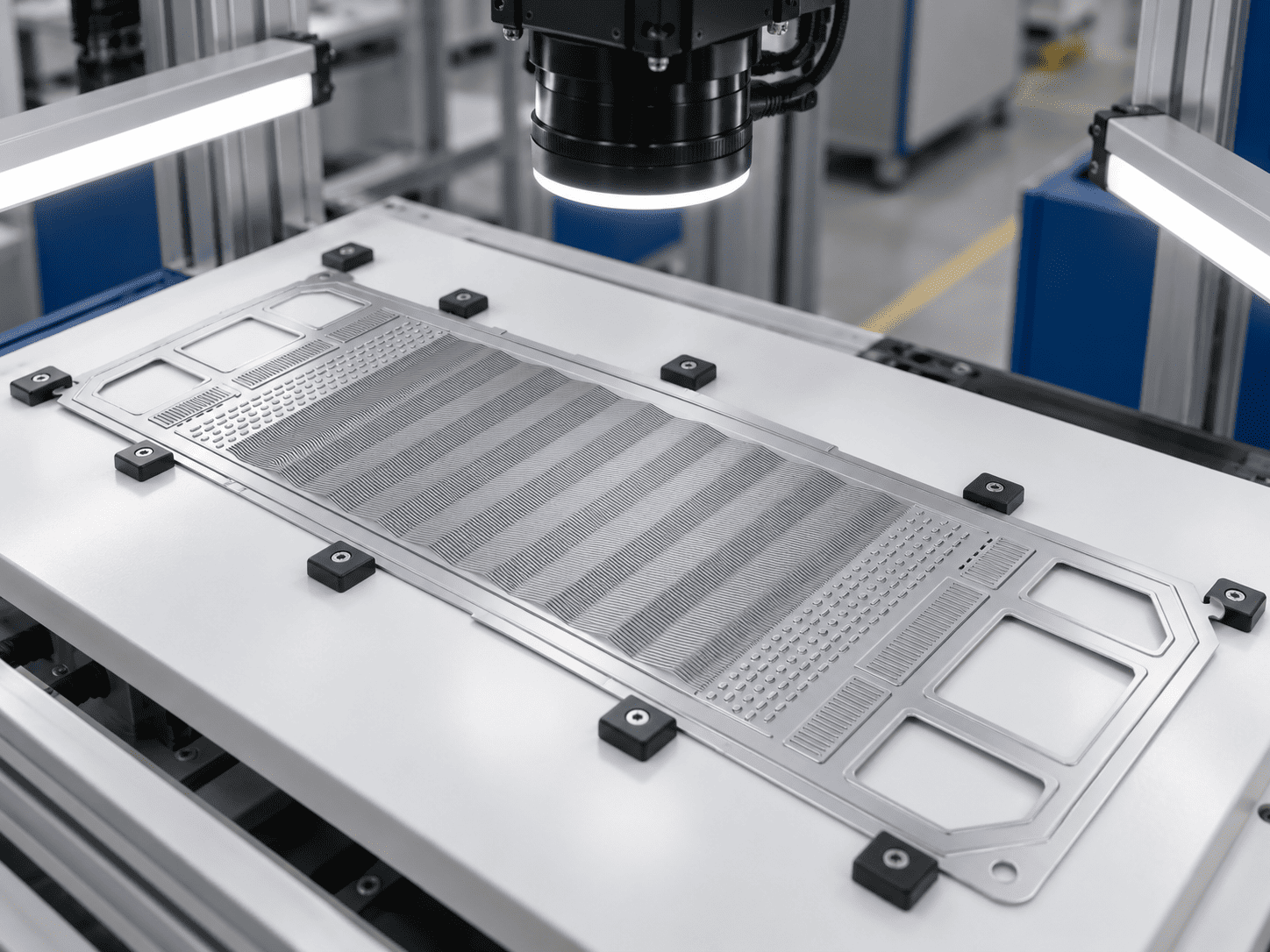
Automated optical inspection screens incoming components for surface damage and contamination. Early screening helps prevent visible defects from consuming further manufacturing time and material.
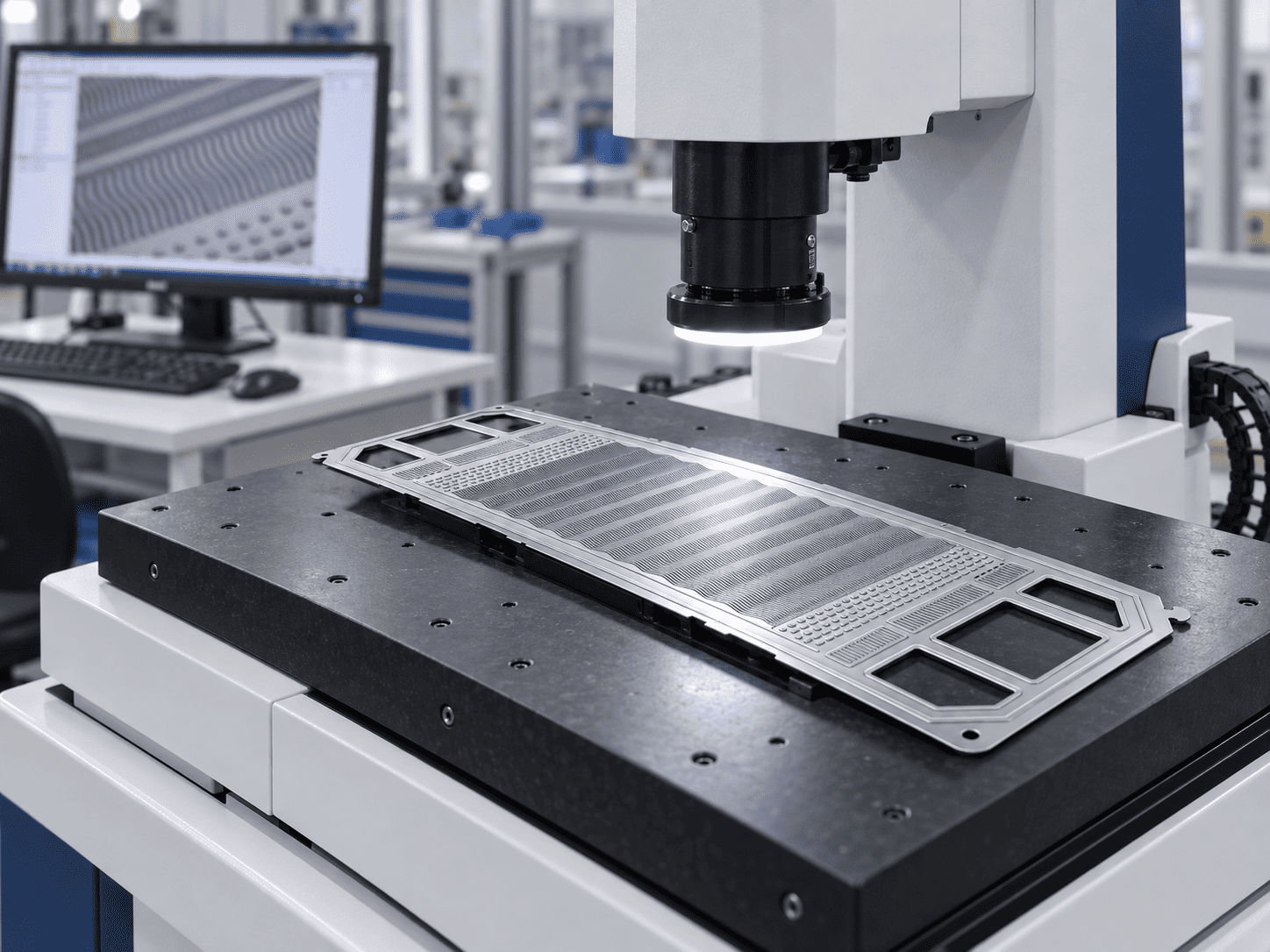
Optical inspection areas up to 500 × 400 mm accommodate different plate formats. Surface and weld-defect classification provides feedback for process correction, helping control rejects as output increases.
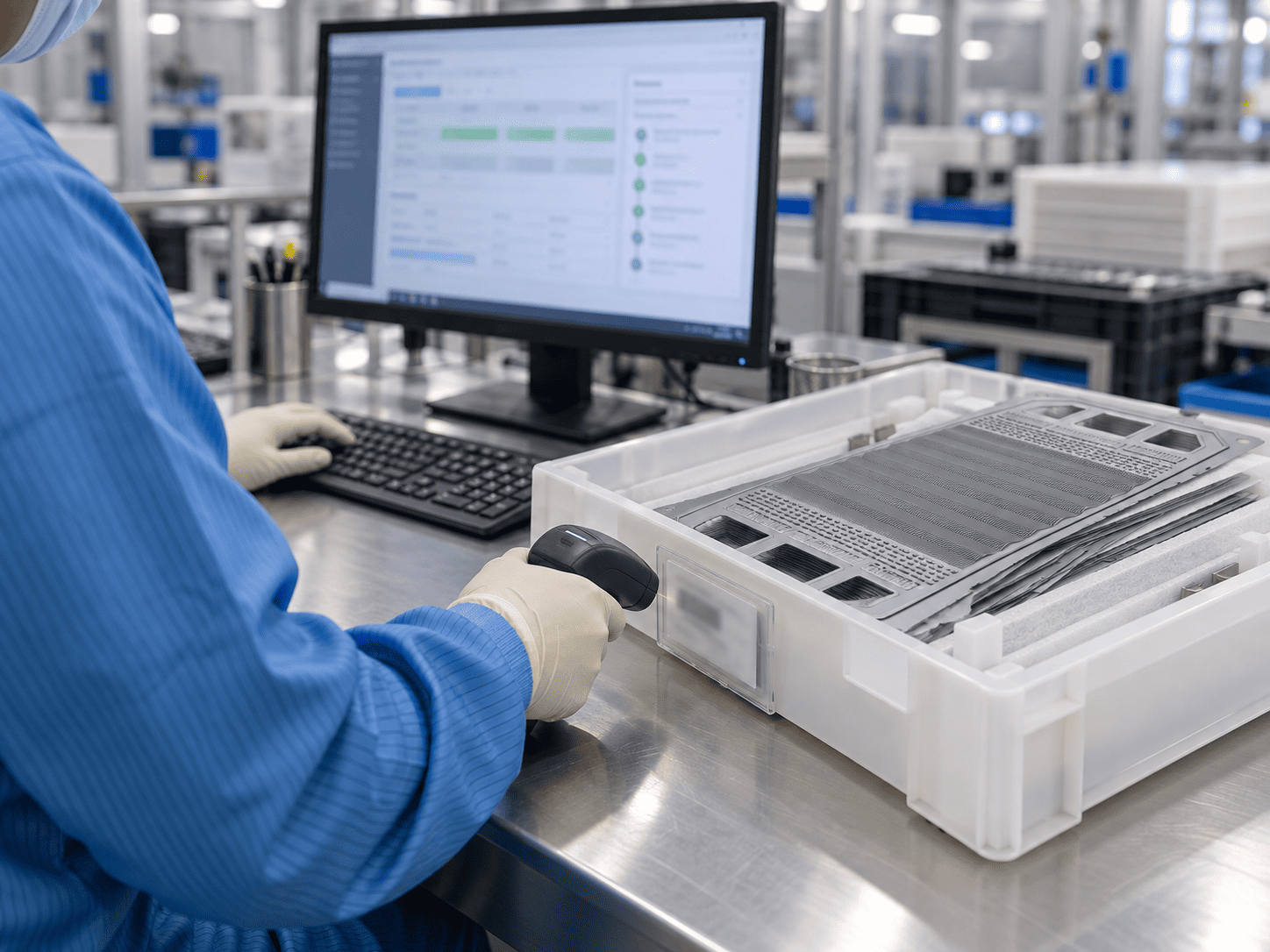
MES links production records to each manufacturing lot. Your team can review process history and trace deviations to the relevant batch, supporting focused containment and quality follow-up.
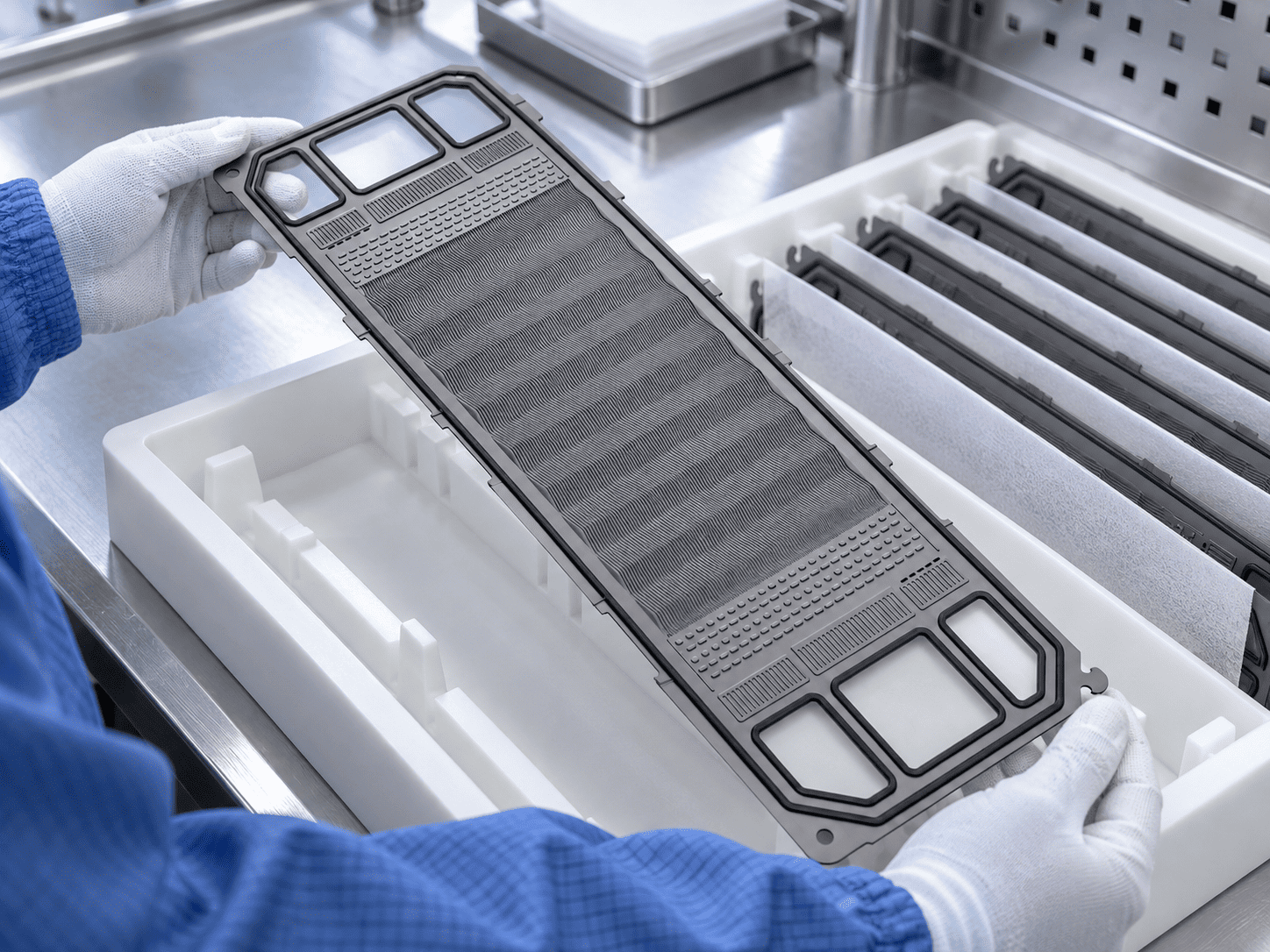
Dimensional, visual and leakage checks verify the finished plate against your release requirements. Coated and sealed components complete defined quality checks before packaging for your assembly operations.
Inspection coverage and acceptance criteria are established for the component and manufacturing scope.
Bring your PEM fuel cell program into high-volume production with Sydrogen’s Shanghai manufacturing hub. Automated coating capacity, integrated plate manufacturing and IATF 16949-certified quality management support your volume and supplier-quality requirements.
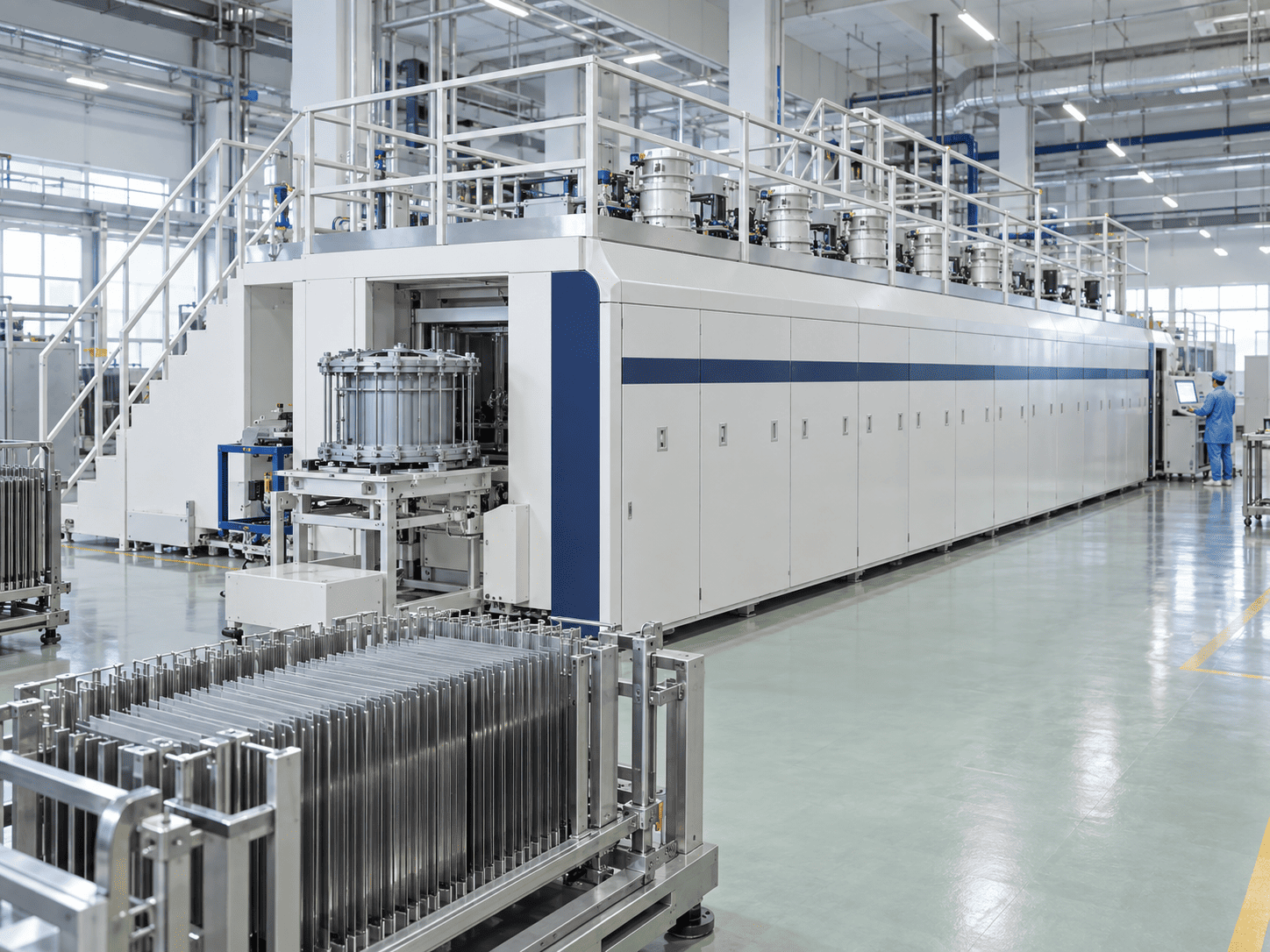
Metallic PEMFC bipolar plates per year
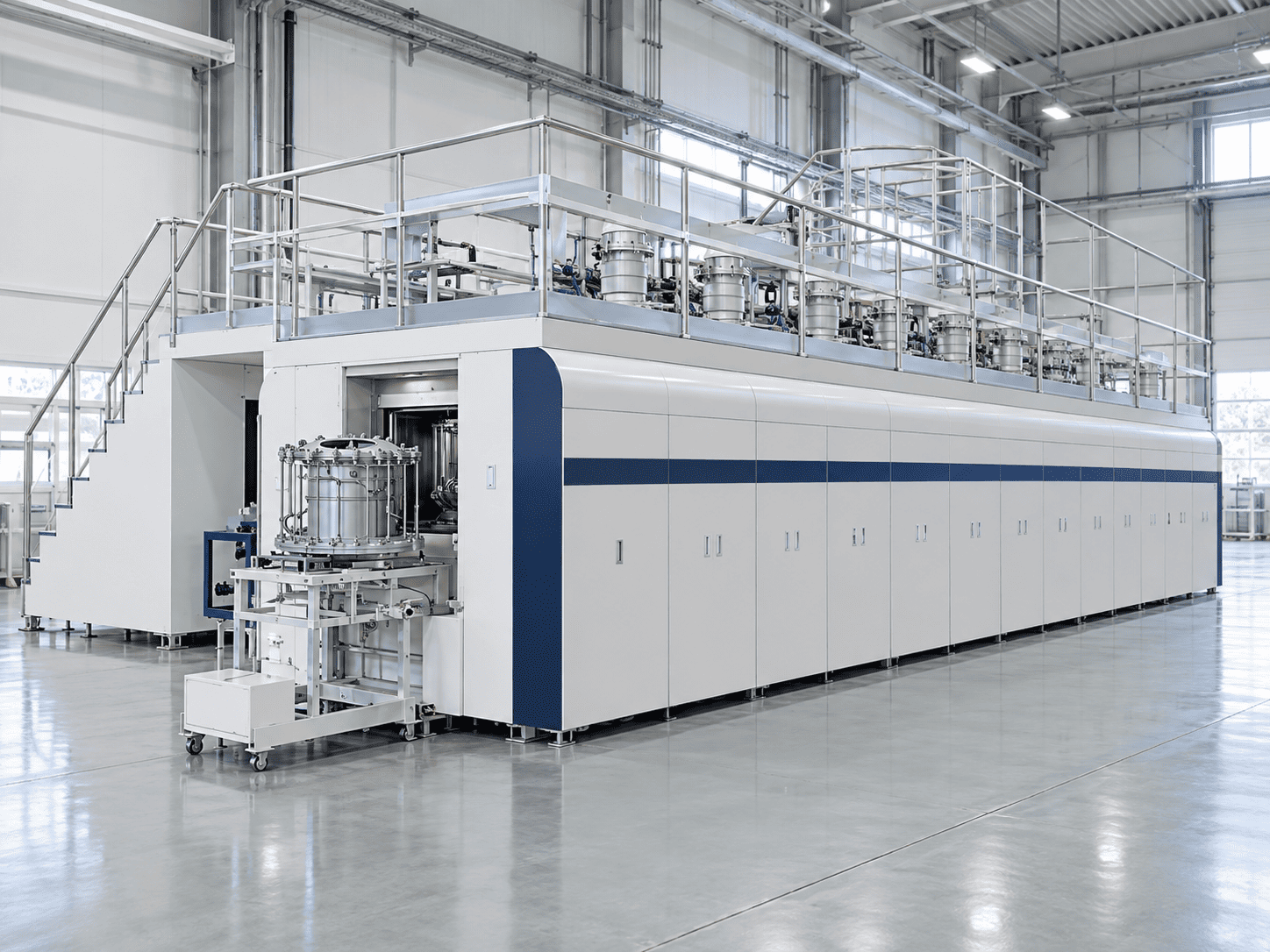
Four fully automated inline coating systems support annual capacity at our Shanghai hub, bringing proprietary surface technology to high-volume metallic bipolar plate production.
IATF 16949
Certified automotive quality management
Certified quality management focuses on defect prevention, controlled processes and continuous improvement. Inspection and MES lot traceability support your supplier-quality reviews and production requirements.
Full-service manufacturing delivers the coated and sealed component. Modular support adds specialized processes to your existing supply chain. Both give your program access to Sydrogen’s surface technology and manufacturing expertise.
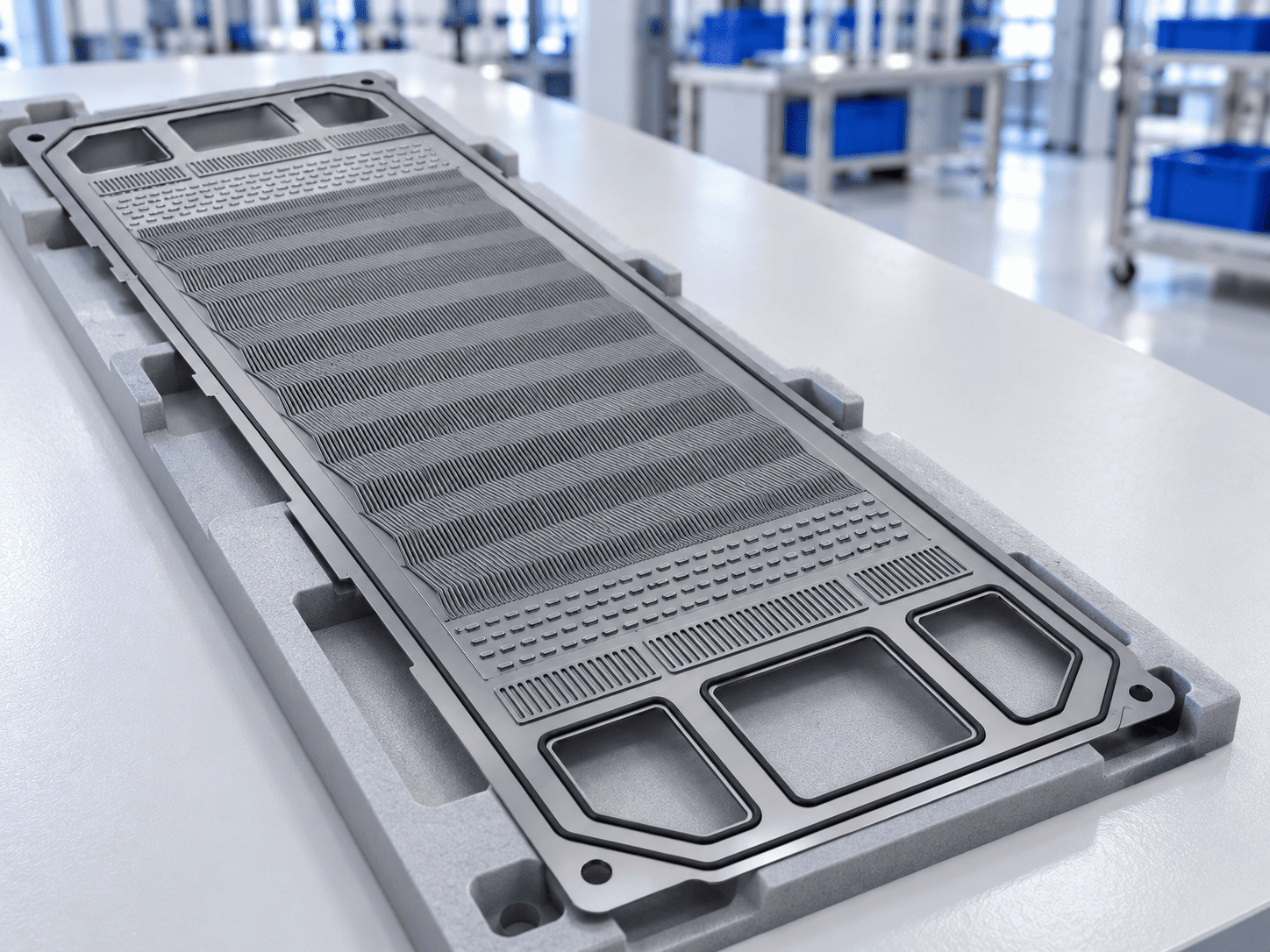
Access complete bipolar plate manufacturing without establishing each process in-house. SydroPLATE™ combines material control, forming, cleaning, welding, leak testing, FCVA coating, gasket integration and final inspection to deliver the coated and sealed component your design requires.
Metallic foil to a coated, sealed and inspected bipolar plate
Complete manufacturing coverage
Forming & Joining
Foil control, stamping, cleaning, welding and leak testing
Protective Coatings
SydroCOAT™ surface protection and coating evaluation
Seal Integration
LSR overmolding, gasket bonding and leak verification
Inspection & Traceability
Optical inspection, lot records and component release
Complete manufacturing from metal foil to the coated, sealed and inspected plate.
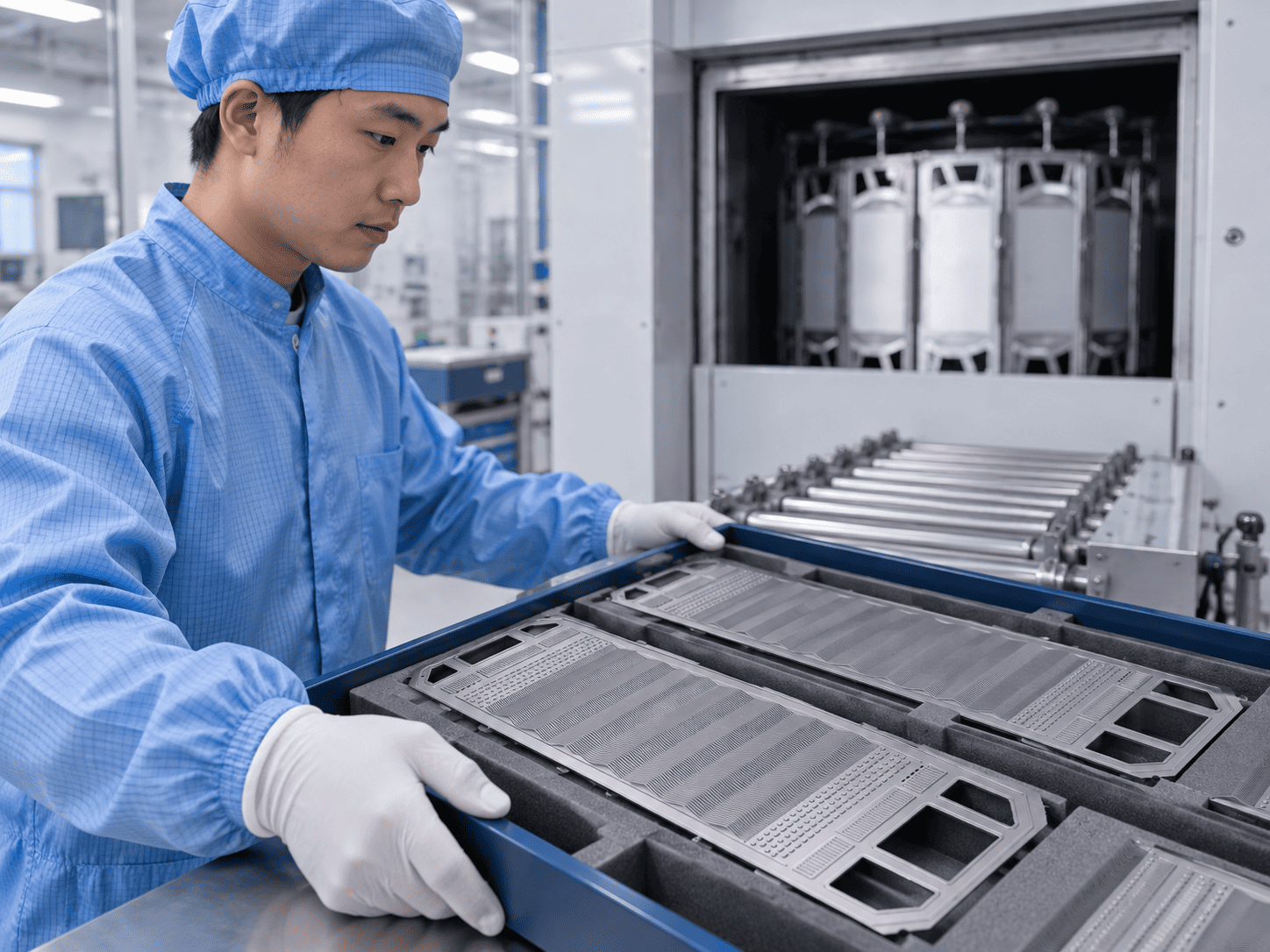
Add proprietary FCVA coating, integrated sealing or selected plate-manufacturing capabilities to the production resources you already use. Your program gains access to specialist processes while retaining the manufacturing arrangements that already work for your design.
Selected capabilities for your existing plate program
Select the capabilities for your program
Forming & Joining
Foil control, stamping, cleaning, welding and leak testing
Protective Coatings
SydroCOAT™ surface protection and coating evaluation
Seal Integration
LSR overmolding, gasket bonding and leak verification
Inspection & Traceability
Optical inspection, lot records and component release
Choose the capabilities you need, then discuss your requirements with Sydrogen.
Bring us your plate design and production goals. We work alongside your team on manufacturability, sample evaluation and production readiness, with the scope and milestones shaped around your application.

We review your plate design, substrate, stack duty and annual volume together. The discussion establishes the manufacturing scope and the technical priorities for your first samples.
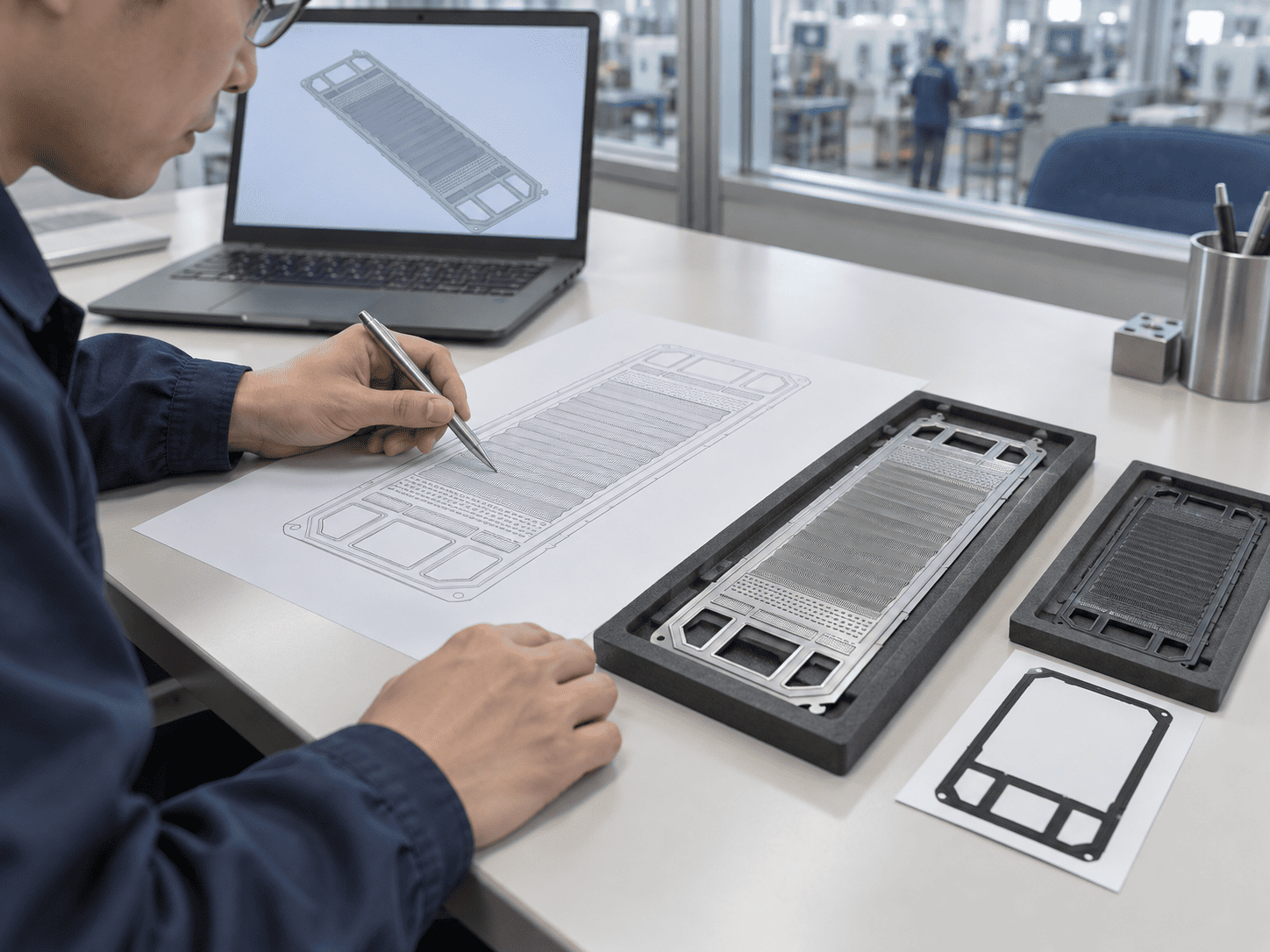
Our team develops the forming, coating, sealing and inspection plan around your drawing, target cost and intended stack duty. Tooling, sample quantities and evaluation priorities are established before trials.
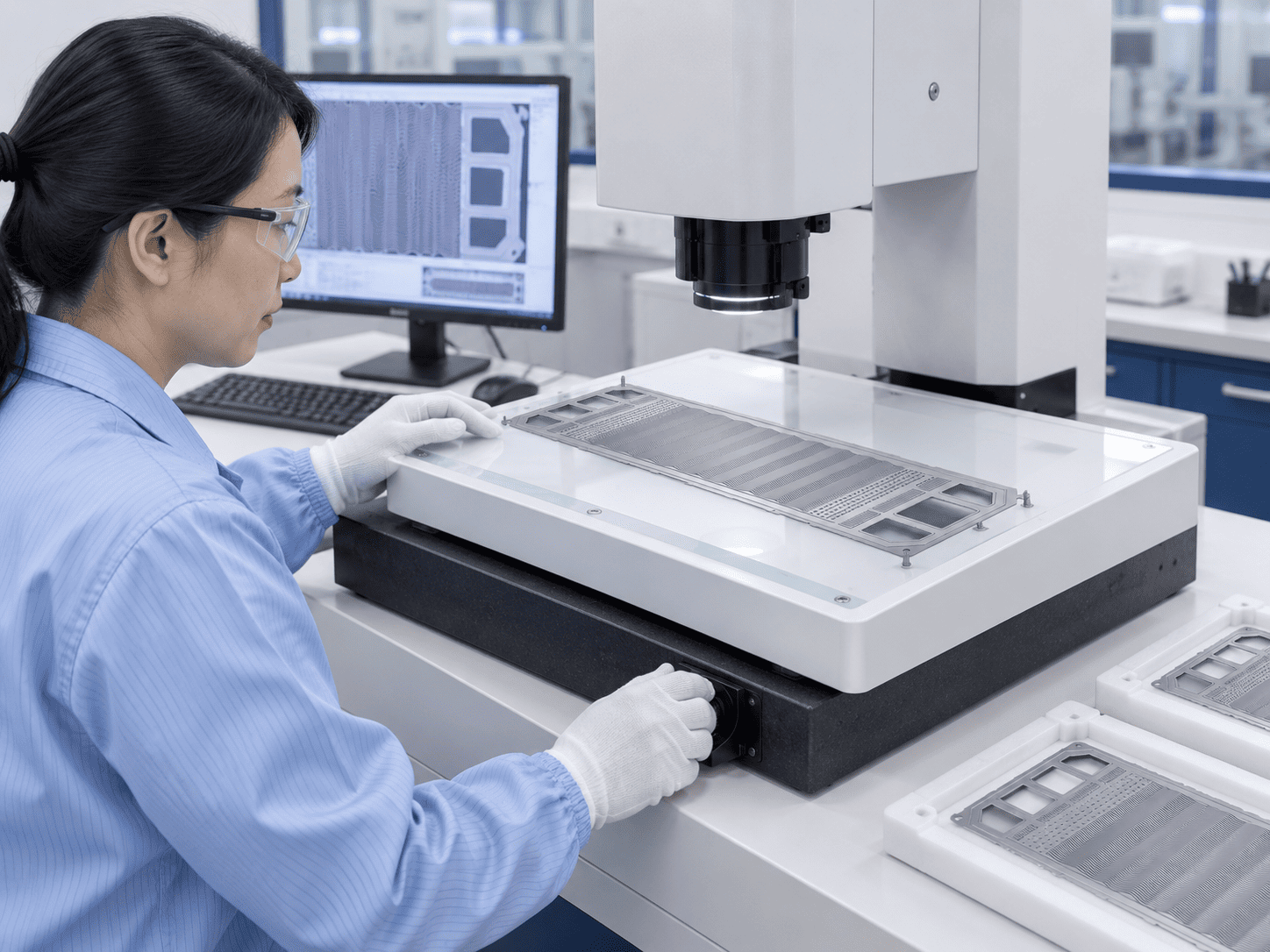
You receive representative plates for dimensional, electrical and sealing evaluation. Our manufacturing and coating teams work with you to review the results against the targets that matter to your stack.

Sample findings guide any required process refinements. We support your component qualification with inspection and test results as your team confirms the design for production.
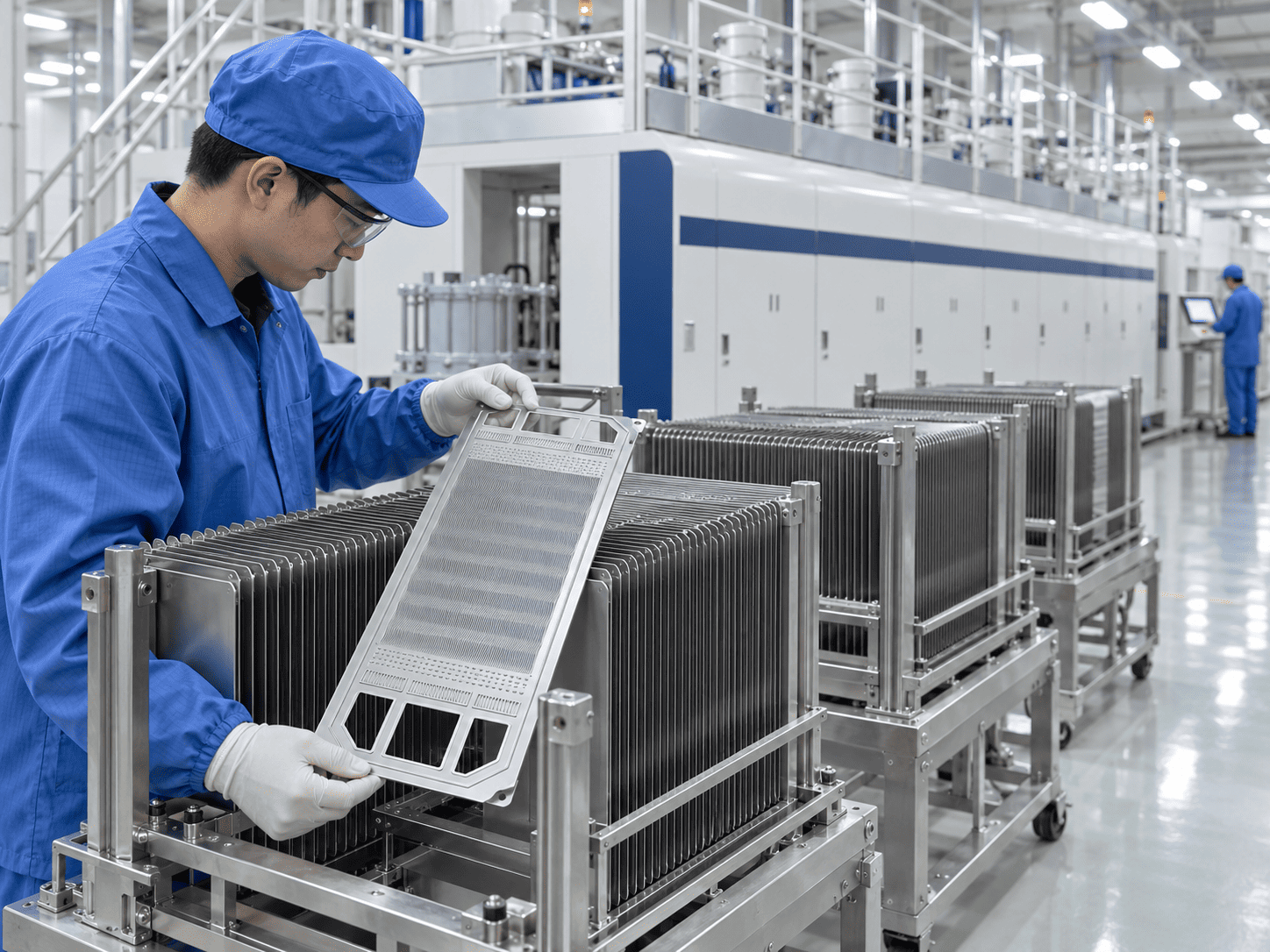
We align production planning and quality controls with your release schedule and volume forecast. Process records and lot traceability support ongoing supply and production-quality reviews.
Explore coating options, in-house production equipment and testing support for your next fuel cell program.
Tell us what your next bipolar plate needs to achieve. Sydrogen’s team will help connect your performance targets, manufacturing scope and production volume.
Metallic bipolar plate contract manufacturing is the outsourced production of plates to a customer’s design and performance requirements. SydroPLATE™ is Sydrogen’s full-service and modular offering for PEM fuel cell bipolar plates, covering metal forming, cleaning, laser welding, leak testing, FCVA coating, gasket integration, inspection and packaging.
Yes. SydroPLATE™ supports sample production, component evaluation, process refinement and high-volume manufacturing. Sydrogen works with your team on the plate design, manufacturing scope and qualification requirements before establishing the production plan.
Sydrogen’s Shanghai manufacturing hub has annual production capacity of up to 5.5 million metallic PEMFC bipolar plates, supported by four fully automated inline coating systems. Capacity for an individual program depends on plate format, process requirements and the agreed manufacturing scope.
Yes. Modular contract manufacturing lets you engage Sydrogen for selected forming and joining, SydroCOAT™ coating, gasket integration or inspection capabilities. This supports an existing supply chain without requiring the entire bipolar plate program to move to a new manufacturing source.
SydroPLATE™ supports SUS304 stainless steel, SUS316L stainless steel and titanium foil. Current foil thickness capability covers 0.075–0.10 mm, with incoming thickness control of ±0.002 mm. Substrate choice and forming requirements are reviewed together with the plate design and coating selection.
Servo-controlled stamping forms the channel and land geometry used for reactant and coolant distribution. Dimensional checks assess the formed plate, automated laser welding joins the plate halves, and post-weld leak testing checks the assembly before coating and sealing. The manufacturing specification sets the channel dimensions, plate flatness and leak acceptance criteria.
Metallic bipolar plates conduct current in a corrosive PEM fuel cell environment. SydroCOAT™ combines low contact resistance, corrosion protection and reduced metal-ion release to support efficient, durable stack operation. The SydroGEM™, SydroDIAMOND® and SydroSTAR™ coatings are precious-metal-free and use FCVA deposition. Coating selection depends on the substrate, operating conditions and production requirements.
SydroPLATE™ offers liquid silicone rubber (LSR) overmolding and preformed gasket bonding. LSR forms the gasket directly on the plate; preformed gasket bonding attaches an elastomer gasket using controlled adhesive application and curing. Both approaches are developed around plate geometry, coating compatibility and the required separation of hydrogen, air and coolant.
IATF 16949 is an automotive quality management system standard. Sydrogen’s certified quality management system supports controlled manufacturing, defect prevention and continuous improvement. For SydroPLATE™, this is complemented by inspection, leak testing and MES lot traceability. Component acceptance and stack qualification remain specific to the customer’s application.
Sydrogen supports dimensional and visual inspection, leakage checks, interfacial contact resistance measurement, electrochemical corrosion evaluation, metal-ion release analysis and coating-integrity and adhesion assessment. The evaluation plan is selected around the plate design, coating grade and operating environment, with representative samples available for customer stack evaluation.
The manufacturing scope, plate geometry, substrate, tooling, coating grade, sealing architecture, qualification work and order volume determine the quotation and schedule. Sharing your drawing, annual demand and target production date allows Sydrogen to develop a proposal around your component and delivery requirements.
Use the inquiry form to choose full-service or modular manufacturing. For modular support, select the capabilities you need. Share your contact details and any available information about your plate design, substrate, operating targets, annual volume and production timing. Sydrogen’s technical and commercial teams will follow up on your manufacturing requirements.