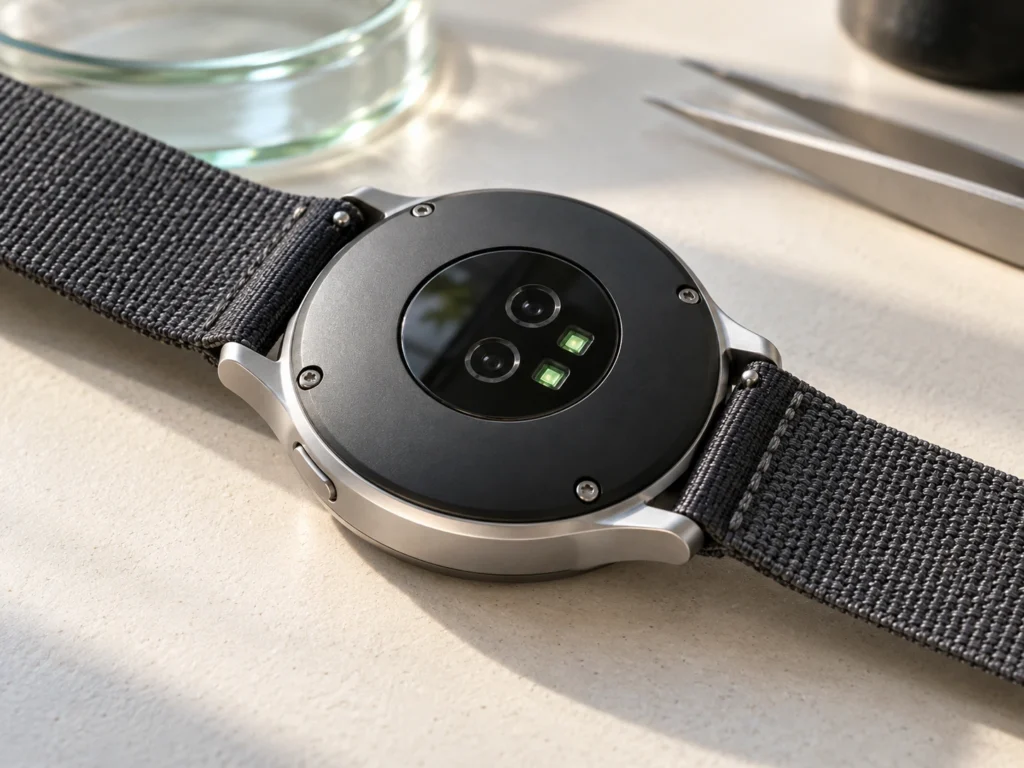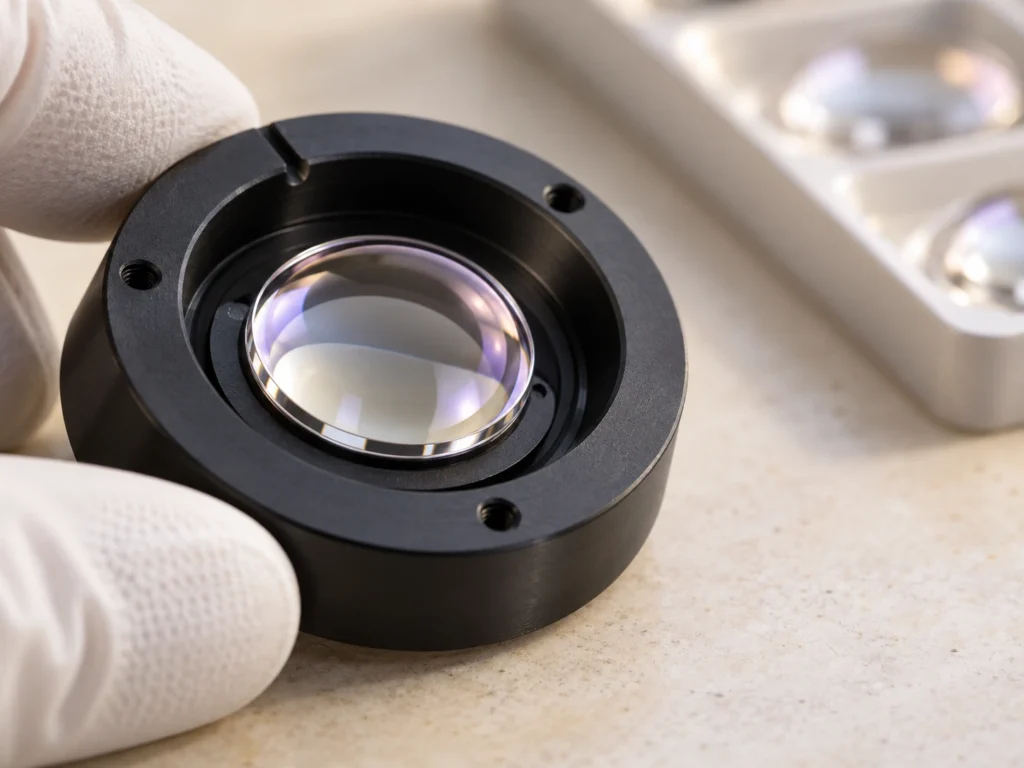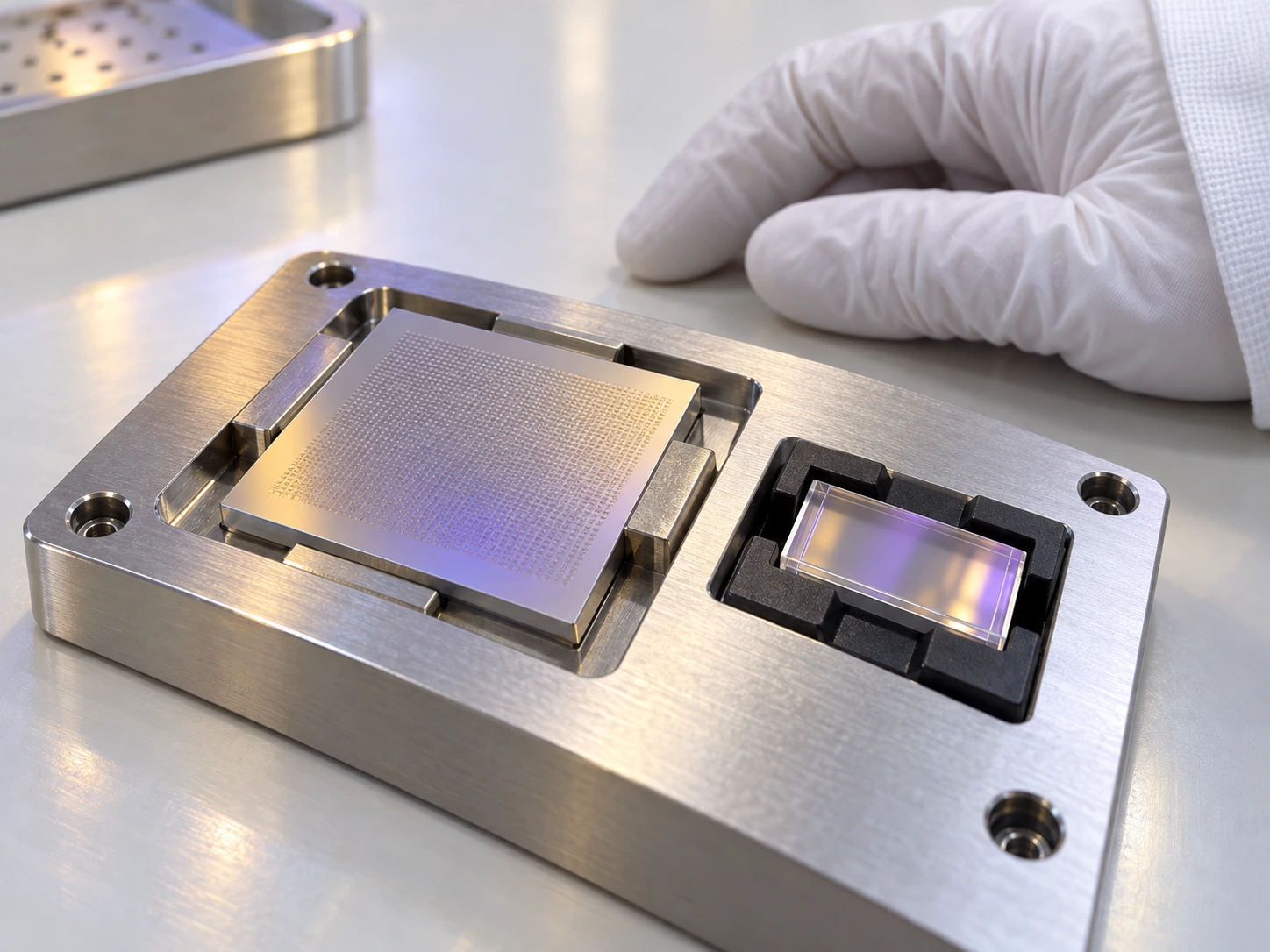
For 3D sensing systems, optical performance depends on both the illumination coverage created by the microlens array and how accurately that lens form is transferred into production.
A wider field of illumination helps distribute projected light across a broader sensing area. Achieving this requires an aspherical MLA profile that can control the outgoing light beyond conventional angular coverage.
The designed profile must then be reproduced consistently. Softer-master routes can introduce transfer error and wear, affecting lens form, yield and production stability. NanoFab therefore connected the aspherical optical design with stable metal-master fabrication and controlled imprinting.
Product and Manufacturing Challenge
The programme required wider illumination coverage without losing the designed aspherical lens form during high-volume production.
Wide FOI requirement
The MLA needed to extend illumination beyond 110° to support broader 3D sensing coverage.
Yield and production stability
Variation in the replicated lens form can reduce usable output and create process interruptions during high-volume production.
NanoFab Solution Results
| NanoFab Solution | Commercial Result |
|---|---|
| Aspherical MLA Design for Wide FOI | Wider 3D Sensing Illumination Coverage |
| Stable High-Precision Metal Master | Higher Yield through Better Lens-Form Transfer |
| Single Metal Master Supporting up to 100M Parts Manufacturing | Cost Saving with Fewer Tooling Replacement |
Benefit and Performance Outcome
The solution connected optical coverage with production control, resulting in wider illumination, higher yield and a more stable route to high-volume manufacturing.
Wider field of illumination
The aspherical MLA design supported FOI beyond 110°. NanoFab’s current widest achievable FOI reaches up to 130°.
Higher yield and repeatability
Reduced profile deviation supported more consistent imprinted optics and a higher proportion of usable parts.
NanoFab’s current aspherical MLA capability supports wide-angle illumination for 3D sensing applications.
A stable high-precision metal master can support extended high-volume imprinting from one production reference.

Product and Manufacturing Value
The solution addresses optical performance and manufacturing stability together. The aspherical MLA expands the illumination field, while the stable metal master helps preserve the designed lens form through repeated imprinting.
This supports broader 3D sensing coverage, improved yield and more consistent optical output across high-volume production. Longer master life also reduces tooling replacement frequency and related process interruptions.
The resulting route provides a practical path from wide-FOI optical design to high-volume imprinted optics for time-of-flight, structured-light and other 3D sensing applications.