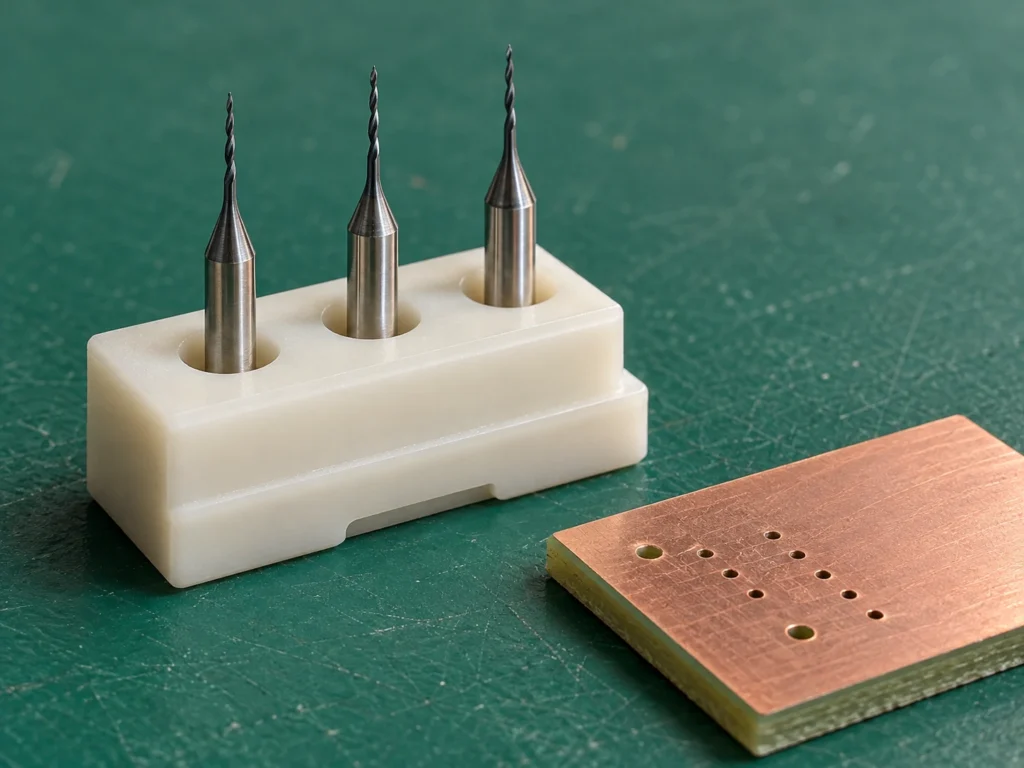
In precision-tool manufacturing, high-volume micro-drill and end-mill applications place heavy pressure on coating production.
For manufacturers supporting large-scale micro-drill and end-mill production, the coating process must do more than deliver the required surface performance. It must also keep pace with market demand, production schedules and long-term cost expectations.
In one high-volume production case, the target was clear: support around 2.4 million coated precision tools per day. At this scale, coating capacity becomes a business-critical question. Manufacturers need to understand not only whether a coating system can meet the required output, but how many systems are needed, how much space they require, how complex daily operations become and whether the investment can support future expansion.
The Challenge
Based on the production planning reference, a conventional batch route can support the target output range, but scale-up would depend on deploying multiple batch coaters operating on 6-hour cycles.
At this level of daily output, the challenge is not whether batch coating can work, but how efficiently the required capacity can be managed. As output requirements rise, adding volume within the same batch setup does not always scale efficiently.
For manufacturers facing high-volume micro-drill and end-mill coating requirements, the challenge is not only to coat more tools. It is to build a coating route that can support higher output without creating unnecessary bottlenecks, footprint pressure or cost per tool.
NTI’s Solution Approach
NTI Nanofilm approached the project from a production planning perspective.
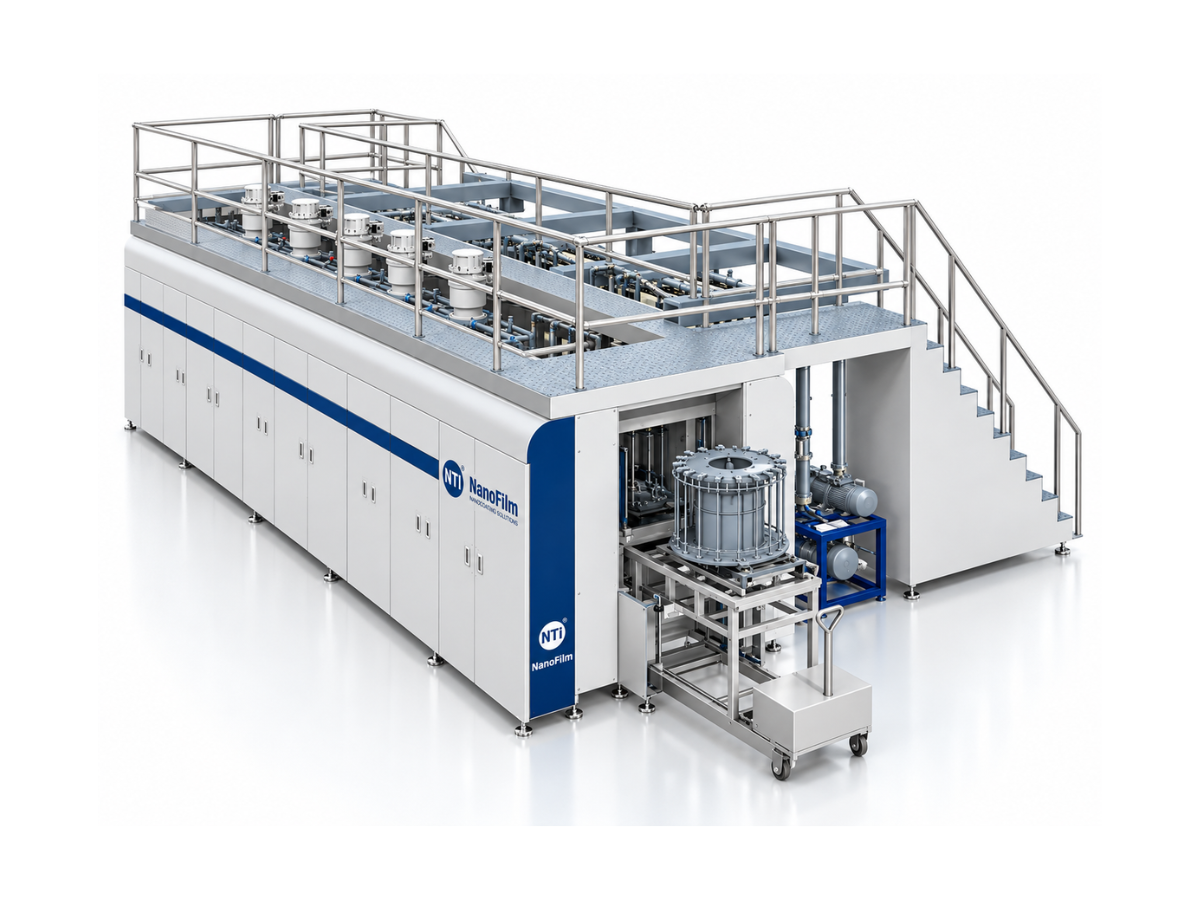
Within the same production planning reference, NTI Titan™ Inline Coating Platform was evaluated as a line-based route requiring 4 continuous lines, with a significantly shorter 0.5-hour cycle and a reference output within the same high-volume production range.
This made the inline route especially relevant for manufacturers planning beyond the immediate production target. Instead of relying only on more batch coaters, manufacturers can consider a line-based coating model that supports smoother production flow, reduced batch waiting time and a clearer path towards higher OEE and automated factory integration.
For micro-drill and end-mill manufacturers, this is especially relevant when production goals require both high daily volume and a coating route that remains practical as demand grows.
Application Beyond Precision Manufacturing
The same scale-up logic applies to other industries where coating demand is moving towards higher volume, higher consistency and stronger automation readiness. Beyond micro-drills and end mills, NTI has scaled production across applications including:
Automotive
FCVA inline coating systems support high-wear components such as engine piston rings, where durability, friction reduction and repeatable coating quality are important for production-scale performance.
Hydrogen
Fuel-cell bipolar plate coating requires corrosion resistance, conductivity and scalable production readiness, especially as PEM fuel cell manufacturing moves towards commercial volume.
Solar
Continuous coating platforms can support fast, solvent-free film deposition for perovskite and next-generation photovoltaic applications.
Electronics and 3C Metal Parts
PVD inline sputtering systems support decorative and functional coatings for metal casings, logos, frames and buttons, helping manufacturers deliver scratch resistance, premium appearance and consistent surface quality at scale.
Across these applications, the value of inline coating lies in helping manufacturers move from coating capability towards production-ready scale.
Business Outcome
NTI Titan™ Inline Coating Platform gives manufacturers another route to scale, supporting faster cycle times, smoother production flow and a clearer path towards future automation.
By reducing coating cost per drill by more than 35%, the inline route has also helped manufacturers improve cost efficiency as production scales.
Approximate coating cost per 1,000 drills
Approximate coating cost per 1,000 drills
Lower coating cost per drill
For manufacturers, the value is not only higher throughput. It is the ability to support high-volume demand with a coating route that improves production efficiency, lowers coating cost per drill and strengthens long-term ROI.
That is how NTI Nanofilm helps manufacturers turn coating technology into a practical production strategy for high-volume micro-drill and end-mill manufacturing.