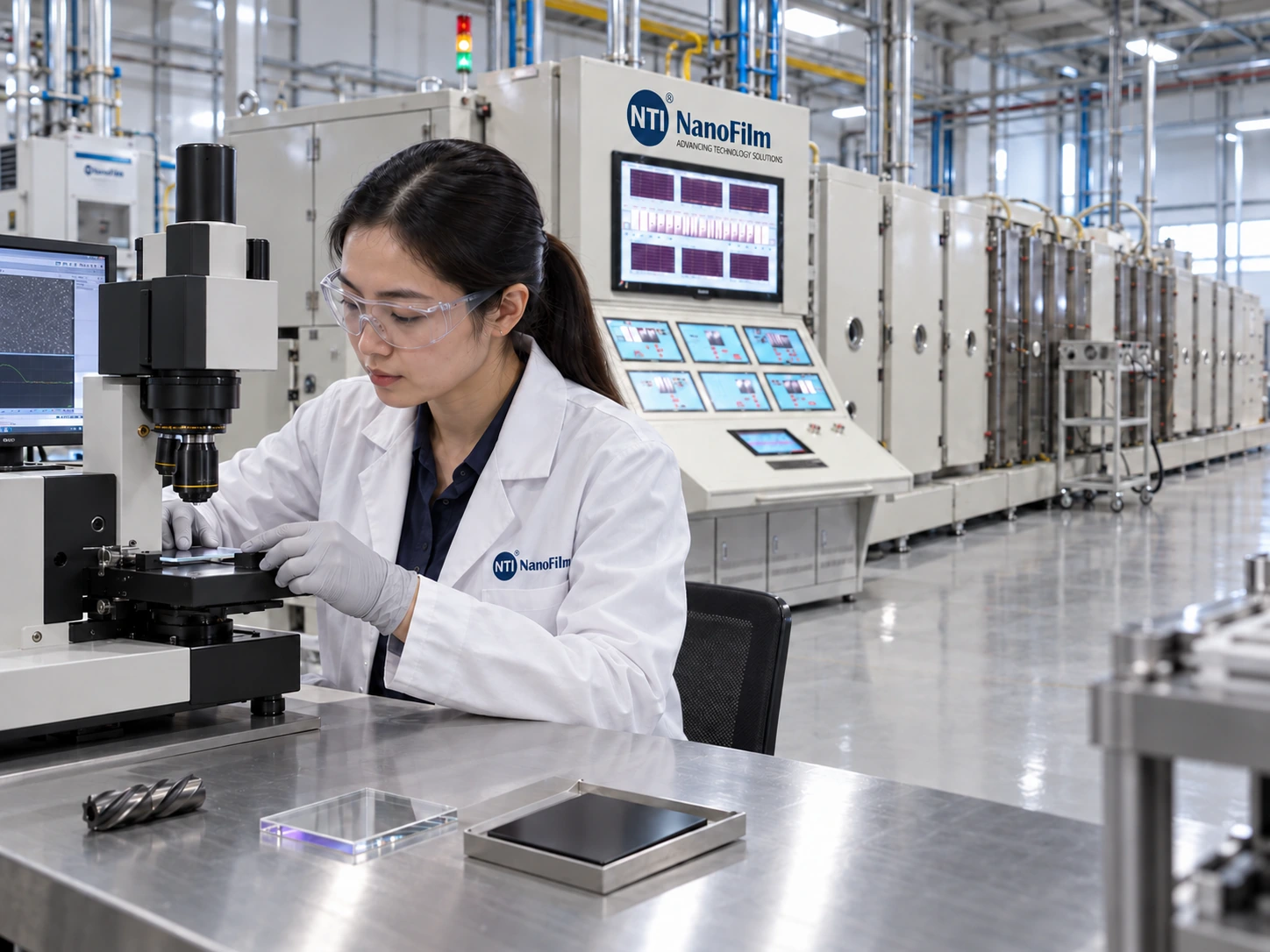
Built for What Comes Next
NTI Titan™ Inline Coating System brings coating technology, substrate handling and automation into one configurable production platform, helping manufacturers move more parts with repeatable coating performance and stronger production economics.
Keep the surface performance your customers expect as production volumes grow. NTI Titan™ combines deposition sources, controlled handling, vacuum continuity and factory automation to keep critical process steps connected, reduce unnecessary interruptions and support higher output at a lower cost per coated part.
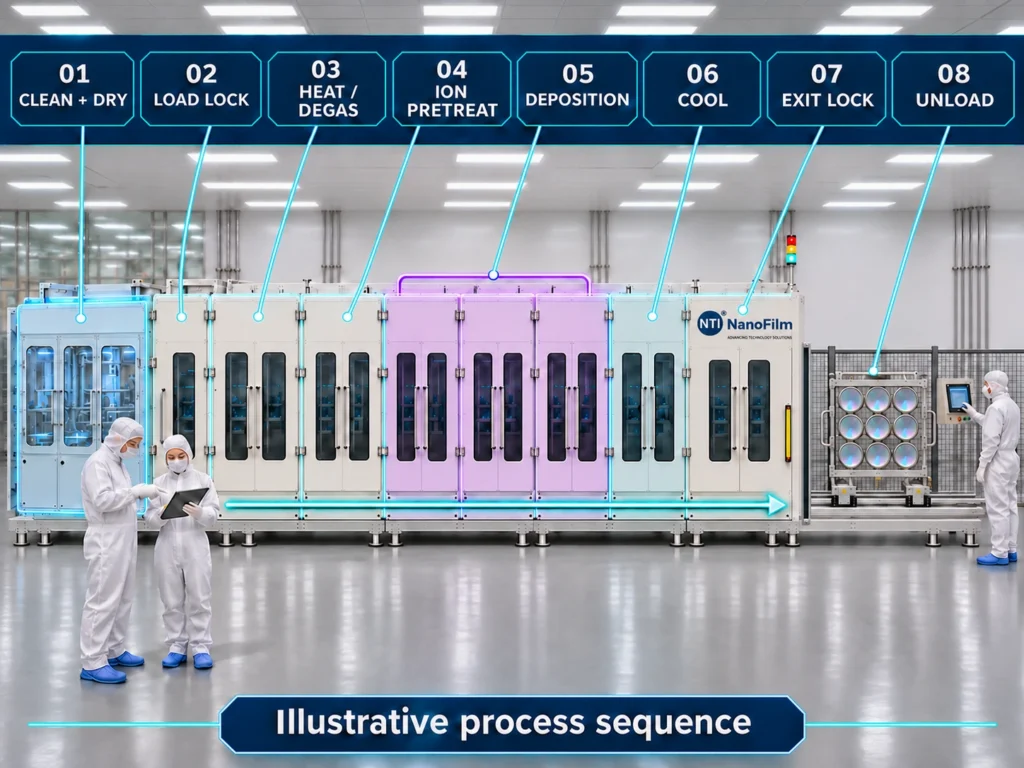
Arrange cleaning, pretreatment, deposition, heating, cooling and other process zones around the qualified coating sequence. Every chamber has a production purpose, keeping the line focused on the steps that control surface performance while avoiding unnecessary process stages and equipment complexity.
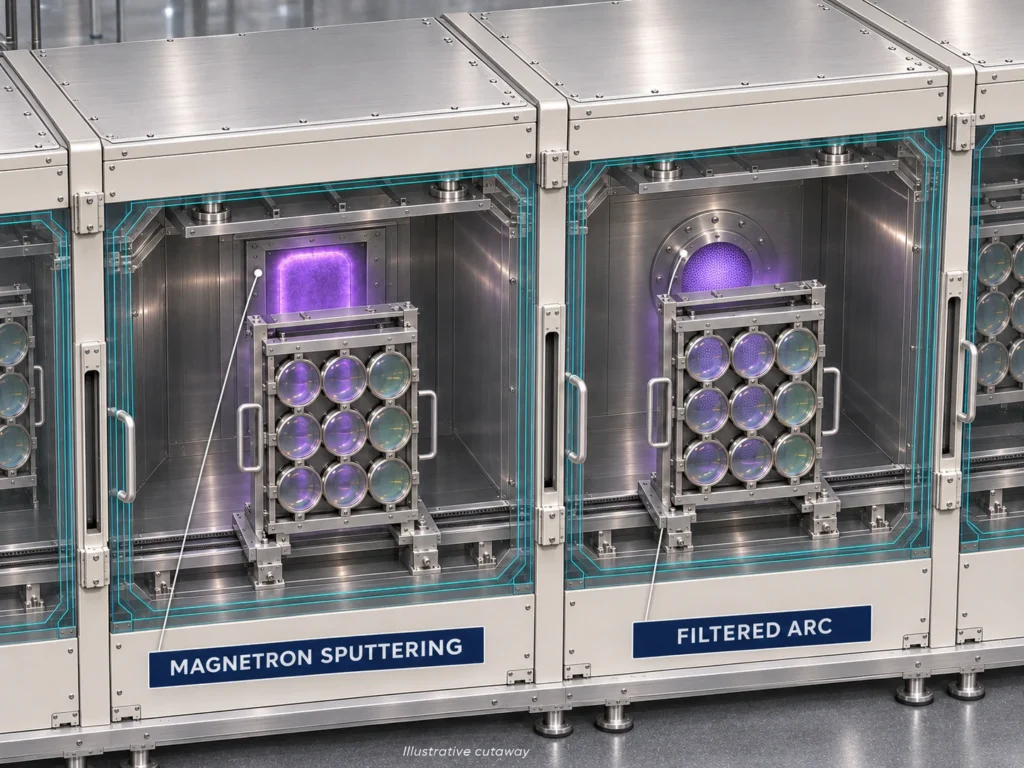
Combine magnetron sputtering, FCVA, arc, ion and plasma modules within one Titan architecture when the coating stack requires them. This gives production teams more freedom to run multilayer and hybrid processes, broaden the range of surface functions produced on the line and adapt source combinations as product requirements evolve.
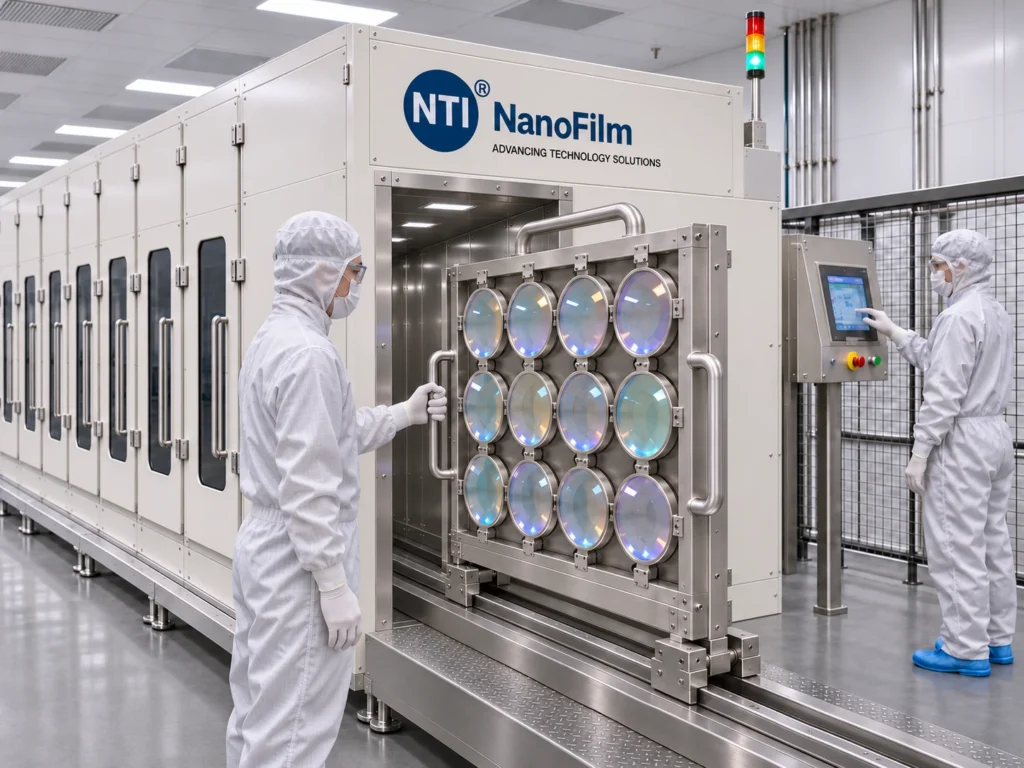
NTI’s patented Seamless Continuous Coating technology stages loading and unloading through load-lock handling while successive carriers or panels continue through the vacuum process. Rather than rebuilding the main process environment for every load, the line maintains a continuous production rhythm that supports higher throughput and longer productive operating intervals.
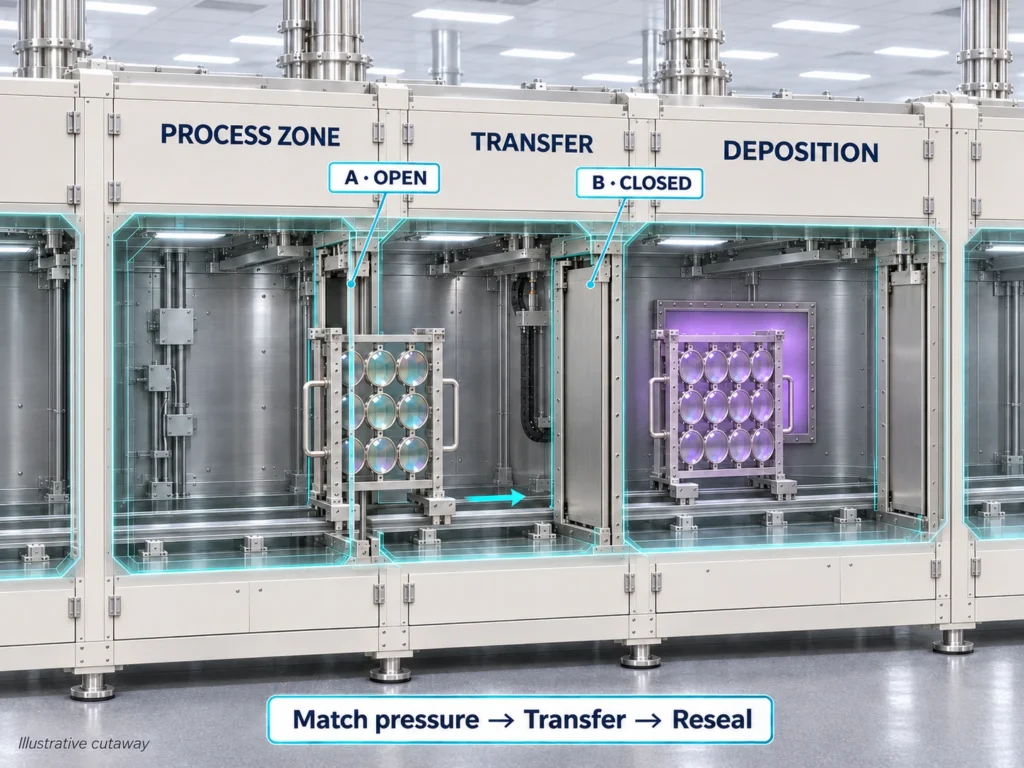
Large transfer paths and staged chamber movement keep substrates progressing between process zones while critical coating chambers remain under controlled vacuum. Transfer time, coating time and output can therefore be engineered together as one production flow rather than treated as separate handling steps.
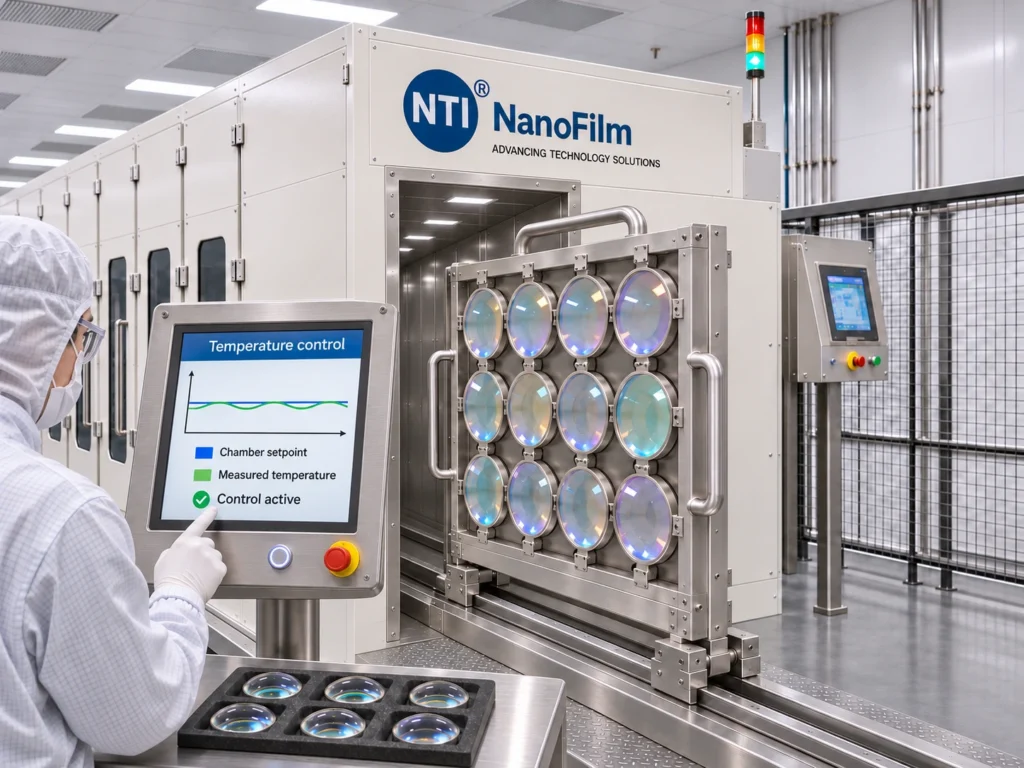
Heating, cooling and lower-temperature deposition routes can be arranged around substrate sensitivity and coating chemistry. This supports heat-sensitive materials, pre-coated parts and processes where temperature stability affects dimensions, appearance or film performance without treating every product as if it can tolerate the same thermal cycle.
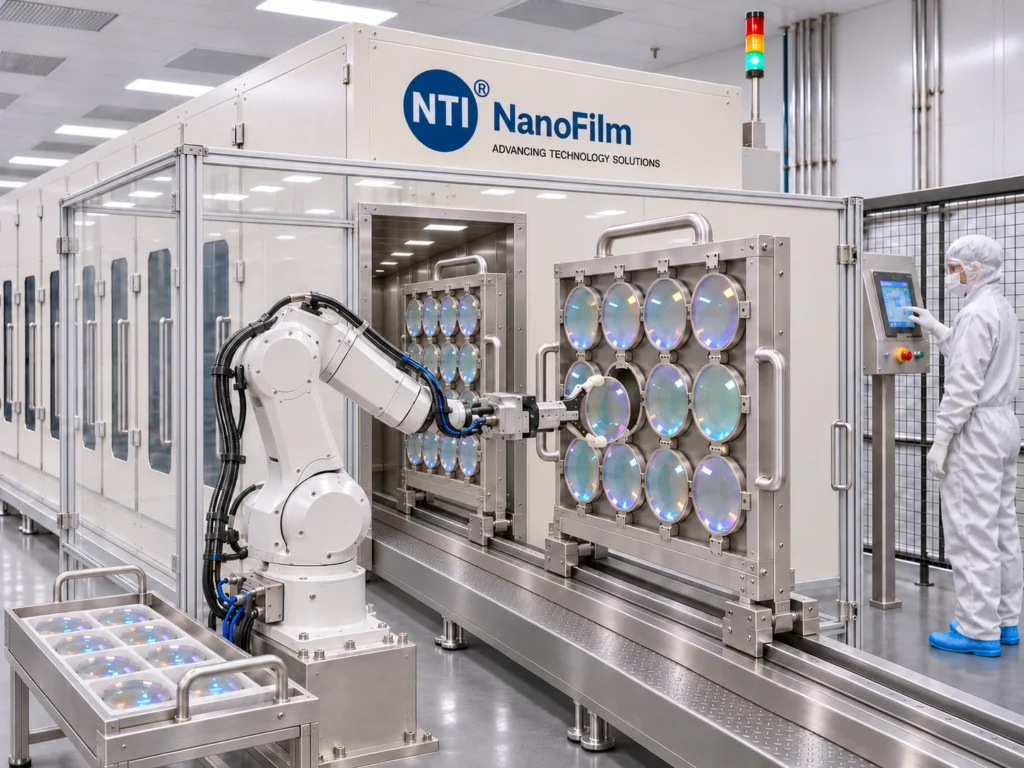
Recipe control, carrier identification and production data can connect with robots, conveyors, inspection, traceability and MES. Titan fits into the wider manufacturing flow, giving operations teams a clearer path to reduce manual handoffs, maintain process visibility and extend automation as output requirements grow.
Illustrative representations. Equipment configuration, internal layout, process conditions and application results vary with the engineered system and qualified coating programme.
NTI Titan™ brings Magnetron Sputtering, Cathodic Arc Evaporation, PECVD DLC and Filtered Cathodic Vacuum Arc together with ion and plasma preparation in a source architecture engineered for continuous production. Different source formats give control over ionisation, deposition rate, film density, interface cleanliness, thermal exposure and multilayer construction, allowing manufacturers to build the coating performance the product needs while keeping a path open to new surface functions and production programmes on the Titan platform.
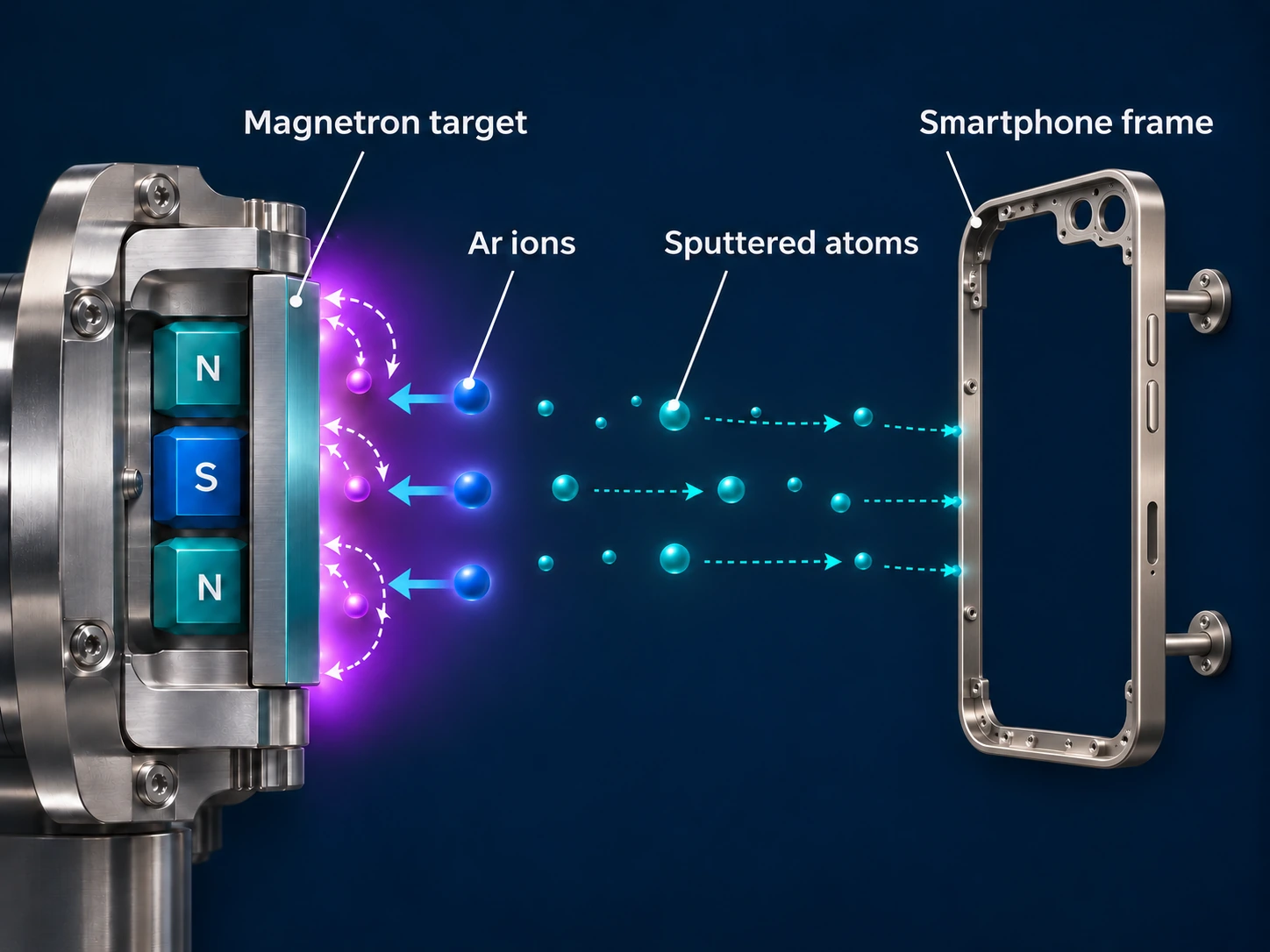
Control Film Composition, Thickness and Multilayer Growth
Magnetron sputtering keeps the plasma close to the target for controlled deposition of metals, nitrides, carbides, oxides and multilayer stacks. Adjustable power and gas control provide fine control of thickness, composition and deposition rate, while scalable source geometries extend the same process discipline across moving substrates for optical, electrical, decorative and hard functional coatings.
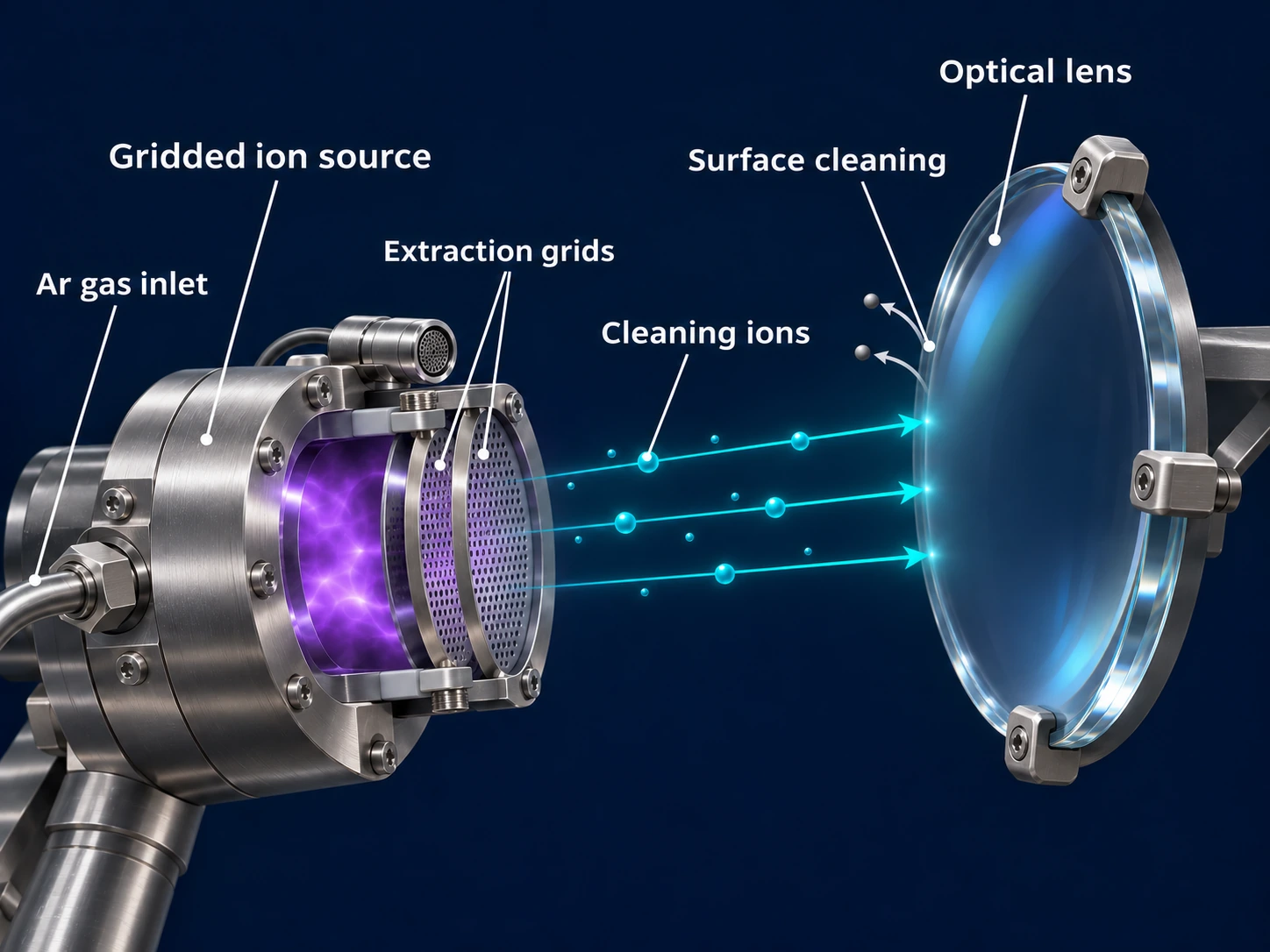
Prepare a Cleaner, Better Controlled Interface Before Deposition
Ion bombardment cleans, etches and activates the substrate in vacuum before deposition. Bringing surface preparation and ion assistance into the coating sequence improves control of the interface where adhesion begins, supporting more consistent film growth without moving the product out of the controlled vacuum workflow.
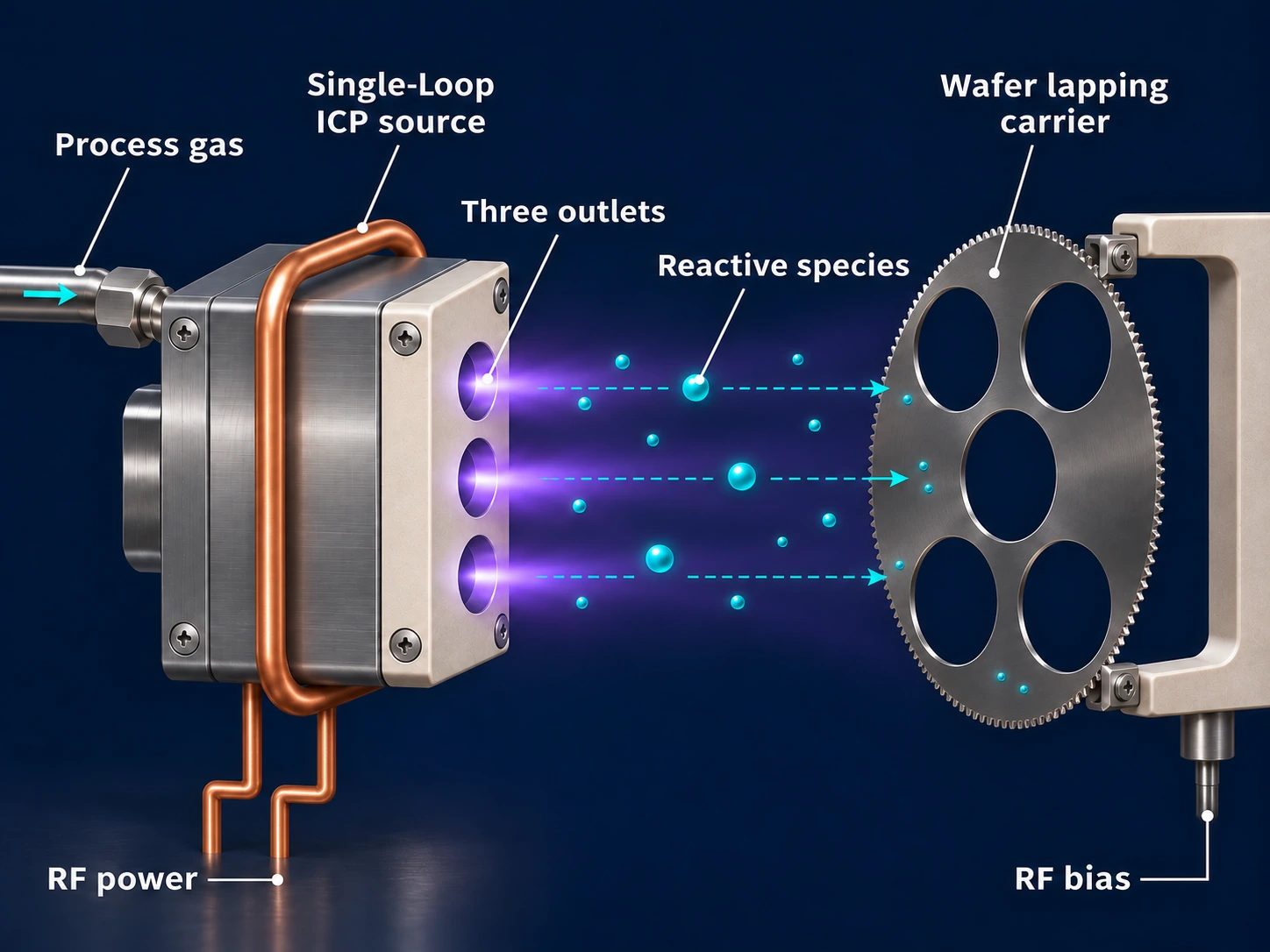
Generate High Density Plasma With Controlled Thermal Exposure
PECVD DLC uses plasma-enhanced chemical vapour deposition to form diamond-like carbon coatings with controlled thermal exposure. The process can be qualified around component geometry, substrate sensitivity and the required friction, wear and surface performance, bringing a complementary carbon coating route into the inline sequence.
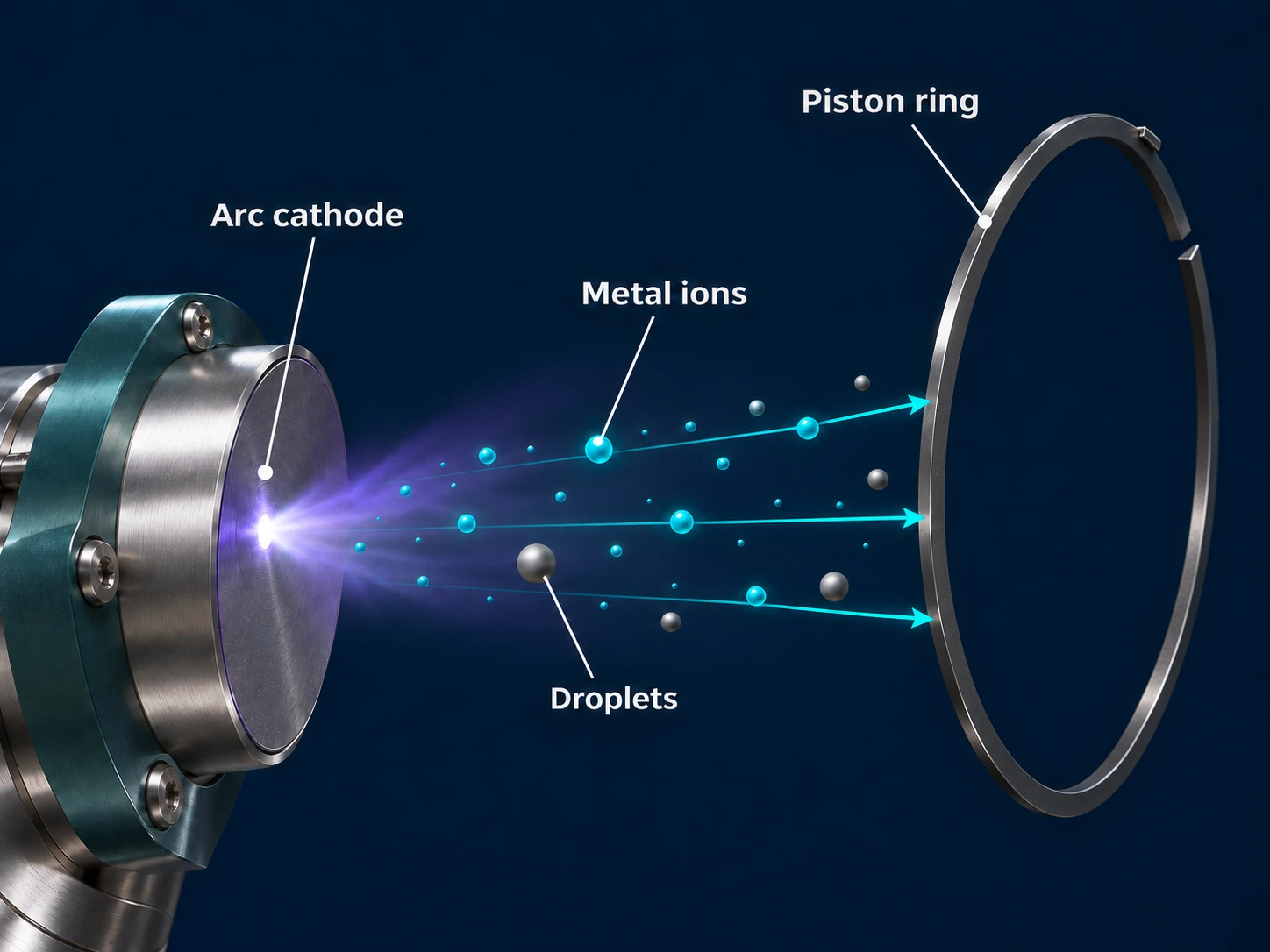
Build Dense Hard Coatings With High Ionisation and Productive Deposition Rates
Direct and Multi Arc sources use compact cathodic arc emitters that can be positioned around the coating zone to deliver highly ionised metal vapour at high deposition flux. The format supports dense nitride and carbonitride layers, strong adhesion and productive hard coating cycles, while multiple sources provide flexibility to combine target materials and layer sequences around the required hard coating stack.
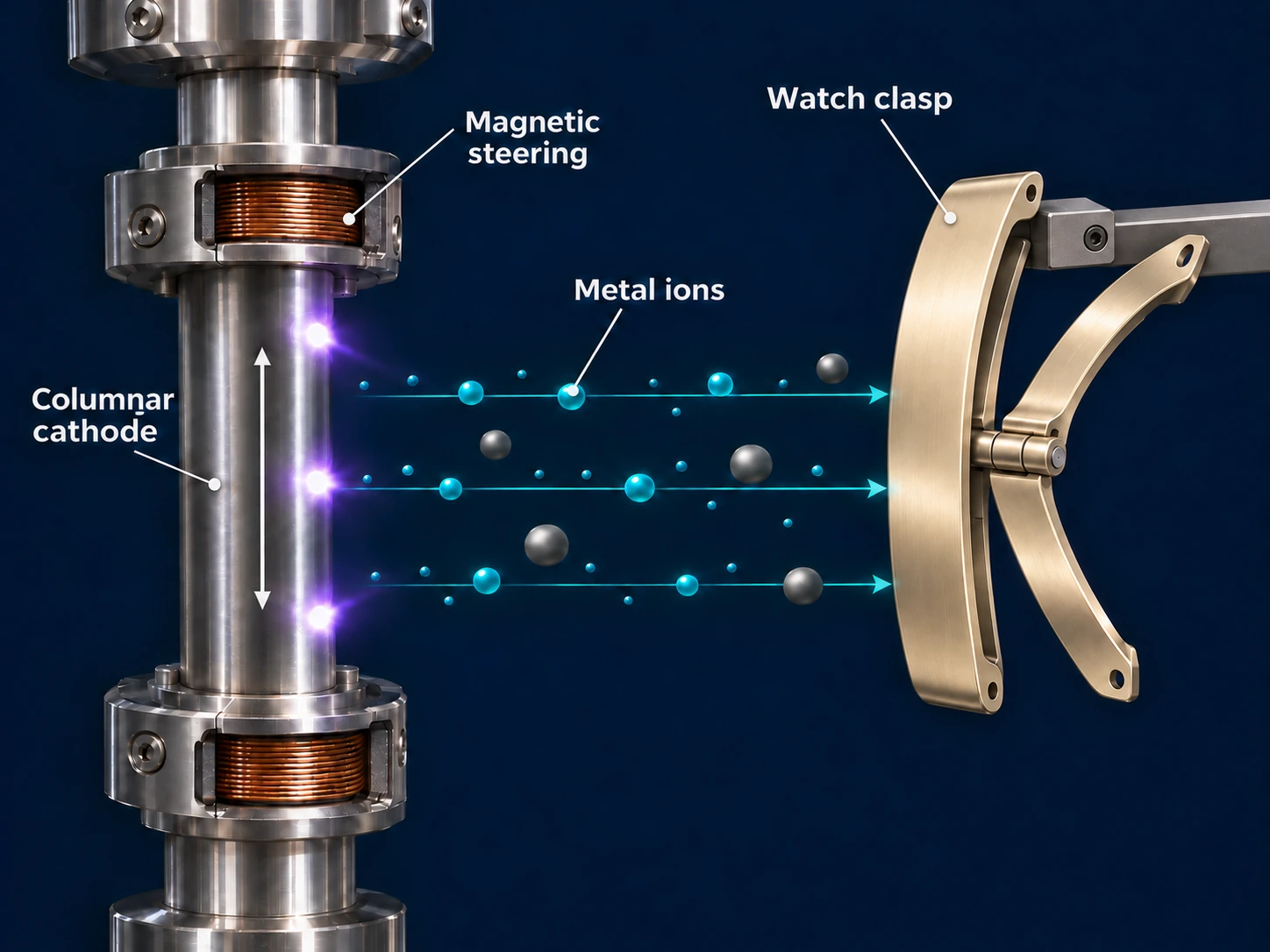
Improve Surface Finish While Retaining Highly Ionised Arc Deposition
NTI ColumnArc uses a magnetically controlled columnar cathode to move arc activity across the target in a more distributed and controlled pattern. Controlled cathode spot motion reduces local heating and the molten droplets that contribute to surface roughness, helping produce a smoother arc deposited surface while retaining the high ionisation and productive deposition character of cathodic arc. The source can be combined with other deposition modules where hard functional, decorative or multilayer PVD coatings need a stronger balance of coating performance, surface finish and production efficiency.
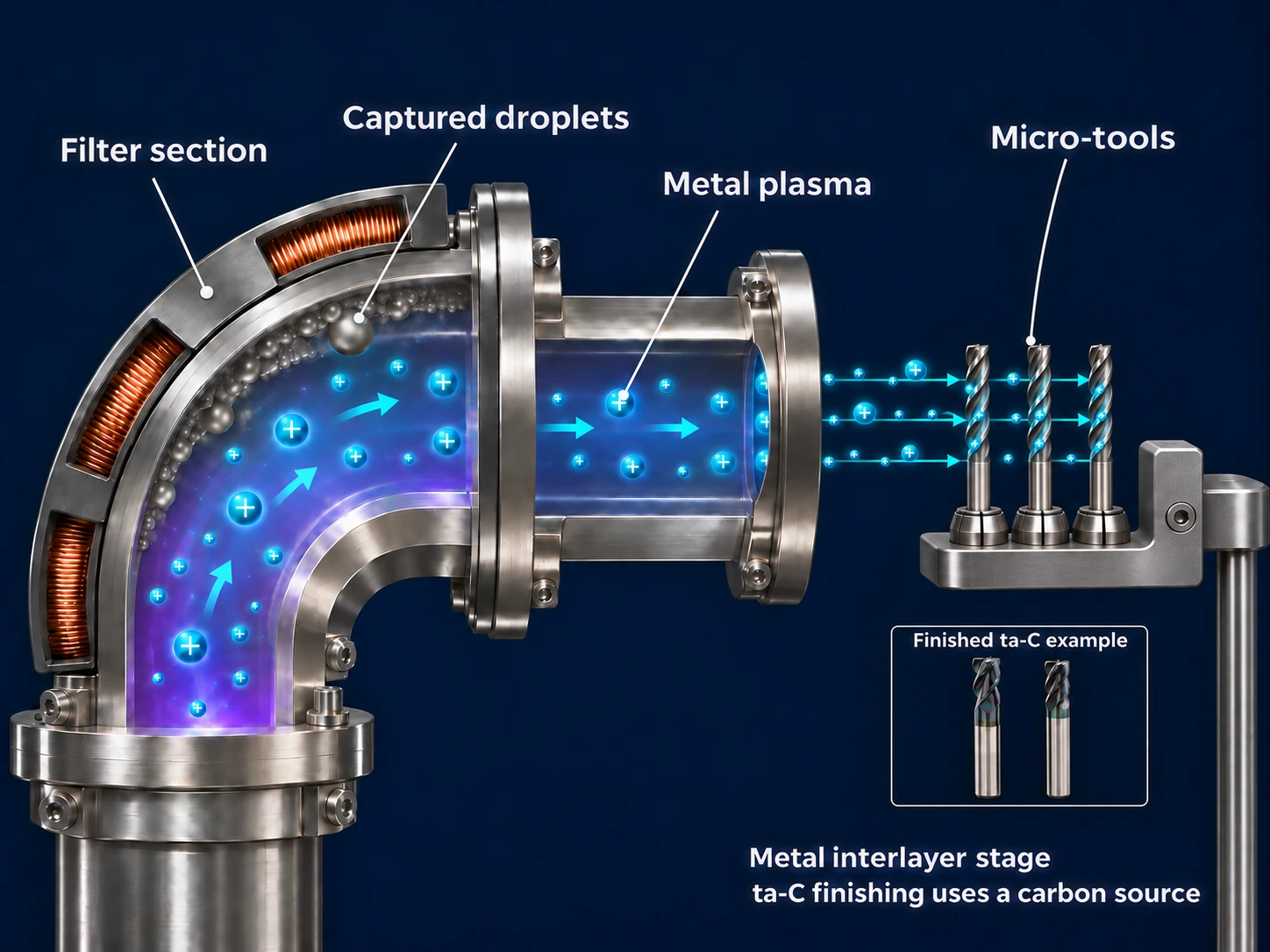
Filter Metal Ion Plasma for Cleaner, Denser Functional Layers
FCVA Metal filters cathodic arc plasma before deposition, reducing macroparticles while retaining a highly ionised metal flux. The cleaner metal-ion stream supports dense interfaces and functional metallic layers where film density, interface quality, conductivity, corrosion performance or hybrid stack design matter more than conventional high-rate arc deposition alone.
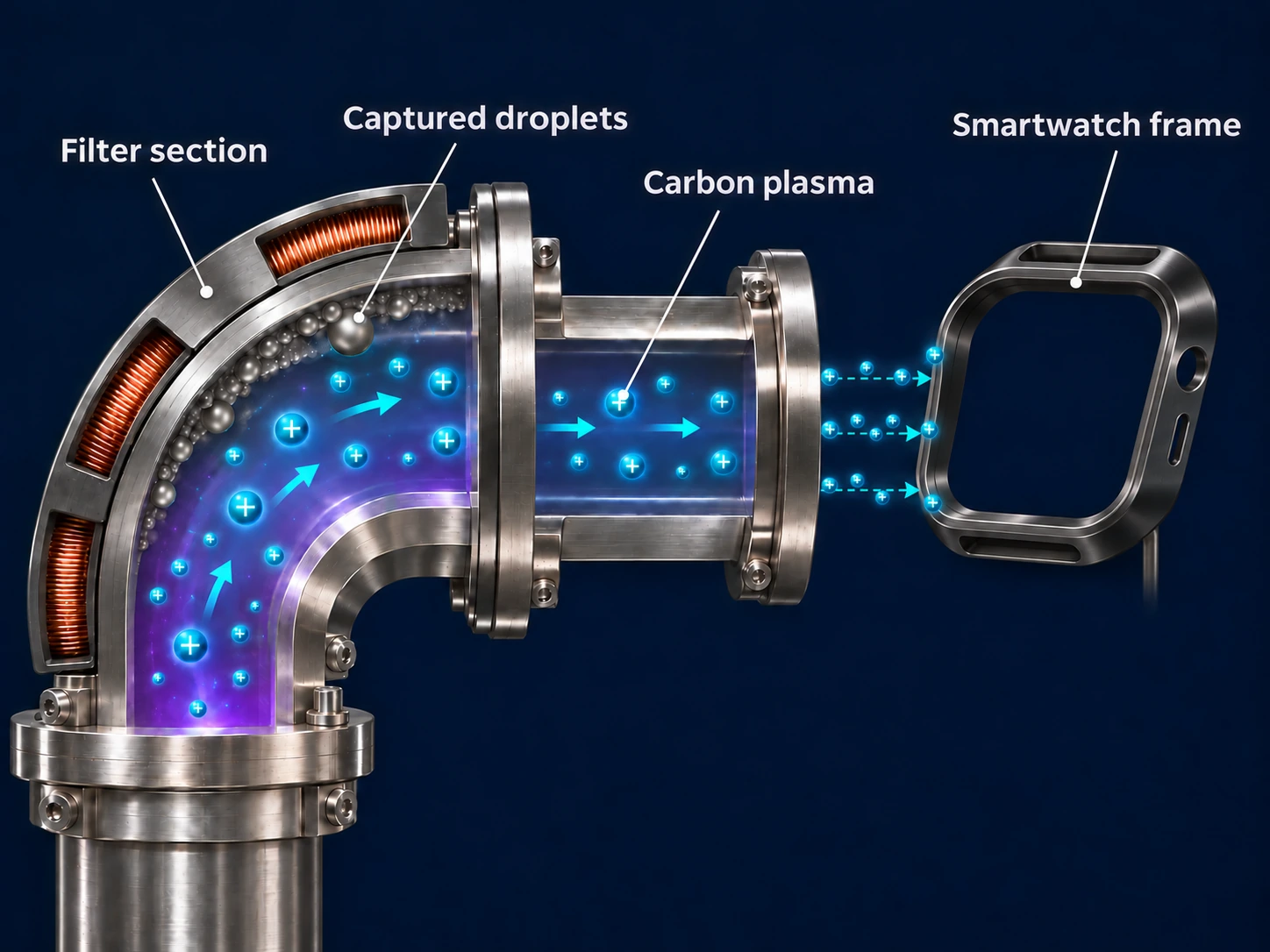
Build Ultra Hard, Dense and Low Friction Hydrogen Free ta C
FCVA Carbon combines highly ionised carbon plasma with magnetic filtration to remove macroparticles before deposition. The filtered carbon flux supports hydrogen-free ta-C with high density, high hardness and low friction, bringing demanding wear surfaces, tools, sliding components and lower-temperature ta-C processes into configurable batch production.
Source availability and combinations depend on the NTI Titan™ architecture, coating stack, substrate, process temperature, chamber sequence and production requirement. Final source selection and application specific performance are confirmed through NTI engineering and process qualification.
From premium finishes and longer component life to precise optical response, controlled electrical properties, cleaner surfaces and durable electrochemical interfaces, the right coating adds value to the product itself. NTI Titan™ brings these surface functions into inline manufacturing, supporting the finish, protection and functionality your application calls for at the volumes your business demands.
Coat large substrates continuously, expose more surfaces on complex parts, increase loading density or bring thin-film absorber deposition into an inline production route. NTI Titan™ offers Horizontal, Vertical, Rotary and CSS architectures to improve coating access, make better use of factory space and support the thermal and process conditions your products require.
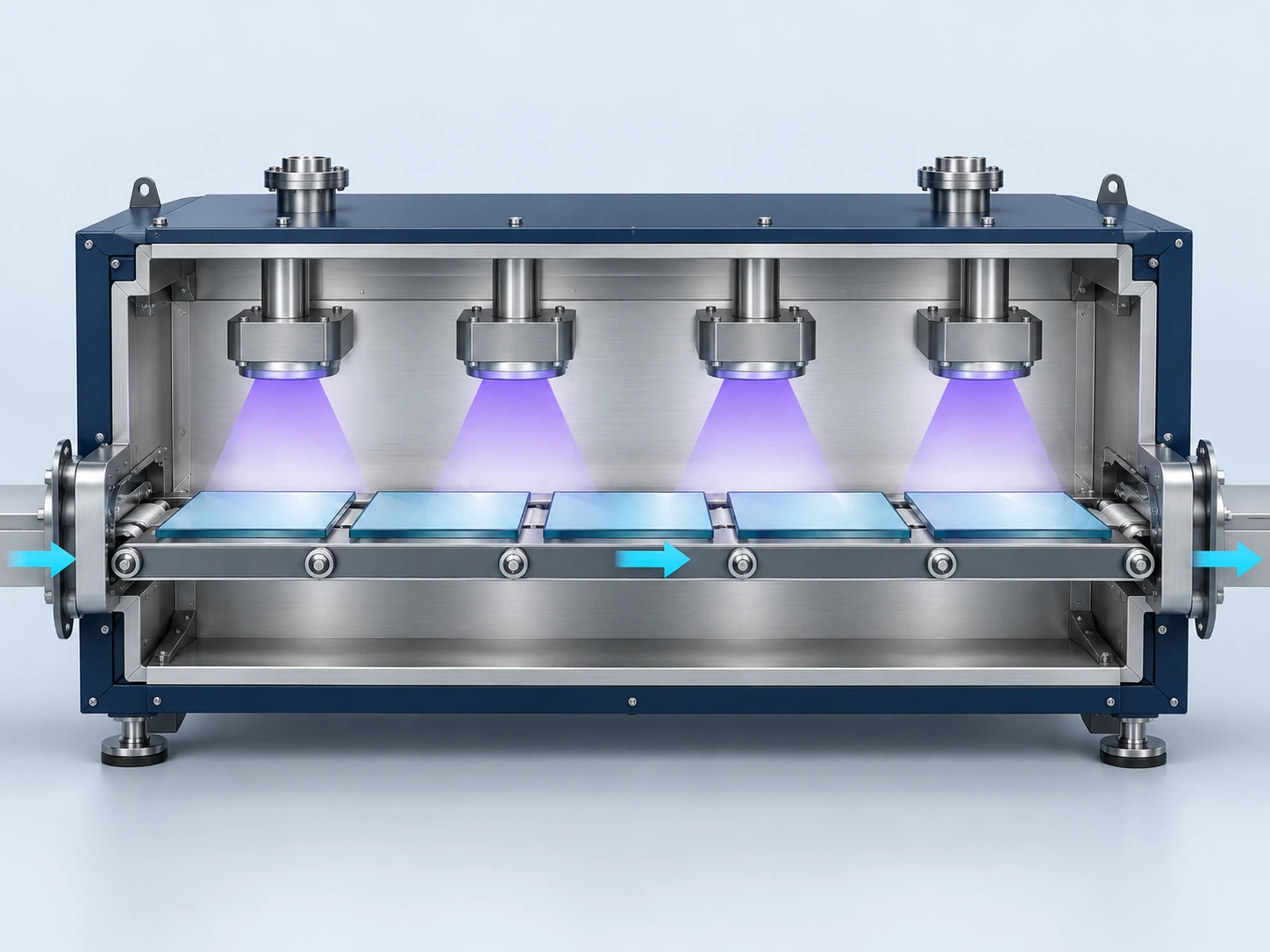
Horizontal transport keeps flat substrates in a consistent face up or face down orientation through sequential pretreatment, deposition, heating and cooling zones. Carrier or carrier free movement supports glass, panels, optics and photovoltaic formats with repeatable layer formation, straightforward upstream and downstream integration and high coated area throughput. It is a strong production route where uniformity, line speed and cost per coated area need to improve together.
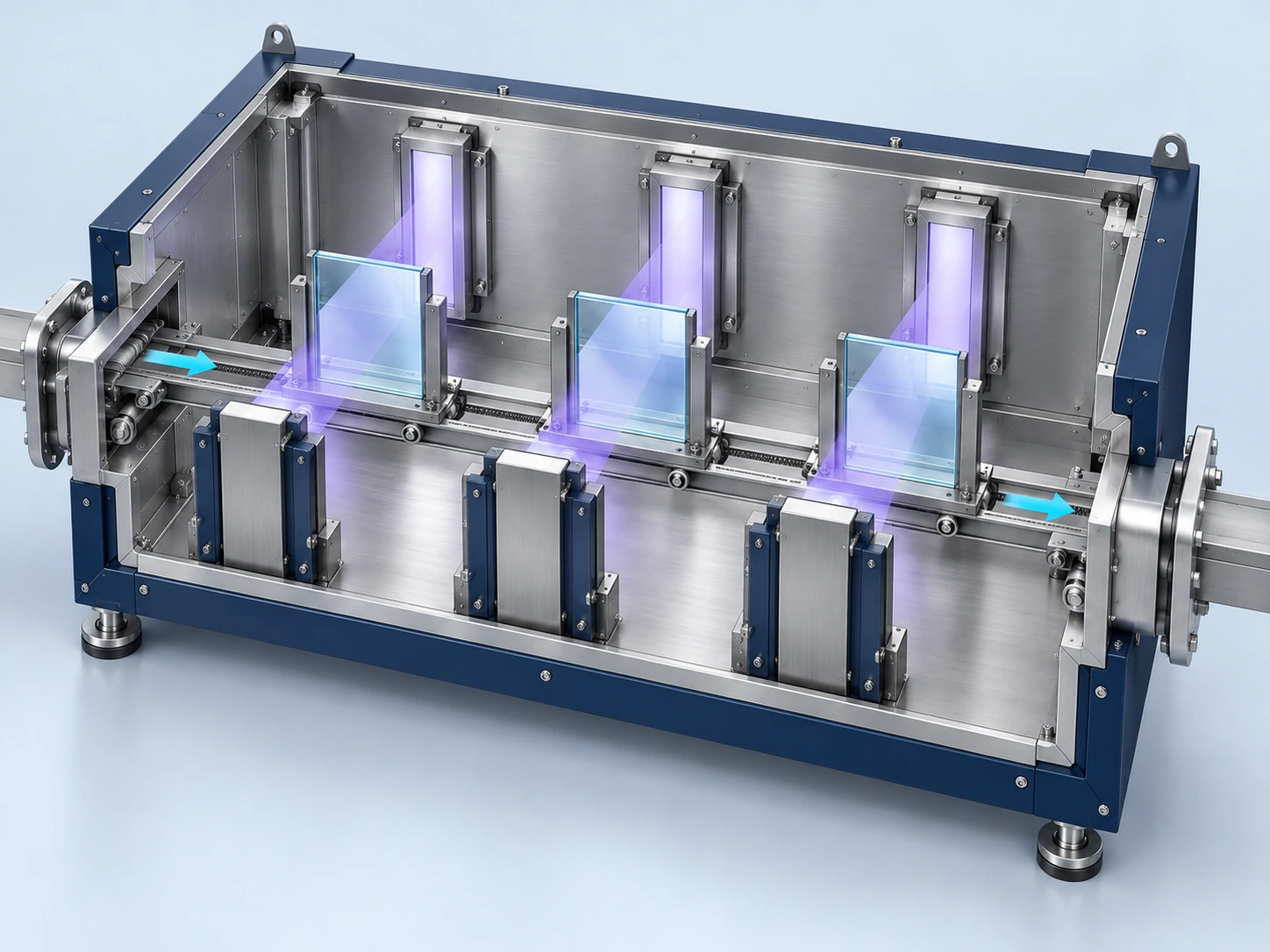
Upright carrier transport reduces the floor width required for large flat products and can help reduce particle fall on to critical surfaces. Single pass movement supports direct, higher throughput processing, while oscillating multi pass movement can expose the same product to one or more sources repeatedly within a shorter process section. This gives more freedom for multilayer stacks and source combinations while balancing coating uniformity, material utilisation and output.
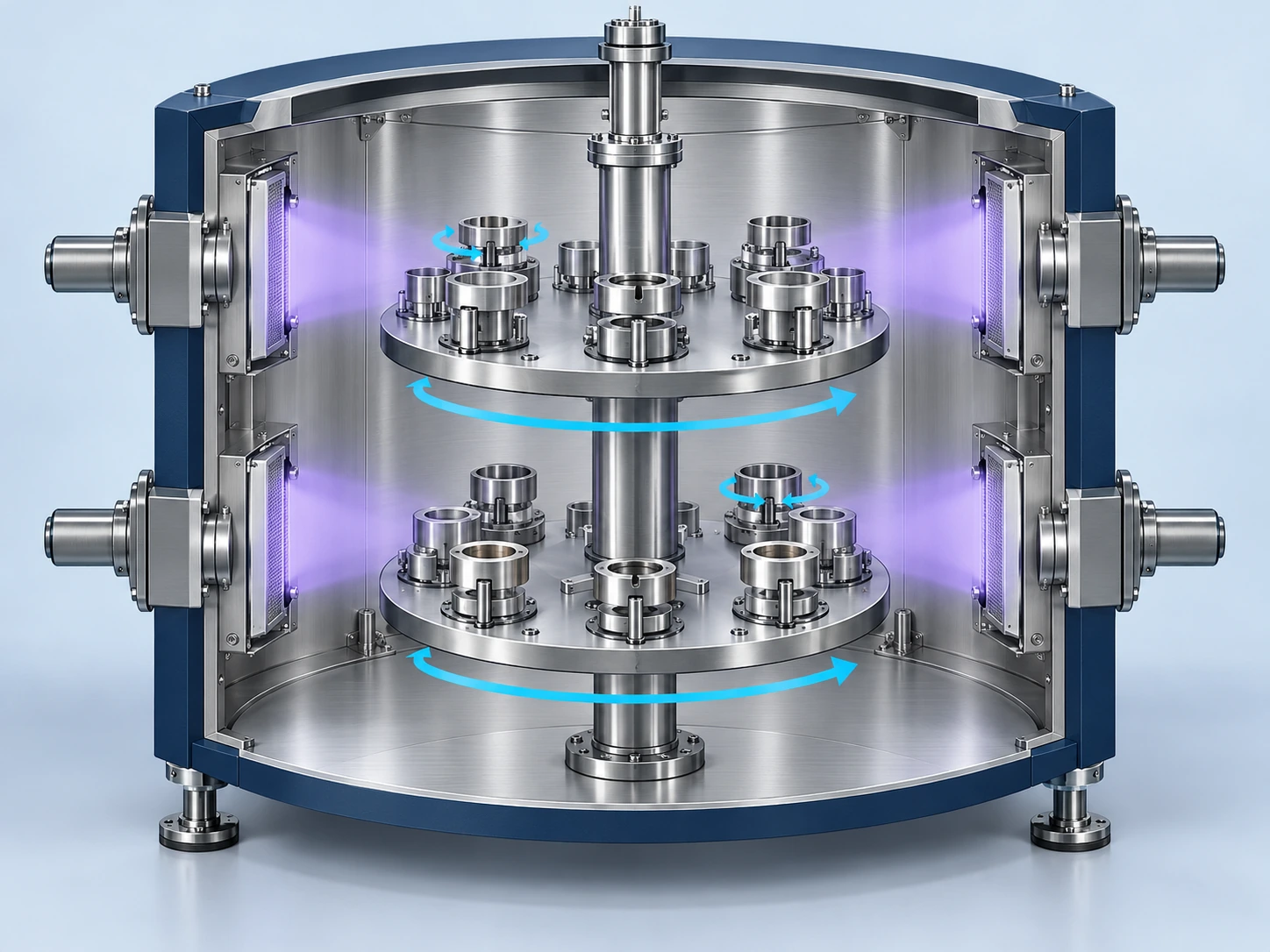
Rotary, planetary and multi axis motion keeps three dimensional parts moving relative to the coating source, repeatedly presenting edges, circumferences and working surfaces during deposition. This allows more tools, rings, shafts and complex components to share the coating zone while maintaining access to critical surfaces that are difficult to treat in a flat pass through format. The production advantage is greater loading density with consistent multi surface exposure.
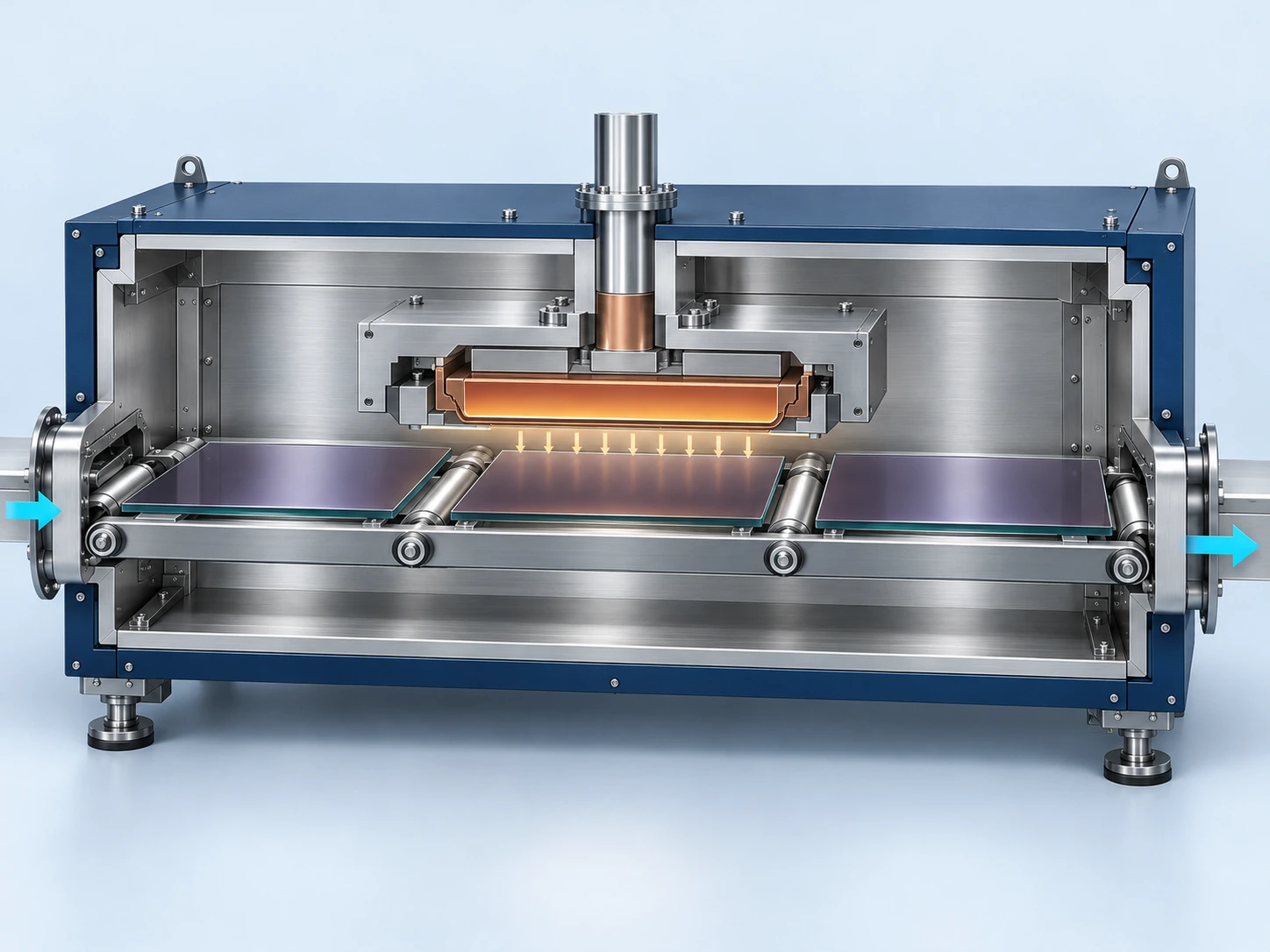
Closed Space Sublimation places the source within millimetres of the substrate, shortening the vapour path to support high deposition rates, strong material utilisation and uniform large area absorber formation. Top down deposition, automatic material feeding, controlled heating and continuous glass movement provide a direct route for CdTe, perovskite and related photovoltaic layers where film formation and production throughput need to be controlled together.
Each NTI Titan™ architecture is engineered around the required coating uniformity, precision, material utilisation, product format, handling concept, line length, factory footprint and production throughput. Final configuration is confirmed through application and production review.
The right architecture can change how much product you coat, how consistently you reach critical surfaces and how efficiently you use factory space. NTI Titan™ Horizontal, Vertical, Rotary and CSS offer different routes to these production gains through their chamber layout, coating range, product movement and deposition capabilities.
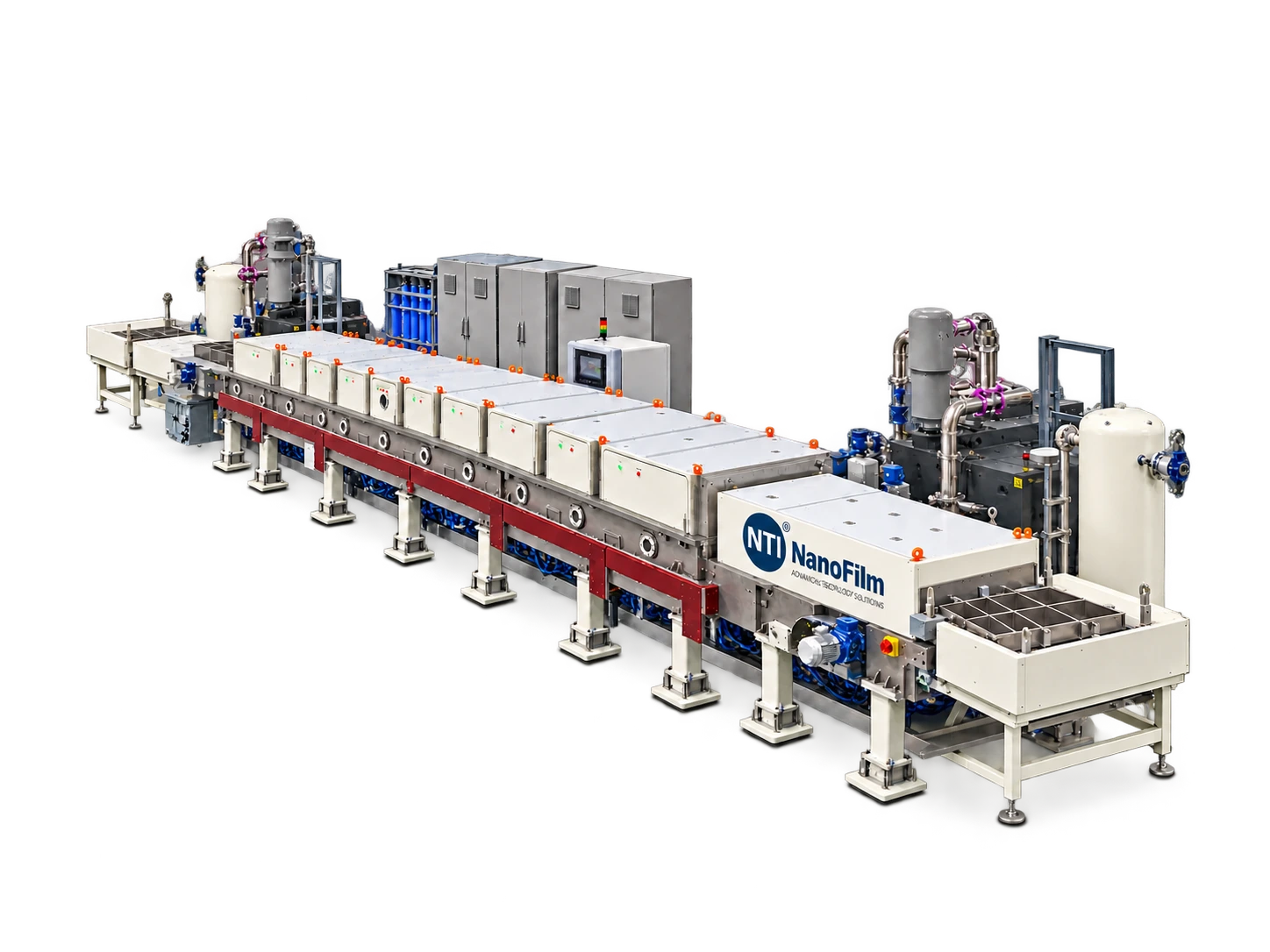 NTI Titan™ Horizontal Keep large-area products moving through continuous coating | 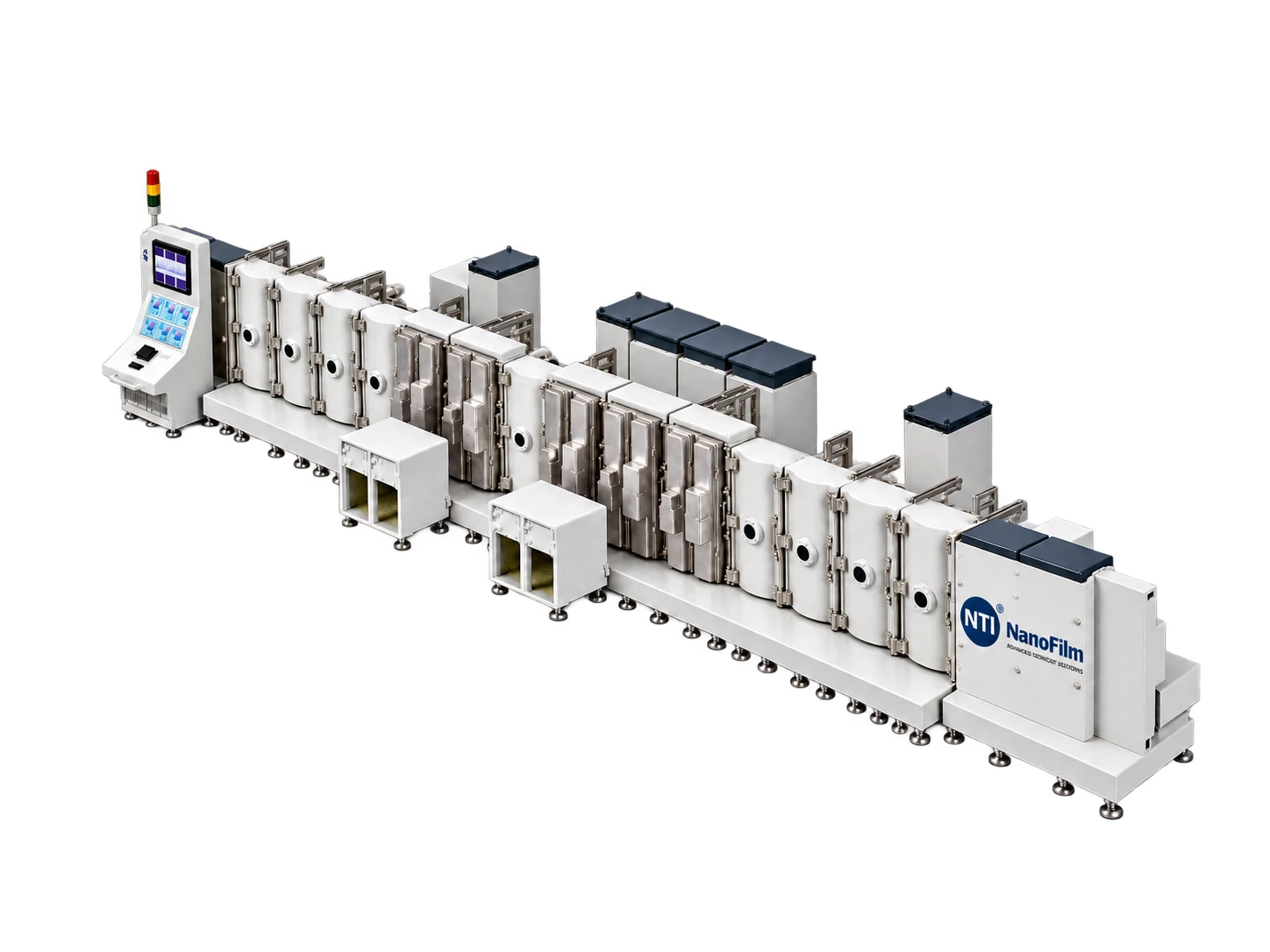 NTI Titan™ Vertical Gain upright coating access with single-pass or multi-pass flexibility | 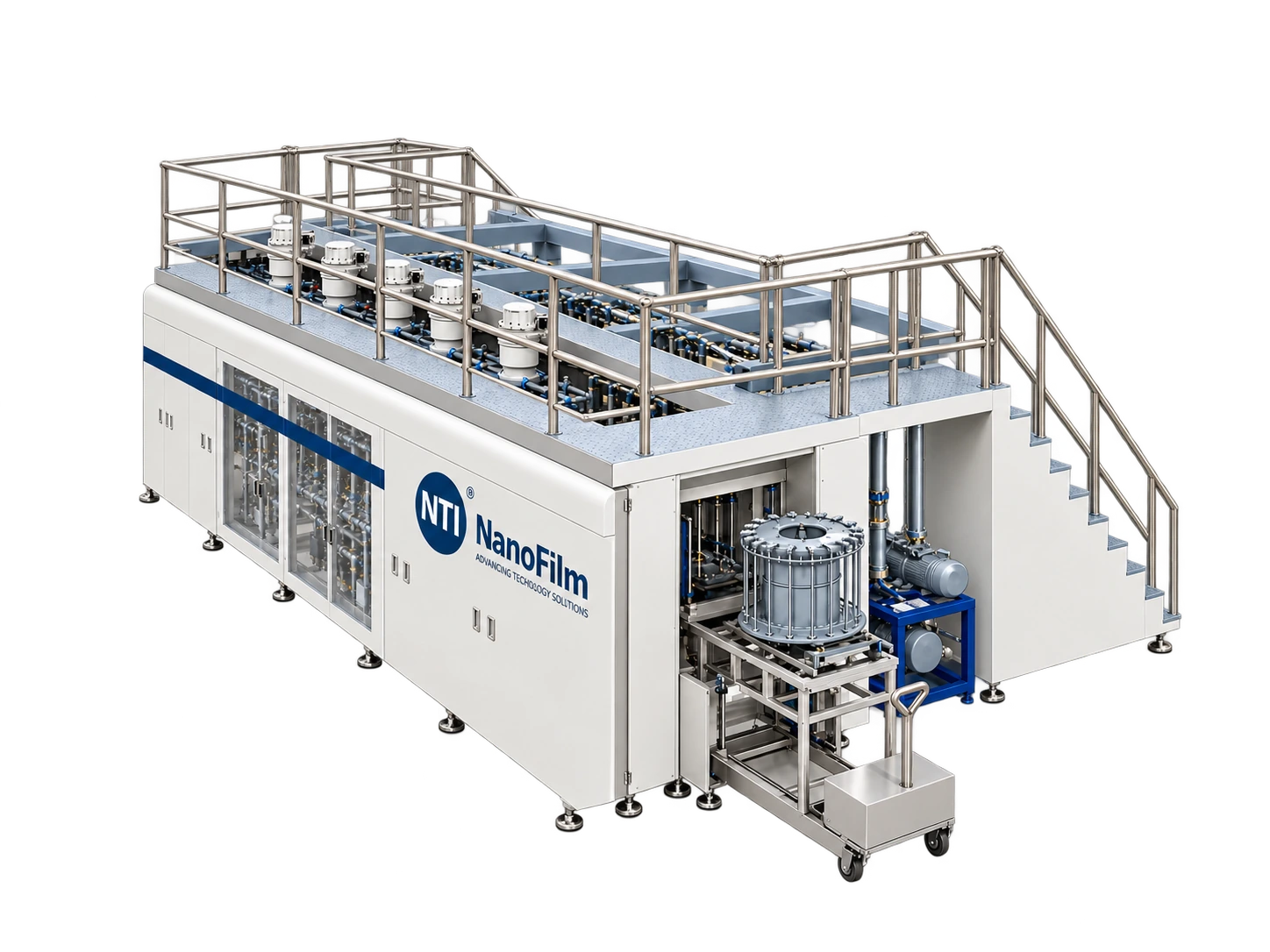 NTI Titan™ Rotary Load more parts and expose more surfaces in every cycle | 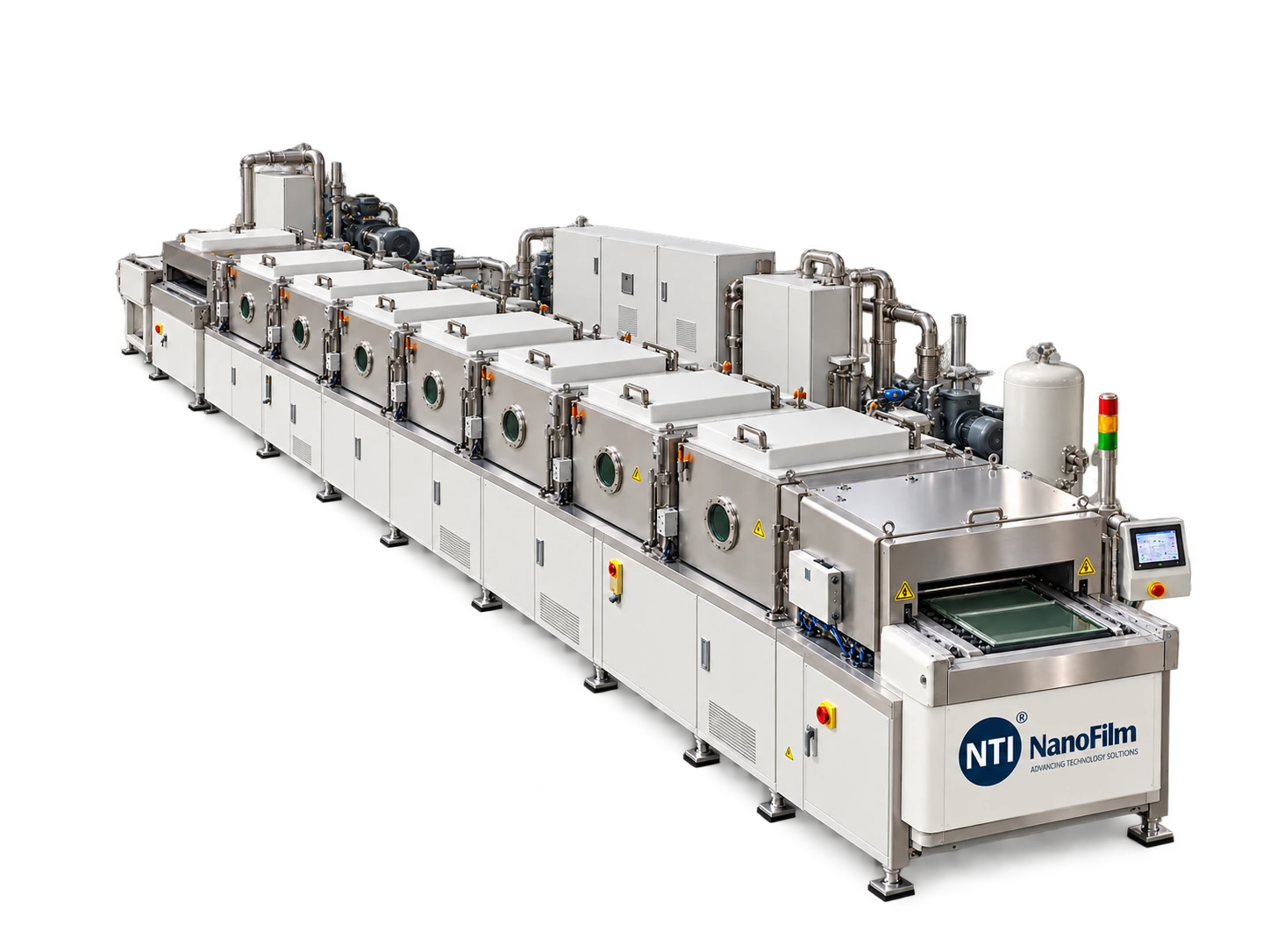 NTI Titan™ CSS Accelerate dry thin-film deposition across large areas |
|
|---|---|---|---|---|
| Chamber Architecture |
|
|
|
|
| Coating Range |
|
|
|
|
| Product Handling & Movement |
|
|
|
|
| Deposition & Plasma Sources |
|
|
|
|
The values shown reflect developed or engineered NTI Titan™ configurations and illustrate current capability rather than platform limits. Final chamber dimensions, coating range, source package, line length, utilities and throughput are configured around the confirmed product, coating process and production requirement.
Cutting tools and piston rings demand lasting wear protection; precision optics need controlled films on critical surfaces; bipolar plates and thin-film solar depend on functional coatings at production volumes. NTI Titan™ combines application-specific deposition with inline product handling to help manufacturers increase coated output while protecting the surface performance that makes each product work, from industrial components to premium consumer products.
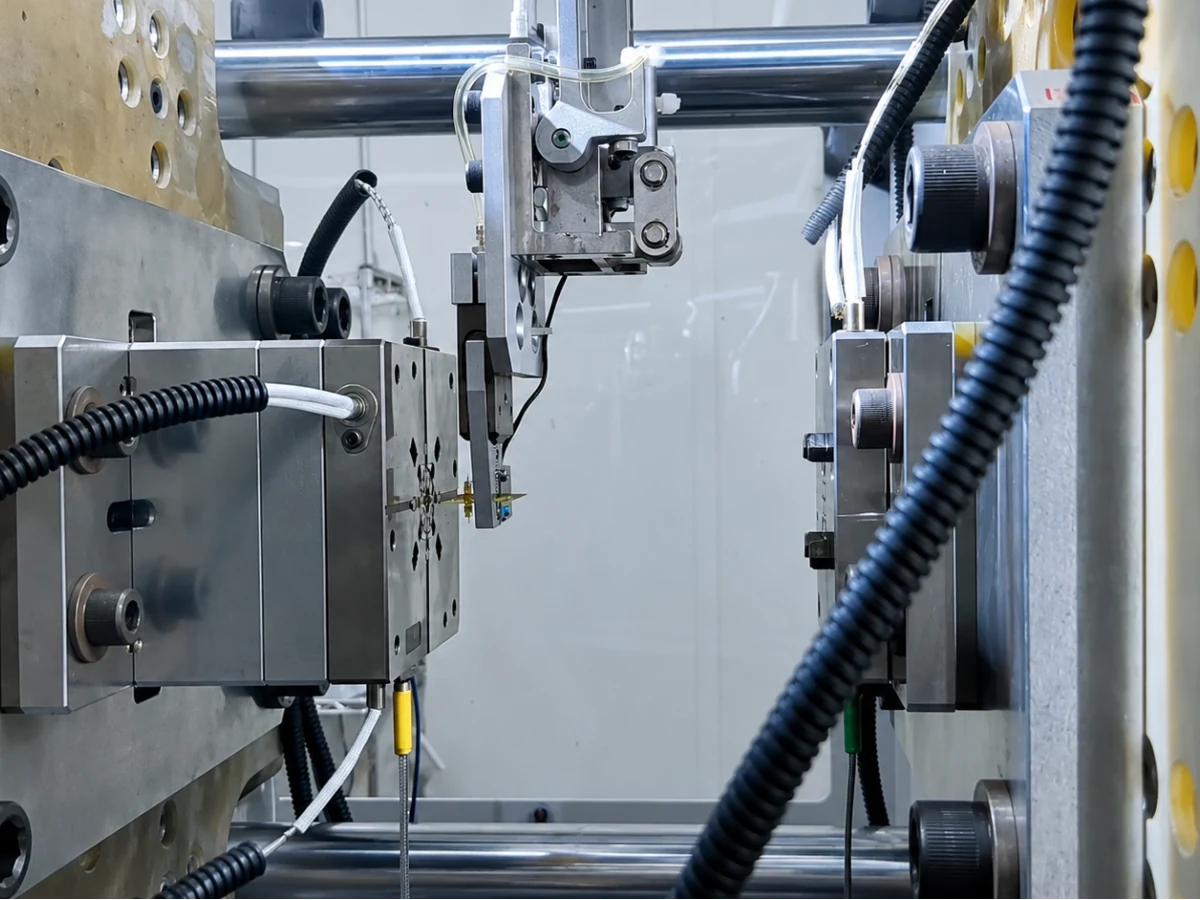
Move drills, cutting tools, dies and mold inserts from batch constrained coating into a higher capacity production flow without giving up the wear, friction and release performance that determines tool life. NTI Titan™ Inline Coating System has demonstrated 1.10 million drills coated per day in a configured production program.
High density loading, planetary movement and automated transfer can be combined with FCVA ta-C, DLC and hard PVD routes, giving manufacturers a platform to raise output, lower coating cost per tool and expand around future tooling programs.
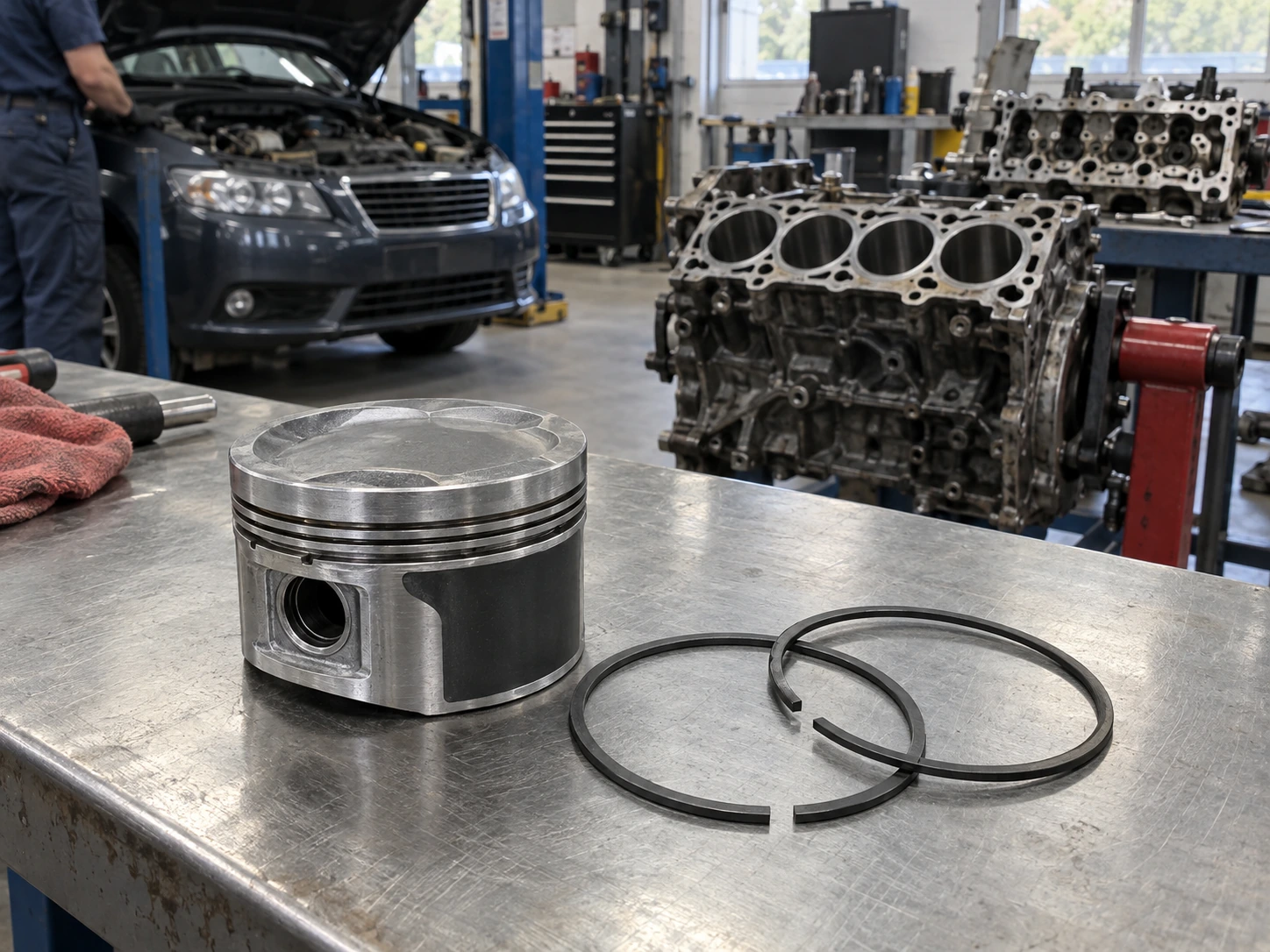
Bring piston ring coating directly into mass production where friction control, wear resistance and consistency must hold across very large volumes. An NTI iTAC Protect™ piston ring program has demonstrated more than 5× longer service life versus untreated rings, establishing a strong performance foundation for inline production.
NTI Titan™ Inline Coating System combines FCVA deposition with automated handling so manufacturers can reduce external coating handoffs, repeat ring to ring performance and configure capacity around future engine component volumes and coating requirements.
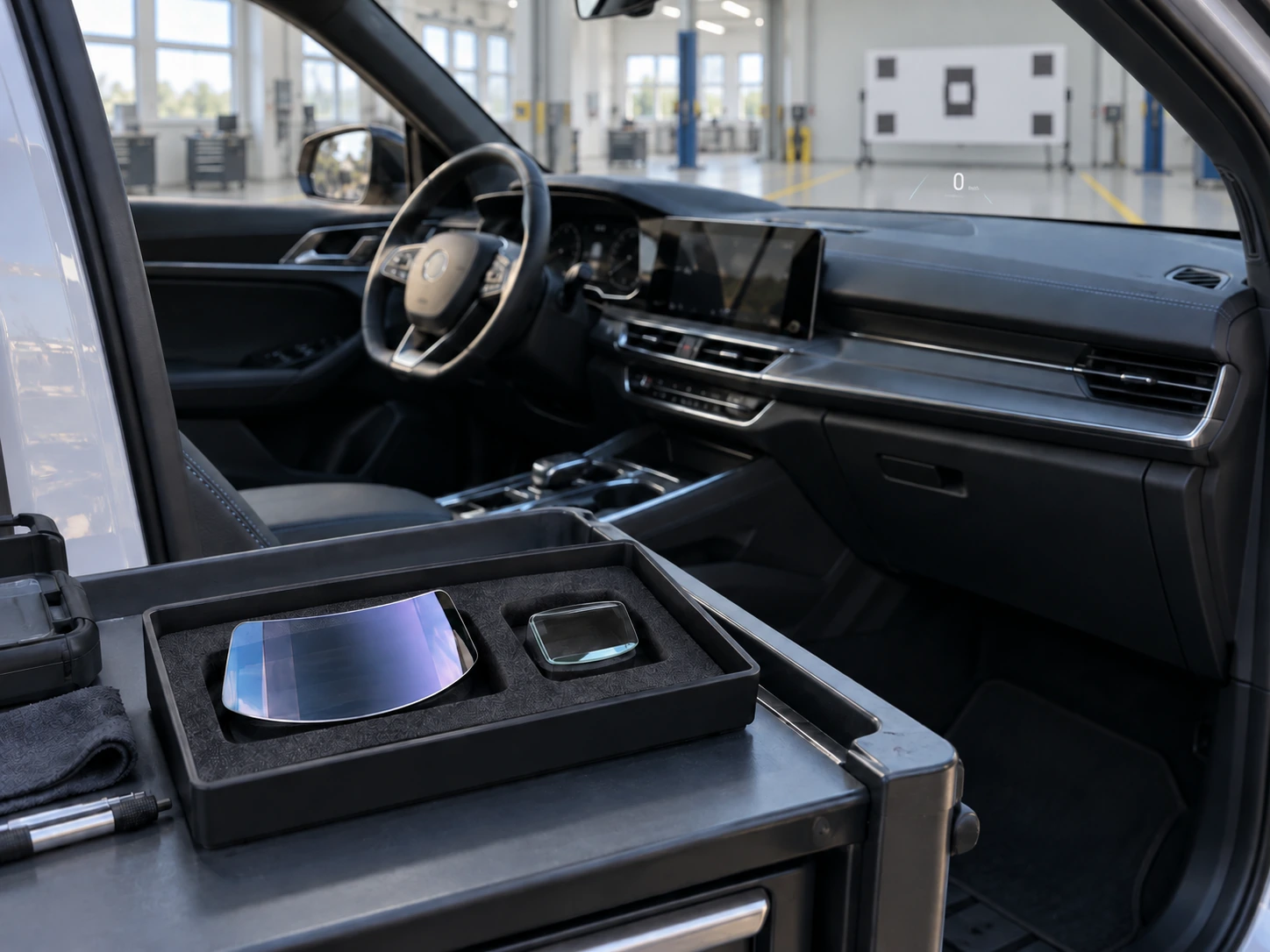
Move HUD, LiDAR, camera, sensing and display optics beyond batch constrained capacity while maintaining the coating uniformity and run to run consistency demanded by optical production. NTI Titan™ Inline Coating System has demonstrated more than 5,000 HUD parts per day in a configured production program.
Vertical or horizontal architectures can be combined with the coating stack required by the optic, giving manufacturers a route to consolidate capacity, support more optical formats and build toward higher production volumes with fewer coating systems.
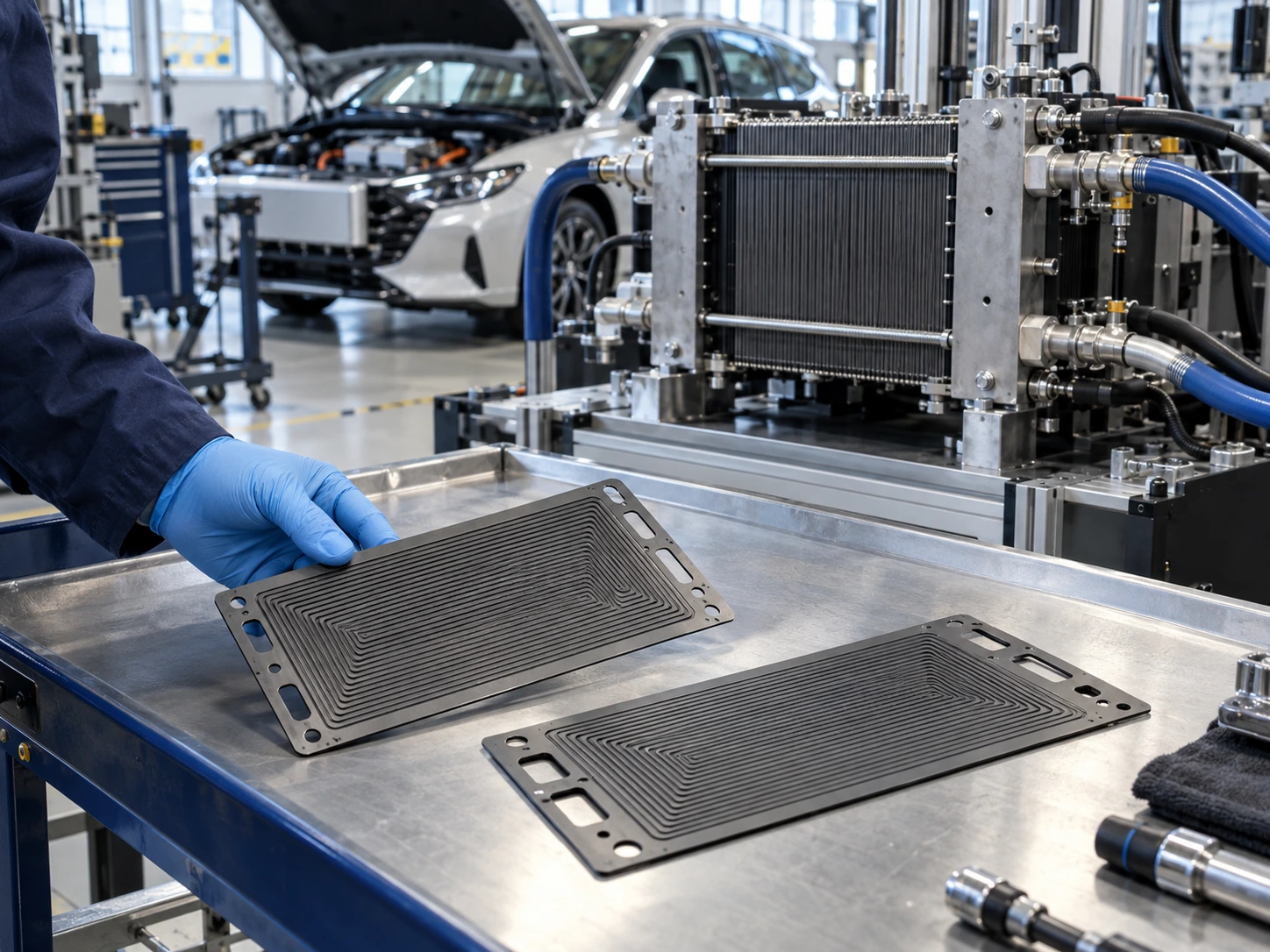
Increase metallic bipolar plate output without trading away the electrical and corrosion performance that determines stack efficiency and durability. Selected NTI coating programs have achieved initial interfacial contact resistance at or below 2 mΩ·cm², providing a proven performance basis for higher volume production.
NTI Titan™ Inline Coating System can combine FCVA and complementary PVD with single or double sided plate handling, allowing manufacturers to reduce production handoffs, control coating repeatability and configure the line around future plate formats, output targets and acceptance requirements.
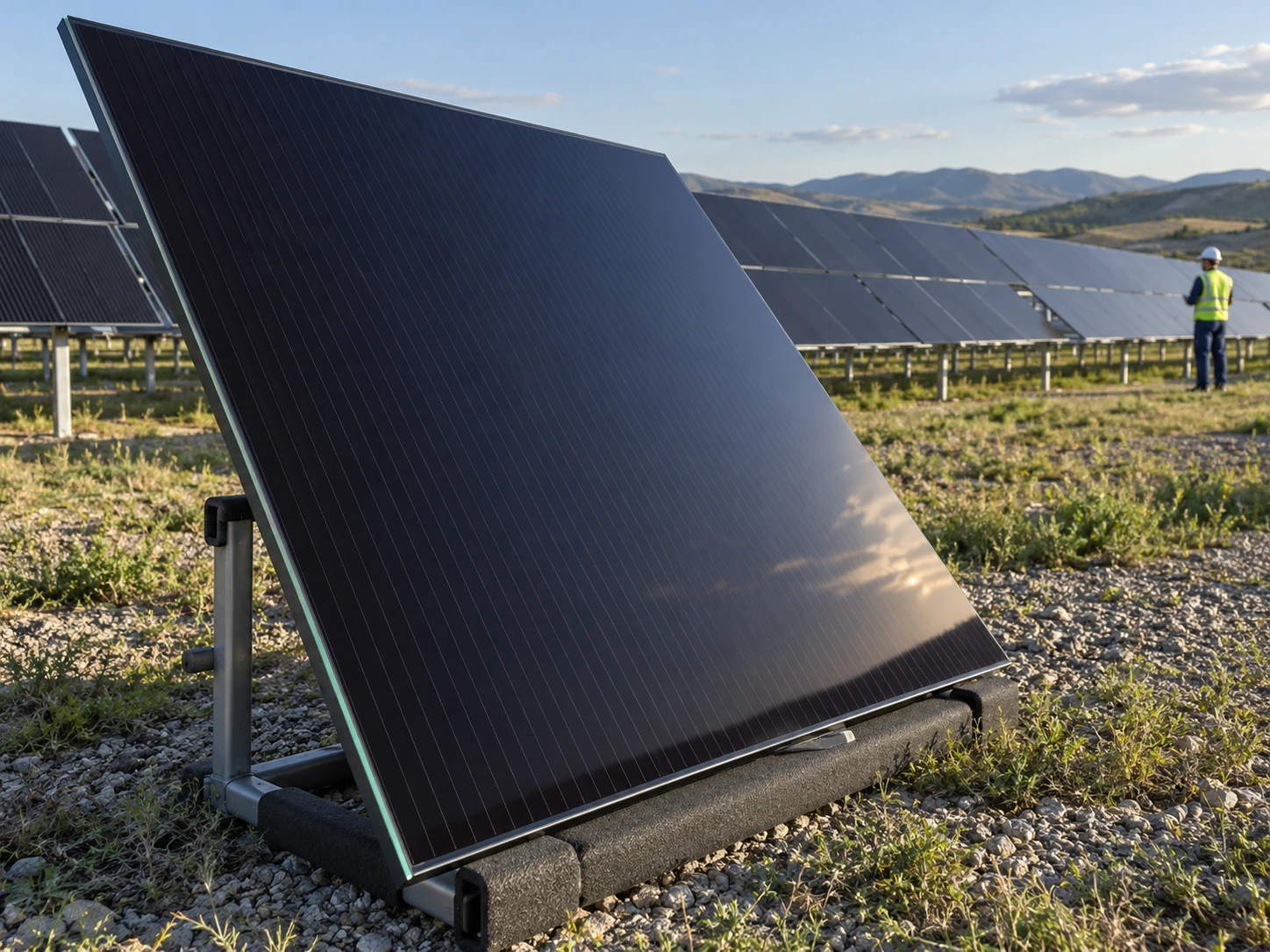
Move large area CdTe glass through continuous PVD coating with the film uniformity, uptime and production rhythm needed for competitive solar manufacturing. NTI has demonstrated 1,600 × 1,200 mm glass with coating cycles down to 45 seconds per substrate.
Horizontal top down sputtering, rotatable cathodes and controlled substrate spacing support repeated functional layers across large areas, while the line architecture can be engineered around future glass formats, layer sequences and production volumes.
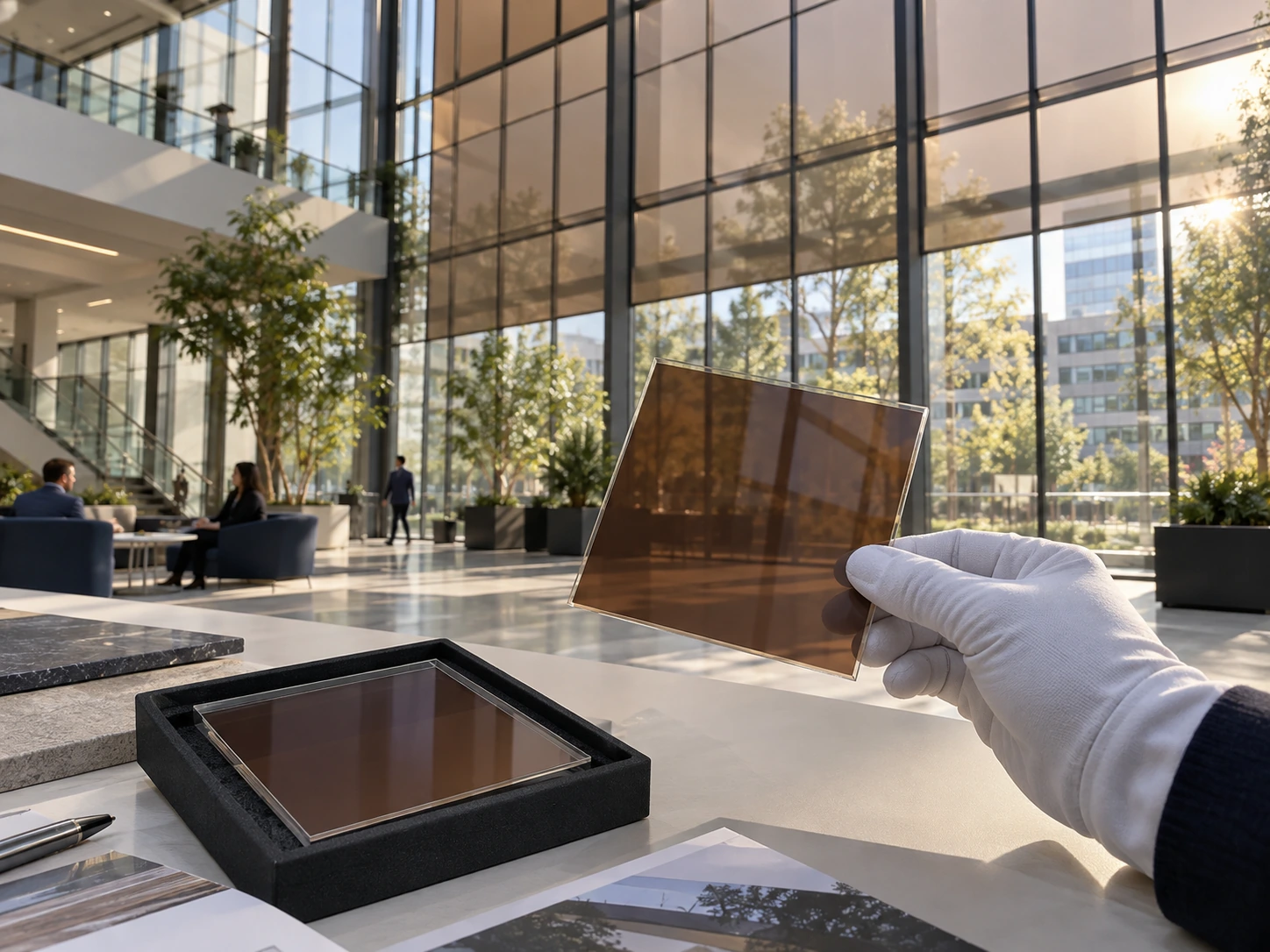
Move perovskite dry deposition toward higher output manufacturing while maintaining the source spacing, material delivery and thermal control needed for consistent absorber formation. NTI CSS technology has demonstrated deposition rates from 1 to 10 µm/min, providing a strong route to shorter coating cycles.
NTI Titan™ Inline Coating System combines top down Closed Space Sublimation, automatic material feeding and controlled glass transport with complementary PVD routes, giving manufacturers room to extend deposition capability across more of the cell stack as production requirements evolve.
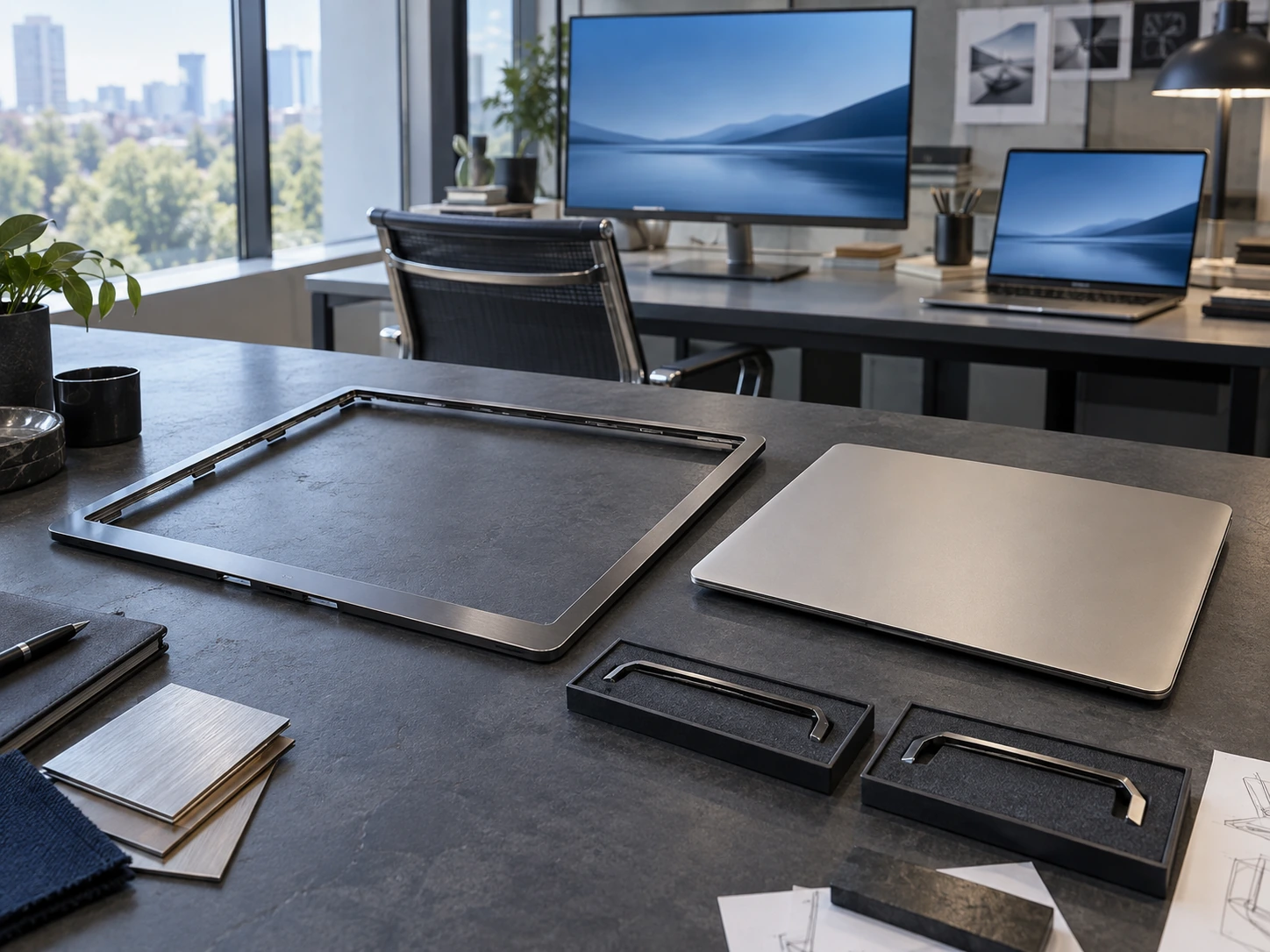
Raise decorative coating output for housings, frames, bezels, trims and larger consumer electronics parts without losing the color and finish consistency that brand programs demand. NTI has demonstrated inline architectures for components up to 1,600 × 1,200 mm.
Configurable presentation, double sided processing and automated handling can support metallic, black, gold and interference finishes with fewer touchpoints, giving manufacturers a flexible route to increase finished part volume, lower coating cost per component and accommodate new product formats.

Bring the next production challenge into the same conversation, whether it involves automotive and mobility components, semiconductor tools, luxury goods, watches and eyewear, homeware, sanitary hardware or other industrial parts. The opportunity is strongest where coating performance, repeatability and production economics need to improve together.
NTI Titan™ Inline Coating System can be configured around the product, required surface function, handling concept and production volume, opening a route to inline manufacturing for both established applications and new programs as demand develops.
Performance figures represent demonstrated application outcomes and illustrate production capability rather than system limits. Final configuration and performance are engineered around the substrate, coating specification, production volume, process requirements and acceptance criteria.
Broaden the coating capabilities you can bring in-house, from precision surface protection and functional films to higher-volume production and component recovery, with NTI equipment configured around your parts and production goals.
NTI Titan™ Inline Coating System can match the level of automation to your volume, product sensitivity, traceability needs and labor model. Begin with flexible operator loading, move into automated carrier flow, or extend to robotic part handling when greater consistency and unattended production become the priority.
Keep loading and unloading in the operator’s hands while NTI Titan™ Inline Coating System manages chamber transfer, recipes and process recording automatically. This is a practical fit for mixed products and moderate volumes where flexibility matters as much as repeatability.
Automated carrier movement, identification, buffering and recipe verification help keep lots moving with fewer manual transfers. This suits operations that want stronger continuity and lot traceability without introducing robotic handling for every part.
Robotic loading, orientation and unloading can be combined with inspection, reject segregation and MES data exchange. This suits higher volume production and sensitive parts where scratches, contamination, loading errors or orientation variation need tighter control.
Move from a coating result validated on your product to an inline system built to deliver it consistently. NTI supports coating qualification, equipment engineering and factory acceptance around your output goals, with clear milestones from the first trials through production ramp-up.
Align the coating result, product format, output target and factory requirements from the outset.
Test coating performance on your components against the criteria that matter to your application.
Establish the recipe and acceptance criteria needed to maintain qualified coating performance in production.
Configure process chambers, handling and automation around your coating and capacity requirements.
Check equipment readiness and agreed process performance through factory acceptance.
Complete site acceptance, training and production ramp-up with NTI technical support.
Your production needs continue long after commissioning. NTI supports operators and maintenance teams with process transfer, preventive maintenance, spare parts, diagnostics and upgrade pathways so you can protect uptime, recover faster from issues and keep the system relevant as products and production requirements evolve.
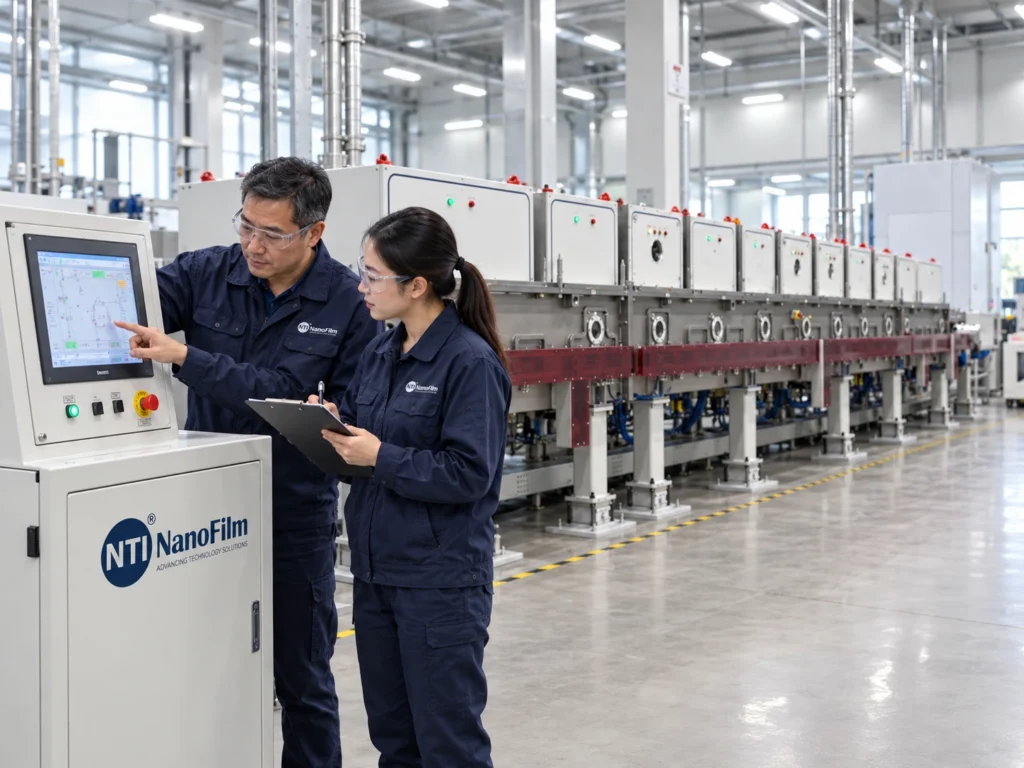
Bring your line into operation with coordinated installation, start-up and agreed site acceptance checks.
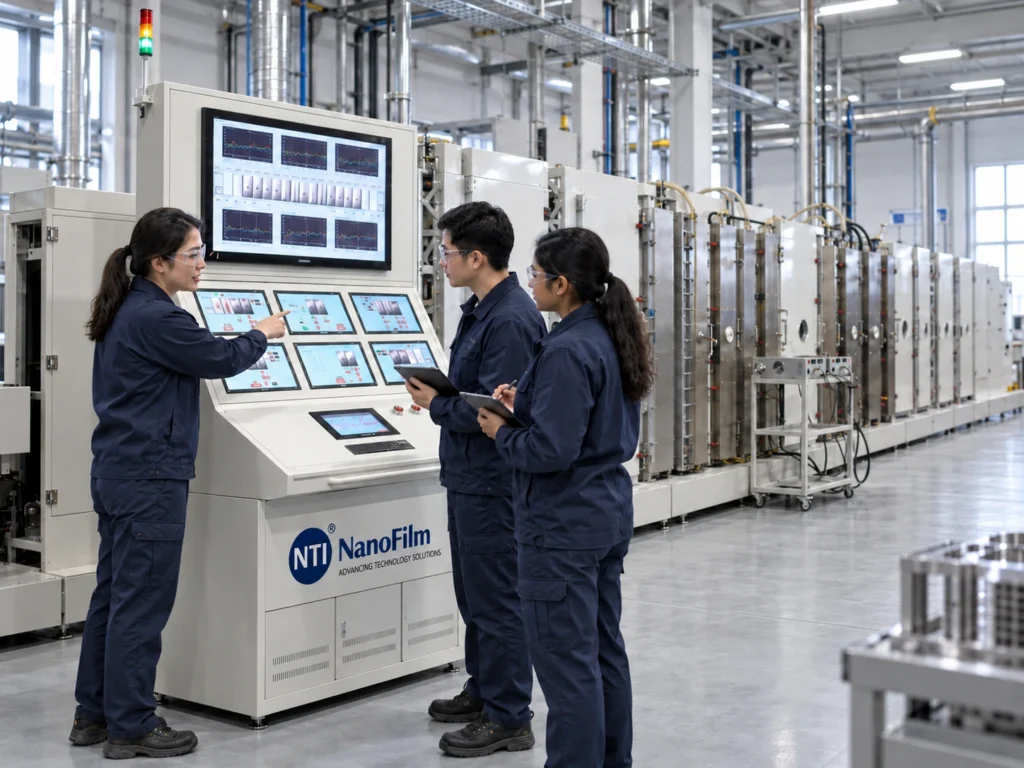
Equip your teams with the recipe, process and system knowledge for confident daily operation.
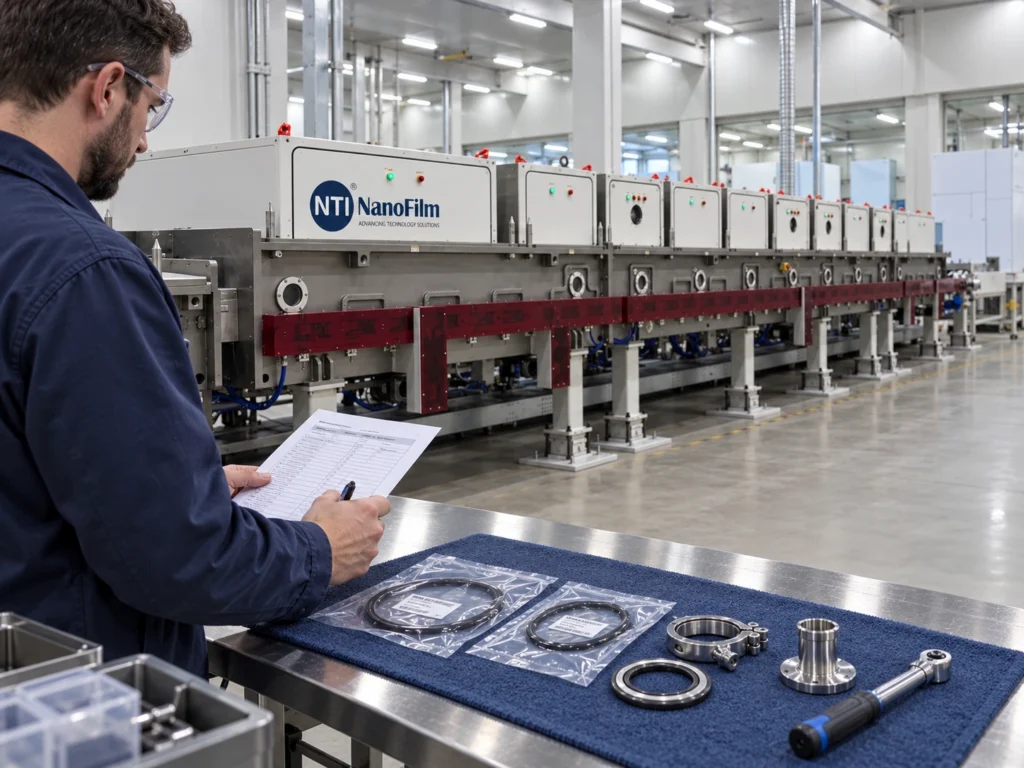
Plan service intervals and critical spares to reduce avoidable stops and support faster recovery.
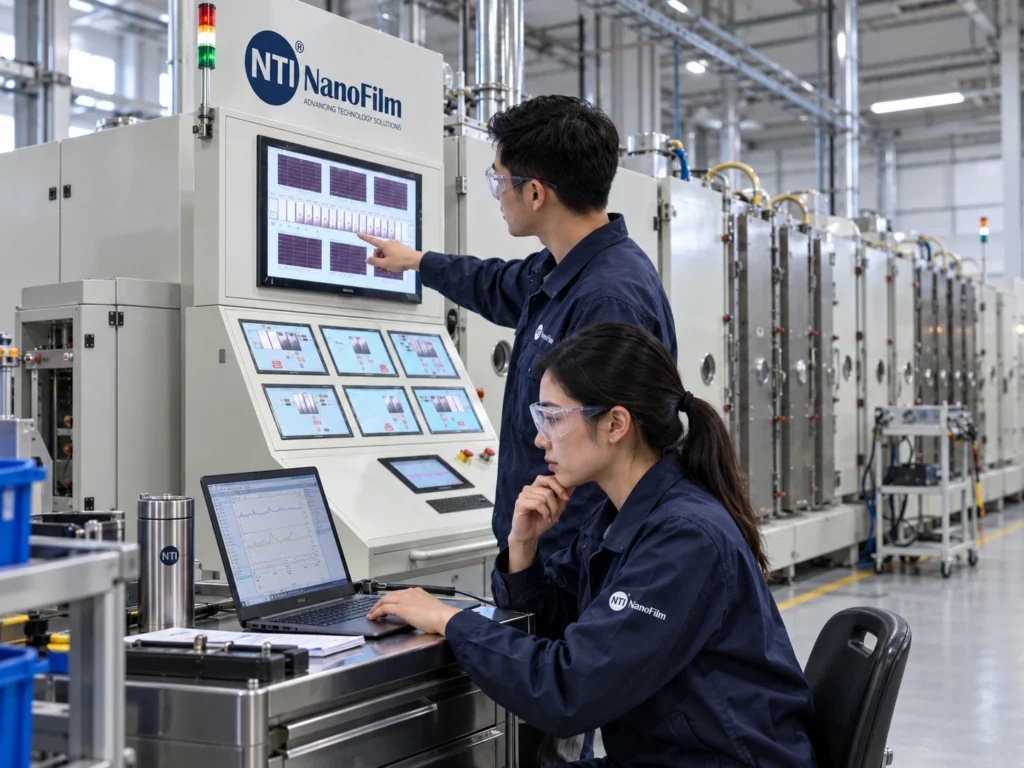
Resolve coating and equipment issues with technical diagnostics that help restore stable production sooner.
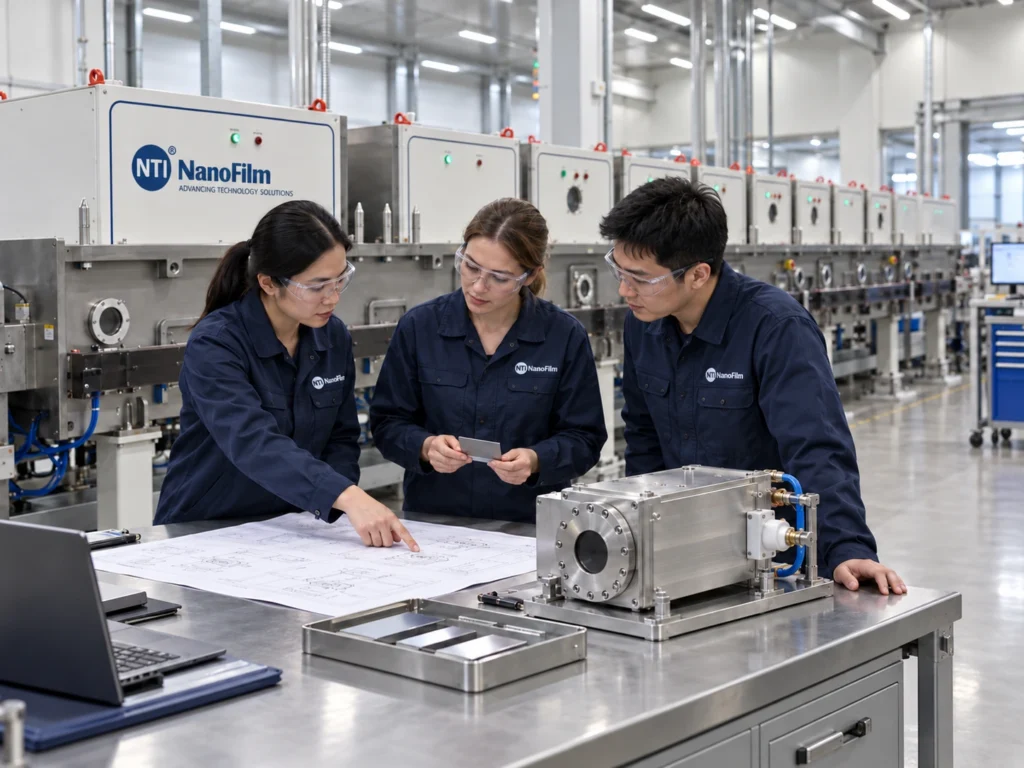
Adapt to new products through reviewed recipes, source upgrades and expanded automation or capacity.
Read more about coating technology, production volume and equipment decisions for industrial inline coating
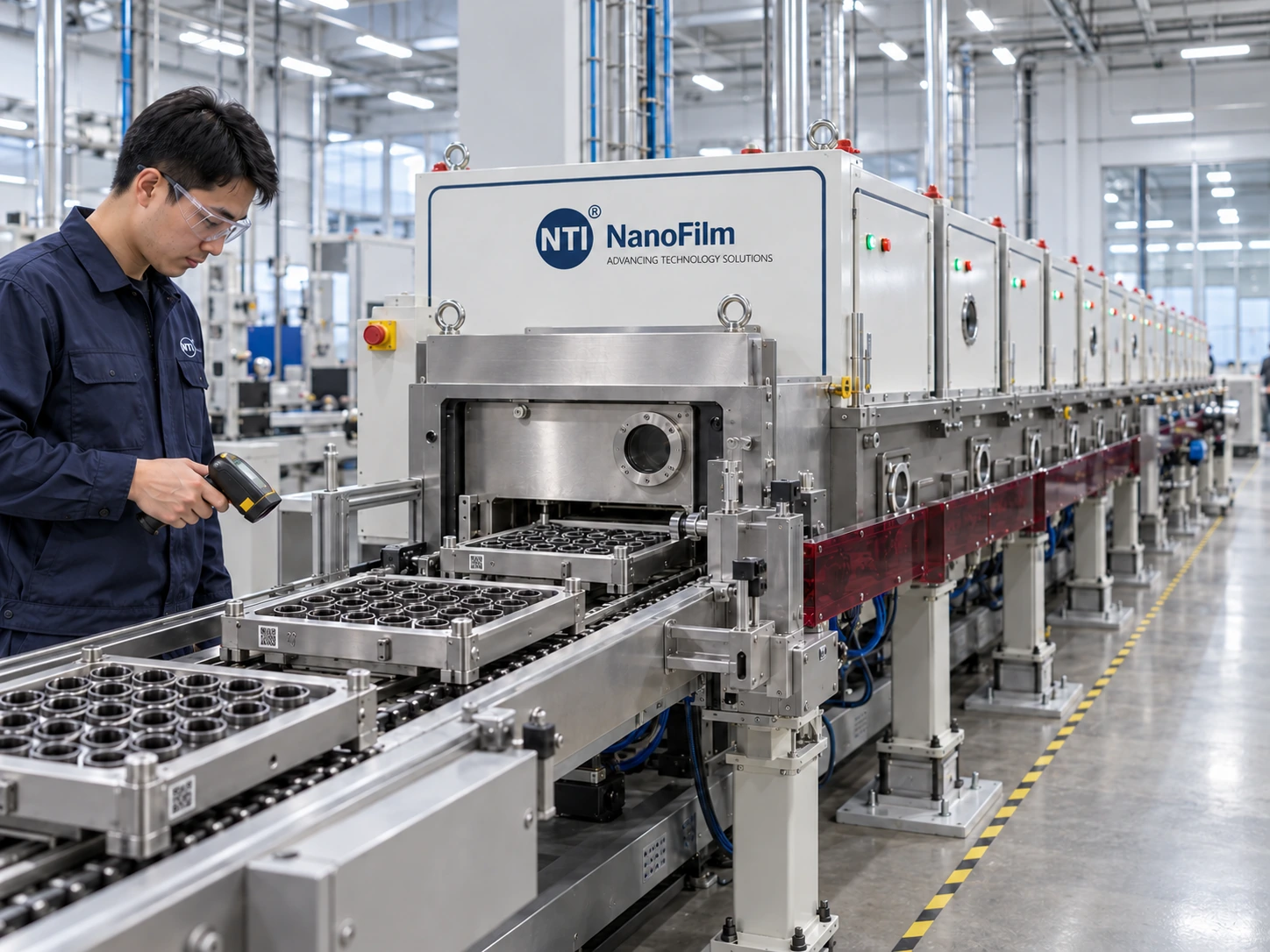
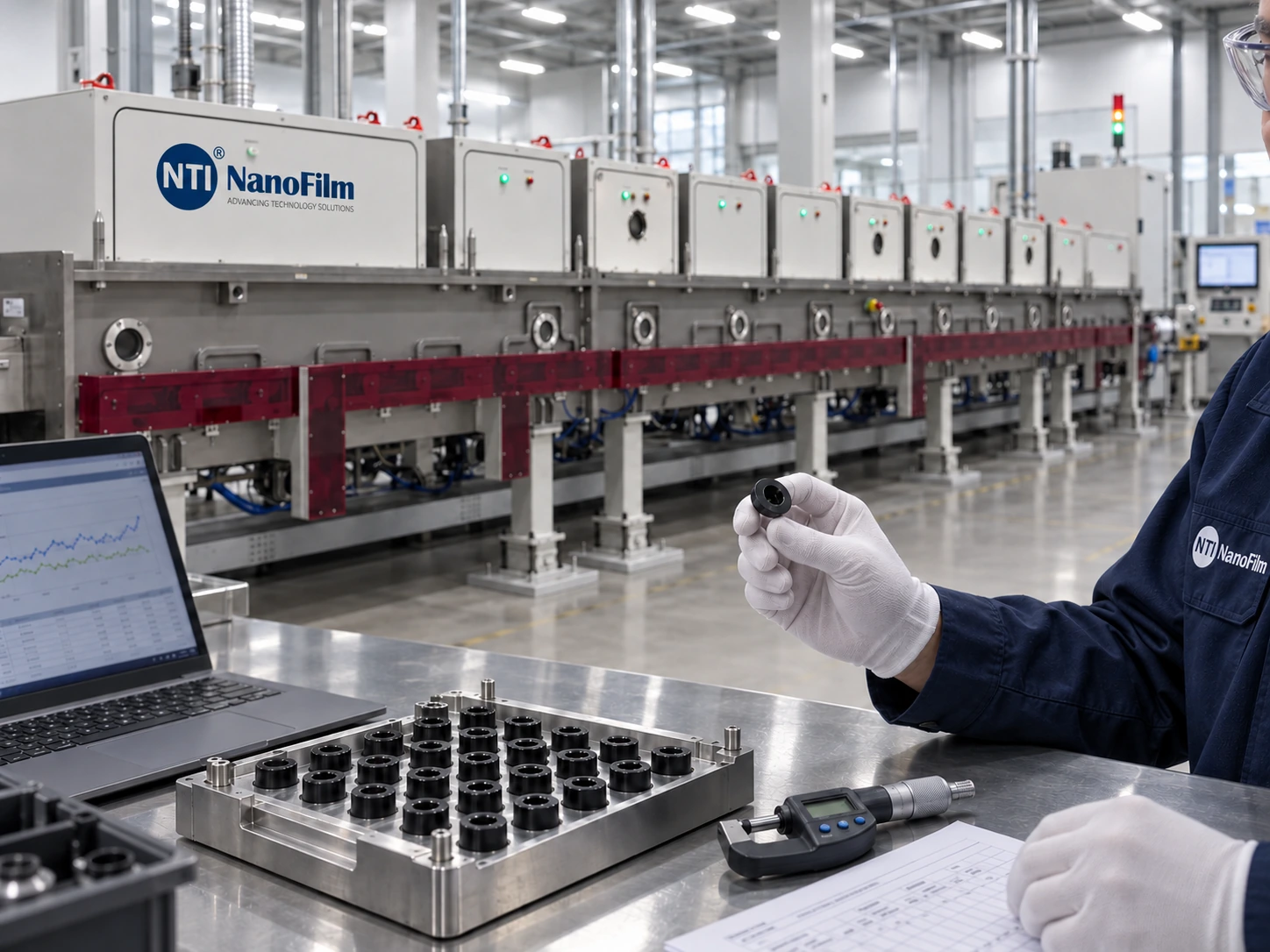
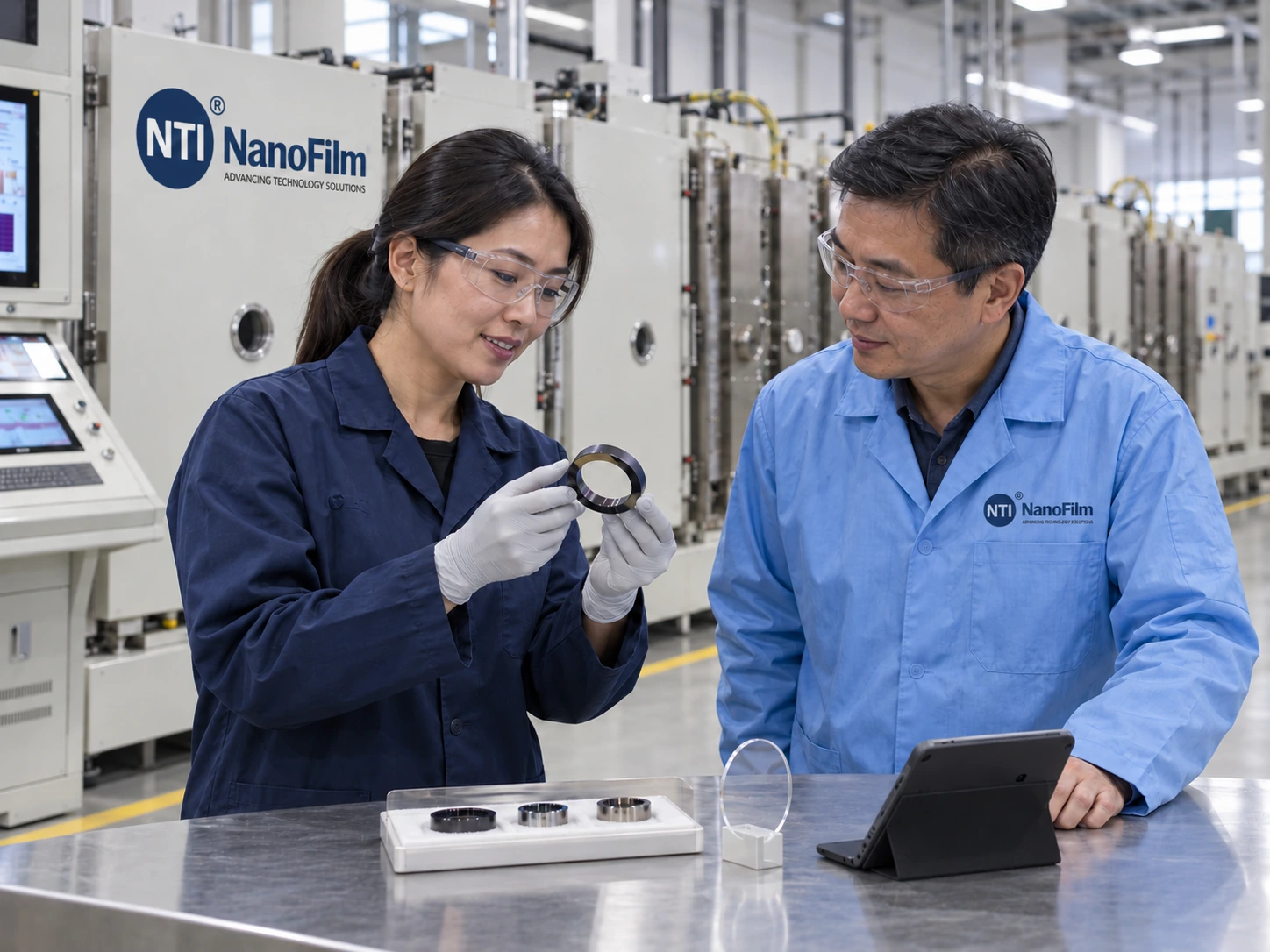
Share your component, coating goal and production target. NTI can help you explore the coating process, handling architecture and automation level that best fit what you are planning next with NTI Titan™ Inline Coating System.
NTI Titan™ Inline Coating System is a configurable vacuum coating platform for higher output manufacturing. It combines deposition and plasma sources, product handling, vacuum process zones, automation and factory integration across Horizontal, Vertical, Rotary and Closed Space Sublimation architectures. Final system architecture is engineered around the substrate, coating performance and required production volume.
Inline coating becomes especially relevant when production needs greater throughput, fewer handling steps, more consistent process flow or lower coating cost per part at higher volume. NTI Titan™ Inline Coating System can move a qualified coating process into a continuous or indexed production architecture while keeping the coating stack, product handling and automation aligned with the manufacturing requirement.
NTI Titan™ Horizontal supports continuous movement of flat and large area products. NTI Titan™ Vertical keeps plates, panels, glass and selected optics upright with single pass or oscillating multi pass movement. NTI Titan™ Rotary increases loading density and multi surface exposure for three dimensional parts. NTI Titan™ CSS uses Closed Space Sublimation for fast dry thin film deposition on photovoltaic and related large area substrates.
NTI Titan™ Inline Coating System can be configured around Magnetron Sputtering, Cathodic Arc Evaporation, PECVD DLC and Filtered Cathodic Vacuum Arc. Depending on the coating stack and architecture, source capability can also include ion sources, ICP plasma, Multi Arc or Direct Arc, ColumnArc, FCVA Metal, FCVA Carbon and Closed Space Sublimation process modules.
Application qualification can connect NTI Titan™ Inline Coating System with surface performance across NTI Finish™, NTI Protect™, NTI Control™, NTI Clarity™, NTI Repel™, NTI Bio™ and Sydrogen coating technologies. This opens routes from wear, friction, thermal and corrosion protection to decorative finishes, electrical control, optical performance, repellency, medical surfaces and electrochemical interface protection.
Yes. Chamber dimensions, coating range, source length, fixture design, process sequence and line length are engineered around the confirmed product and production requirement. The dimensions shown on the page illustrate developed NTI Titan™ capability rather than platform limits, so larger formats or higher capacity programmes can be reviewed through application engineering.
Throughput is developed from the actual manufacturing case rather than a single standard machine rating. Key inputs include product size, loading density, coating stack, coating time, coating access, number and type of process zones, carrier movement, transfer time, maintenance strategy, planned utilisation, utilities and acceptance criteria.
Yes, where the selected architecture and process allow it. Horizontal and Vertical configurations can be engineered around one side or two side exposure, while Rotary configurations provide repeated access around three dimensional surfaces. The final handling concept is selected around coating uniformity, access, product geometry and production flow.
Yes. Integration can include conveyors, carrier buffers, robotic loading and unloading, barcode or RFID identification, recipe verification, traceability, inspection interfaces, production data exchange and MES connectivity. The automation level can range from operator assisted loading to automated carrier flow and robotic part handling.
Developed application directions include tools and dies, automotive piston rings, optics, PEMFC metallic bipolar plates, CdTe thin film solar cells, perovskite solar cells and consumer electronics large part finishing. The platform can also be reviewed for automotive and mobility, semiconductor and precision manufacturing, luxury goods, homeware, sanitary hardware and other products where inline coating can improve production performance.
Yes. NTI can support coating development, application trials, process qualification, equipment engineering, factory acceptance, process transfer, operator training and production ramp up. This allows the coating result and the equipment architecture to be developed around the same product, process window and acceptance requirement.
Aftersales support can include installation and site acceptance, operator and maintenance training, process transfer, preventive maintenance, spare parts, diagnostics, technical assistance and future process or equipment upgrades. Support scope is matched to the installed system and operating requirements.