As hydrogen moves from demonstration to commercial deployment, the industry is entering a new phase defined not only by technical feasibility, but by cost competitiveness and operational reliability.
Across the hydrogen industry, the direction is clear: systems must move closer to cost parity. With current consumer-side hydrogen costs around ¥43.6 CNY/kg and the FCEV parity target at approximately ¥25 CNY/kg, pressure is intensifying across the value chain to improve efficiency and reduce lifecycle costs.
The Challenge
As hydrogen systems move closer to commercial deployment, the performance of individual stack components becomes harder to overlook. The focus shifts from proving that fuel cell systems can work to ensuring that every critical interface can perform reliably and efficiently at scale.
One component increasingly under scrutiny is the metallic bipolar plate.
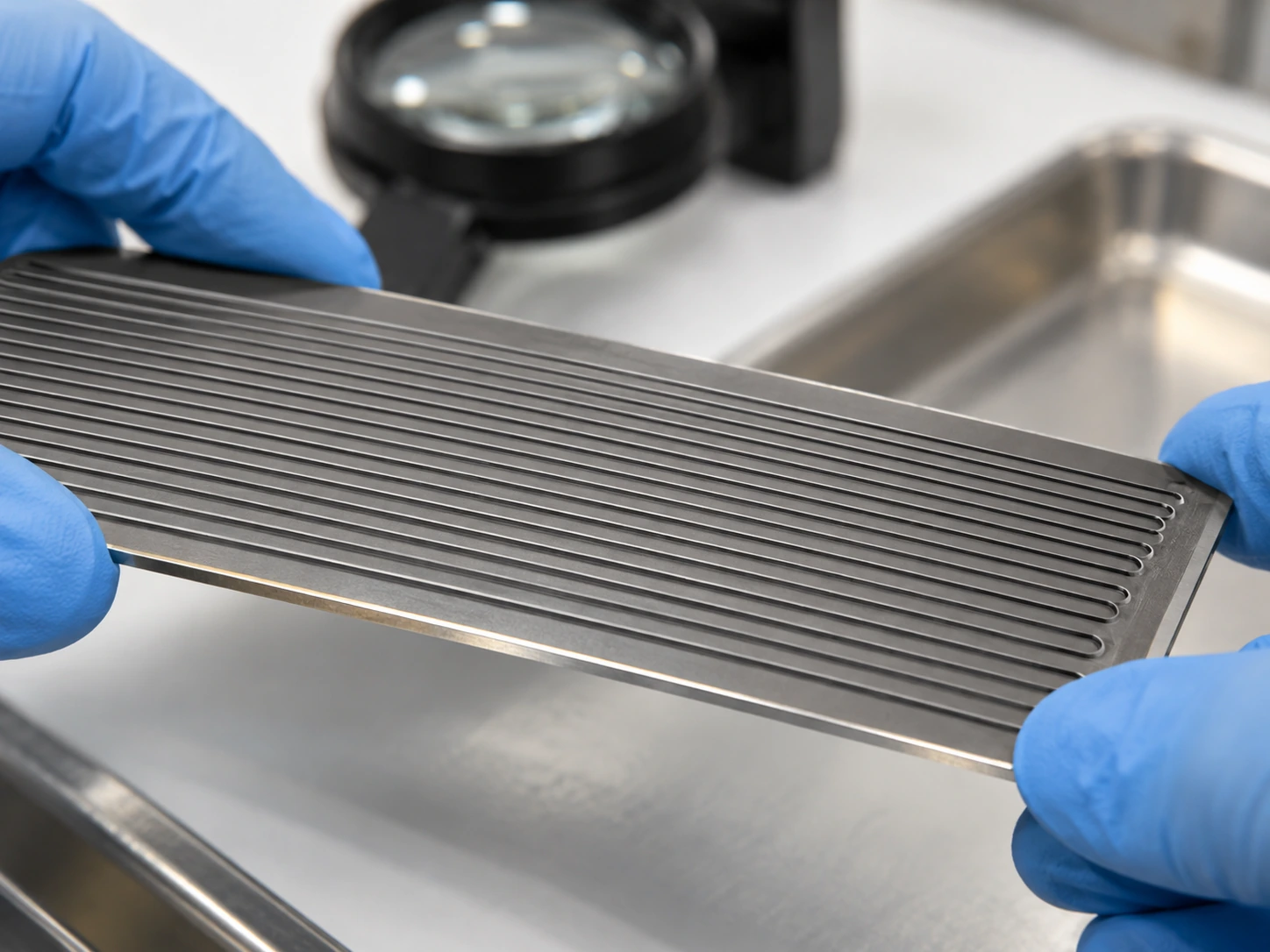
As a central interface within PEM fuel cells, the bipolar plate must conduct current, withstand corrosive operating conditions and remain stable over extended use. As stacks become more compact, scalable and cost-sensitive, the reliability of the bipolar plate surface and its coating play a growing role in overall system performance.
While metallic bipolar plates enable compact and scalable fuel cell designs, their surfaces must operate consistently within acidic, humid and electrochemical fuel cell environments.
Without sufficient surface protection, corrosion, ion leaching and conductivity degradation can occur over time, affecting fuel cell efficiency, stack durability and long-term deployment confidence.
For manufacturers, the challenge is to protect the bipolar plate surface without compromising the conductivity needed for efficient PEM fuel cell performance.
NTI Solution
To address these requirements, NTI delivers advanced hydrogen coating technologies through Sydrogen, its dedicated hydrogen technology subsidiary.
SydroDIAMOND® is a bipolar plate coating developed using our proprietary FCVA technology. It forms an ultra-smooth and ultra-dense carbon coating on the metallic surface, helping strengthen corrosion protection while maintaining the conductivity required for efficient fuel cell operation.
This coating structure allows the bipolar plate to continue performing both its protective and electrical functions under demanding operating conditions.
For PEM fuel cell applications, this balance is essential. A coating must not only shield the metal surface, but also ensure consistent electrical performance over time.
Business Outcome
As hydrogen technologies move towards commercialization, measurable coating performance becomes critical.
In ZBT-validated testing, SydroDIAMOND® has demonstrated:
ZBT-validated performance that helps reduce contamination risk inside PEM fuel cell stacks.
Supporting long-term fuel cell operation where reliability and lifecycle cost matter.
Together, these results translate directly into business impact. Lower ion leaching helps reduce contamination risk and supports more stable stack performance, while extended durability contributes to longer system lifetimes and lower lifecycle costs.
For manufacturers, this means greater confidence in bipolar plate reliability, improved efficiency over time and reduced operational risk as hydrogen systems scale.
That is how SydroDIAMOND® helps bridge hydrogen cost parity pressure with stronger bipolar plate durability, conductivity and scalable PEM fuel cell performance.