

Future of Mobility Mission: Germany and IAA
In multi-functional printers, reliability is built across many moving surfaces. A printer may operate as one system, but its performance depends on multiple functional units working together with precision. Charging, developing, fusing and cleaning components each face different surface stresses during continuous use.
Over time, these stresses can affect component life, print consistency and maintenance frequency. For multi-functional printer manufacturers and operators, the challenge is not only to keep the machine running. It is to keep every critical surface performing consistently across long operating cycles.
Grids, shields and rollers may be exposed to ozone and nitrogen oxide by-products generated during high-voltage charging, increasing the risk of surface corrosion and shorter component life.
Developer rollers and doctor blades must handle toner particles with precision. Scratches, wear and toner build-up can make smooth toner transfer harder to maintain.
Heaters, fixing parts and fusing rollers operate under heat, pressure and repeated contact. Toner adhesion and surface wear can affect release behaviour and print quality over time.
Cleaning blades, discharging shields and related components operate against residual toner and fine particles. Unprotected surfaces can become more vulnerable to scratches, corrosion, residue accumulation and micro-particle stickiness.
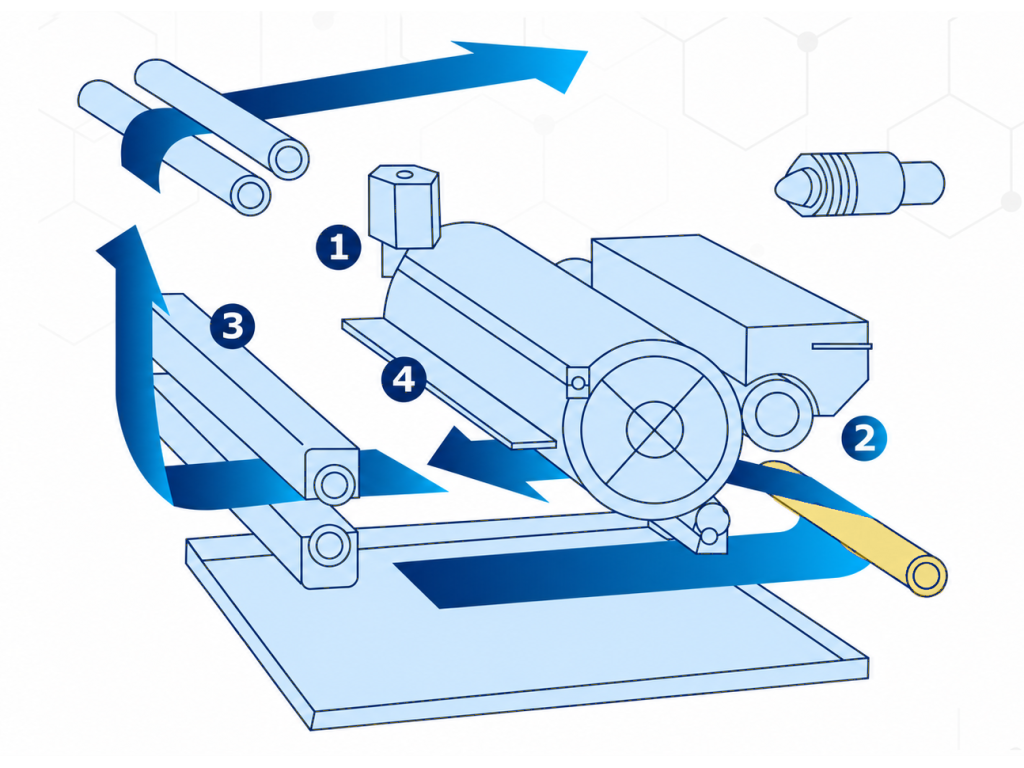
Across the printing process, surface-related issues can appear in different ways. Individually, these may begin as small surface issues, but collectively, they can increase maintenance needs, shorten component lifespan and reduce confidence in long-term print consistency.
TAC-ON® provides a surface engineering solution for printer components that need longer-life protection under repeated motion, contact stress, toner exposure and chemically aggressive operating conditions.
Developed through NTI Nanofilm’s advanced coating capabilities, TAC-ON® forms a durable protective layer over selected component surfaces. The coating is engineered to combine high hardness, low friction and non-stick surface behaviour, helping printer parts resist the surface failures that commonly lead to cleaning, replacement or performance drift.
In practice, TAC-ON® has helped improve the surface behaviours that matter most across demanding printer environments.
Non-stick properties help reduce toner adhesion and micro-particle stickiness, supporting smoother release and reducing residue build-up on critical parts.
High-hardness surface protection helps components withstand repeated contact with toner particles, blades, rollers and moving interfaces.
For components exposed to ozone and nitrogen oxide environments, TAC-ON® supports longer surface protection and improved component durability.
For selected metal cleaning blade applications, TAC-ON® has supported up to 10× longer component lifespan, helping reduce replacement frequency and maintenance pressure in demanding multi-functional printer environments.
The coating can also be applied at low deposition temperature, with room-temperature processing available for suitable components. This helps protect precision printer parts from heat distortion where dimensional stability is critical.
By improving surface durability and reducing adhesion-related issues, TAC-ON® helps printer components operate more smoothly and last longer under demanding printing conditions.
The result is a more reliable operating profile: component surfaces remain more stable, surfaces resist wear more effectively, corrosion risk is reduced and maintenance intervals can be better managed.
For printer manufacturers, this supports longer component service life and greater confidence in machine reliability.
For operators, it supports smoother printing performance, fewer surface-related interruptions and more consistent print quality across extended operating periods.
TAC-ON® turns advanced surface engineering into a practical production advantage: longer-lasting printer components, lower maintenance pressure and more stable printing performance from the surface up.
Delegation of Singapore Enterprise and companies from Singapore visit Germany. Singapore government agency arranged excellent insightful meetings during the "Future of Mobility Mission" in Germany. Leading Mobility startups and established companies had been arranged for each participating Singapore company to pitch for business or collaborations. A pre-arranged tour of the International Automobile Exhibition (IAA) rounded […]
READ MORE
Nanofilm CSO, Mr Gian Yi Hsen, was invited as one of the panelists to the “Vision & Strategy for Future Mobility: Korea & Singapore Seminar”!
READ MORE
NTI Nanofilm expands its European footprint with the acquisition of EuropCoating Group, strengthening its position in decorative and functional coatings. This strategic move builds on the synergies established through the successful integration of AxynTeC in 2024, further enhancing expertise in industrial coatings and solidifying market presence across Europe.
READ MORE
How Leading Manufacturers Are Reducing Cost and Risk Beyond Electroplating Gold remains central to jewellery design and brand value. However, sustained gold price volatility has transformed gold finishing from a design choice into a cost and risk management issue for jewellery manufacturers. For manufacturers supplying the European market, the United States, and other export markets, […]
READ MORE
Modern manufacturing runs on precision and reliability. Whether in cutting tools, forming dies, die-casting inserts, or high-gloss plastic molds, tool failure translates into production loss, inconsistent quality, and higher operating costs. To overcome these challenges, Physical Vapor Deposition (PVD) coatings such as Titanium Nitride (TiN) and Aluminum Chromium Nitride (AlCrN) have become industry standards for […]
READ MORE