
Advanced Coating Solutions for CdTe and Perovskite Solar Cells

Contact Us

Overcoming Environmental Challenges in Solar Panel

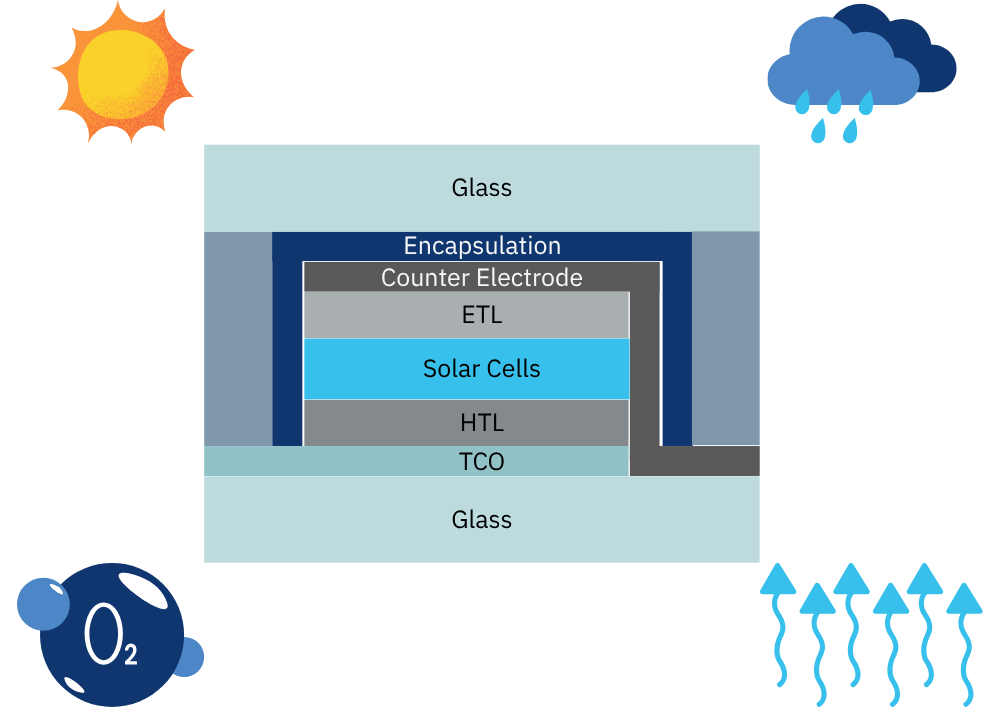
CdTe and Perovskite solar cells are highly exposed to heat, moisture, oxygen, and rain, which accelerate degradation and seal oxidation. Conventional coatings struggle to block water vapour or endure thermal cycling, leading to delamination, corrosion, and power loss. 
Main Advantages of NTI Nanofilm Coating

NTI Nanofilm’s vacuum coatings form ultra-dense, pinhole-free barriers that shield against moisture ingress and oxidation, ensuring long-term stability, clarity, and electrical reliability under real outdoor conditions.

  • Barrier    Protection

    TAC-ON® coatings protect against oxidation or moisture


  • Minimize  Reflection

    Anti-reflective coatings boost efficiency

  • Environmental Protection

    Hydrophobic coatings for self-cleaning

Frequently Asked Questions

  • What’s the difference between solar cell coating and solar panel coating?

    Solar cell coating refers to ultra-thin functional layers applied directly to individual photovoltaic cells to improve light absorption, electrical efficiency, and barrier protection against oxidation or moisture. These coatings are deposited by FCVA processes to enhance performance and reliability.

  • Solar panel coating is applied to the outer glass surface of finished modules. It focuses on protection and maintenance, using hydrophobic, anti-reflective, or UV-resistant layers that repel dust, moisture, and debris, extending the panel’s lifespan and keeping energy output high.

  • What types of coatings are used for CdTe and Perovskite solar cells?

    CdTe and Perovskite solar cells commonly use transparent conductive oxide (TCO) coatings, hydrophobic surface coatings, and ta-C or DLC-like barrier layers. These technologies enhance adhesion, optical clarity, and long-term resistance to temperature, UV, and humidity.

  • Can solar panel coatings improve energy efficiency?

    Yes. Anti-reflective and hydrophobic coatings increase light transmission while keeping panels clean from dust and water. This combination boosts solar efficiency by up to 10% and reduces maintenance frequency for long-term cost savings.

  • Are solar coatings environmentally friendly?

    NTI Nanofilm’s vacuum-based coatings use clean, dry processes, free from hazardous chemicals common in wet coatings. This makes them environmentally safe, sustainable, and compliant with global green manufacturing standards.

  • How do coatings protect solar panels from moisture and oxidation?

    Advanced coatings like NTI Nanofilm’s vacuum-deposited layers form ultra-dense barriers that block moisture, oxygen, and contaminants. These coatings prevent seal oxidation, corrosion, and delamination, ensuring stable performance under heat, humidity, and rain exposure.

Ready to get started?

Do you have any question and want to know more about our services? We will be glad to support you.

Contact Us

We use cookies on our website to see how you interact with it. By accepting, you agree to our use of such cookies. Cookie Policy