
Arc Evaporation Technology

NTI Nanofilm specializes in Arc Evaporation technology, delivering dense, hard, and adherent coatings for cutting, forming, and molding tools.

Arc Evaporation Technology

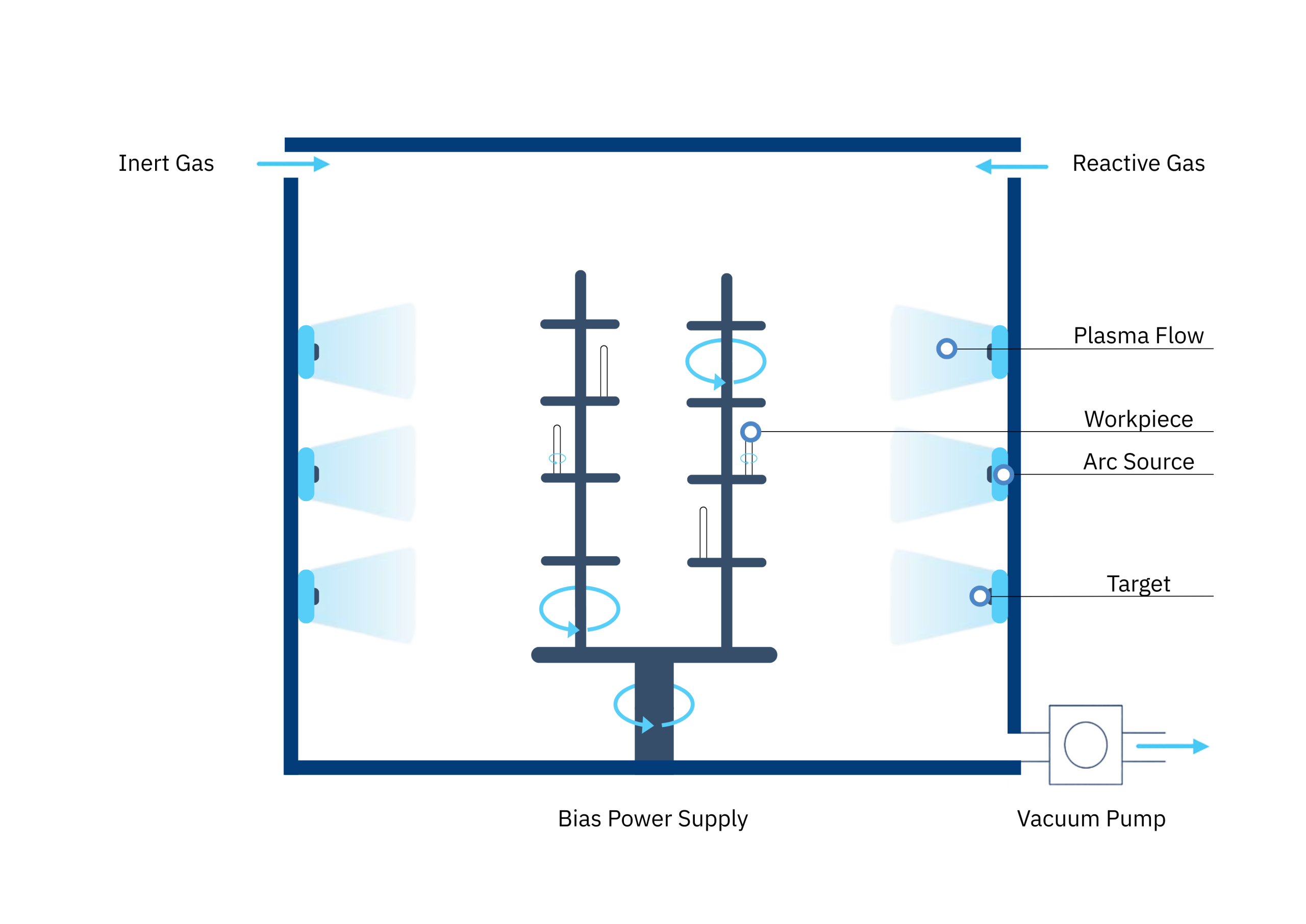
Arc Evaporation is a dry PVD coating process that deposits thin, hard films by vaporising material from a solid target using a cathodic arc discharge in vacuum. The high-energy plasma generated contains ionised metal particles that travel toward the substrate, forming a dense, adherent coating layer. This clean and environmentally friendly process enhances surface hardness, wear resistance, and heat stability—ideal for cutting tools, die-casting molds, plastic injection molds, and precision shank tools.
Main Advantages of NTI Nanofilm Arc Evaporation

Compared to conventional surface treatments such as electroplating and wet coating, Arc Evaporation offers key advantages including higher hardness, superior adhesion, and enhanced wear and heat resistance.

  • High Hardness

    Produces dense, hard coatings such as TiN, AlTiN, and CrN, delivering superior wear and cutting-edge durability for tooling applications.

  • Strong Adhesion

    Ionized metal plasma creates excellent coating-substrate bonding, enhancing film strength, reducing delamination, and extending tool service life.

  • Thermal Stability

    Withstands extreme temperatures in cutting, molding, and die-casting processes, maintaining coating integrity and performance under high-heat conditions.

Frequently Asked Questions

  • What is Arc Evaporation coating and how does it work?

    Arc Evaporation coating, also known as cathodic arc PVD, is a process where an electric arc vaporizes solid metal from a target material and deposits it as a thin film on a substrate. The high-energy arc creates a plasma rich in metal ions that bond strongly to the surface, forming a dense, durable, and adherent coating. This technology is known for producing extremely hard and wear-resistant films that maintain stability under heavy mechanical and thermal loads. It is widely applied in industries that require precision, strength, and surface protection.

  • What are the key benefits of Arc Evaporation coating?

    Arc Evaporation coatings offer outstanding hardness, superior adhesion, and long-term wear resistance. The energetic plasma ensures that each coating layer is compact and free from porosity, improving resistance against abrasion, oxidation, and heat. The process can also produce highly reflective or matte finishes, depending on the gas composition and deposition conditions. This makes arc evaporation a preferred solution for components that demand both functional durability and aesthetic consistency.

  • Which industries and parts benefit most from Arc Evaporation coatings?

    Arc Evaporation coatings are widely used in cutting and forming tools, die-casting and molding systems, automotive engine and transmission components, and decorative metal finishes. The process delivers strong adhesion, hardness, and wear protection for tools that operate under friction, pressure, or heat. It is also applied to high-end consumer and automotive trim parts where long-lasting metallic colour and durability are essential. The combination of mechanical strength and decorative versatility makes arc PVD a trusted choice for both industrial and premium product applications.

  • How does Arc Evaporation improve coating performance under stress?

    Arc Evaporation coatings improve surface strength by forming a dense microstructure with high ion penetration. The strong ion energy allows the coating to anchor deeply into the substrate, creating a firm metallurgical bond that resists peeling or cracking even under cyclic stress. This structure offers exceptional thermal stability and hardness, keeping parts functional in high-friction or high-temperature conditions. As a result, coated components maintain consistent performance and longer tool life during demanding industrial operations.

  • How do you select the right Arc Evaporation coating for your application?

    Choosing the right Arc Evaporation coating depends on the specific function and working environment of the component. For example, coatings designed for cutting or forming tools should emphasize hardness and heat resistance, while those for decorative or optical use should prioritize color stability and gloss. Other factors such as substrate type, processing temperature, and expected load also determine the ideal coating chemistry. Matching these factors ensures the coating delivers optimal performance, surface protection, and long-term value.

Ready to get started?

Do you have any question and want to know more about our services? We will be glad to support you.

Contact Us

We use cookies on our website to see how you interact with it. By accepting, you agree to our use of such cookies. Cookie Policy